
Successful advocacy is rarely about one big move—it’s about hundreds of small, strategic steps. The Ad Hoc Committee on Lifetime Parole executed a meticulous plan:
- Research – Partnered with John Jay College of Criminal Justice (quantitative) and the CUNY Graduate Center (qualitative).
- Bill Drafting – A Columbia Law School professor drafted the new Executive Law 259-j.
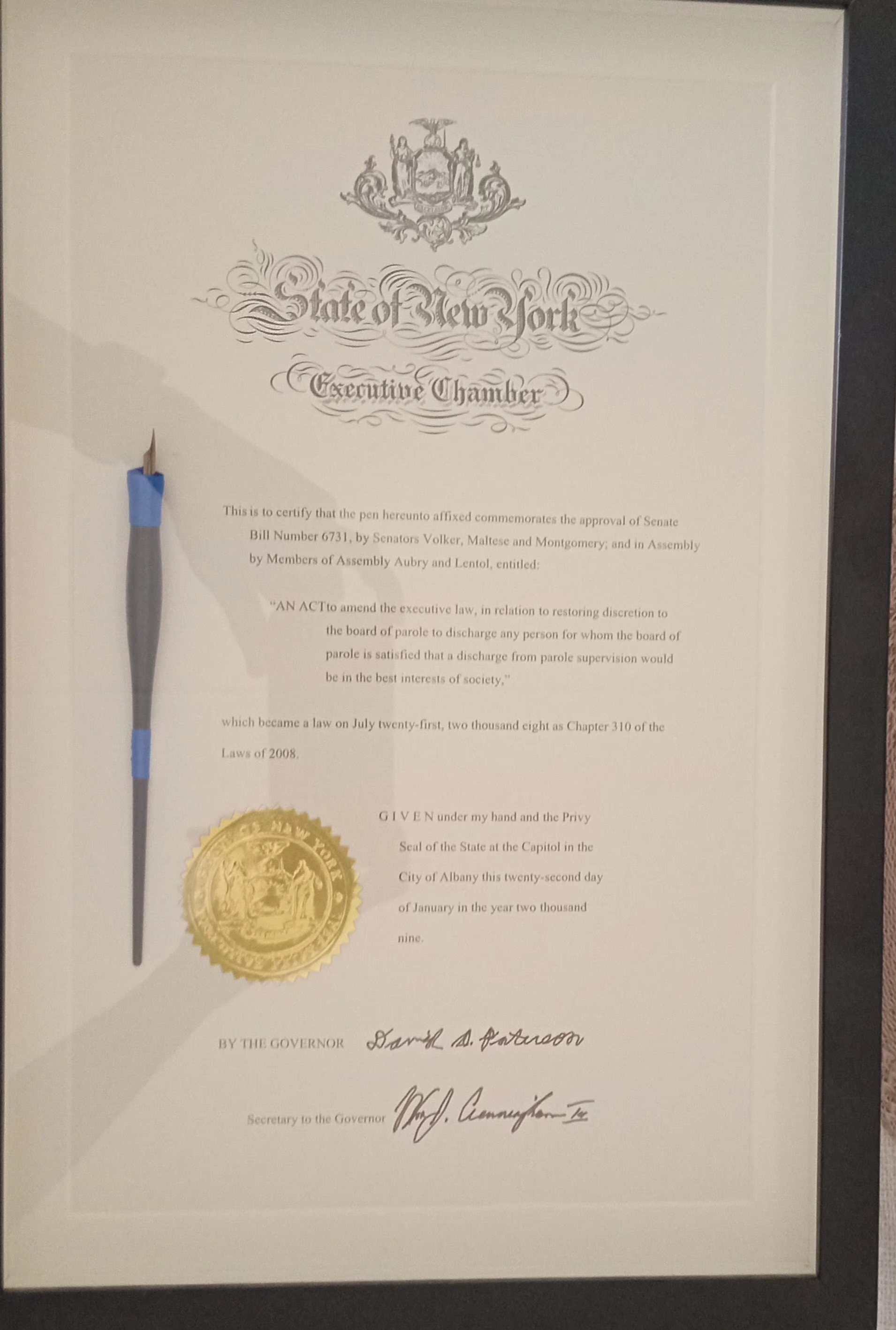
- Political Engagement – Secured Senate Bill 6731, sponsored by Senators Volker, Maltese, and Montgomery; Assembly sponsorship from Members Aubry and Lentol.
- Legal Direction – Guided by a public interest law firm on meetings and timing.
- Coalition Building – Aligned with New Yorkers Against the Death Penalty, Osborne Association, Prisoner Reentry Institute, Citizens Against Recidivism.
- Insider Support – Endorsements from Parole Chairs George Alexander, Robert Dennison, Edward Hammock, and Ramon Rodriguez.
The Victory – On July 21, 2008, Governor David Paterson signed the bill into law as Chapter 310 of the Laws of 2008. By October 2008, many members were officially discharged from parole, in full satisfaction of their sentences.
➡ Read Part 4: Lessons Learned »


 Easy Waters