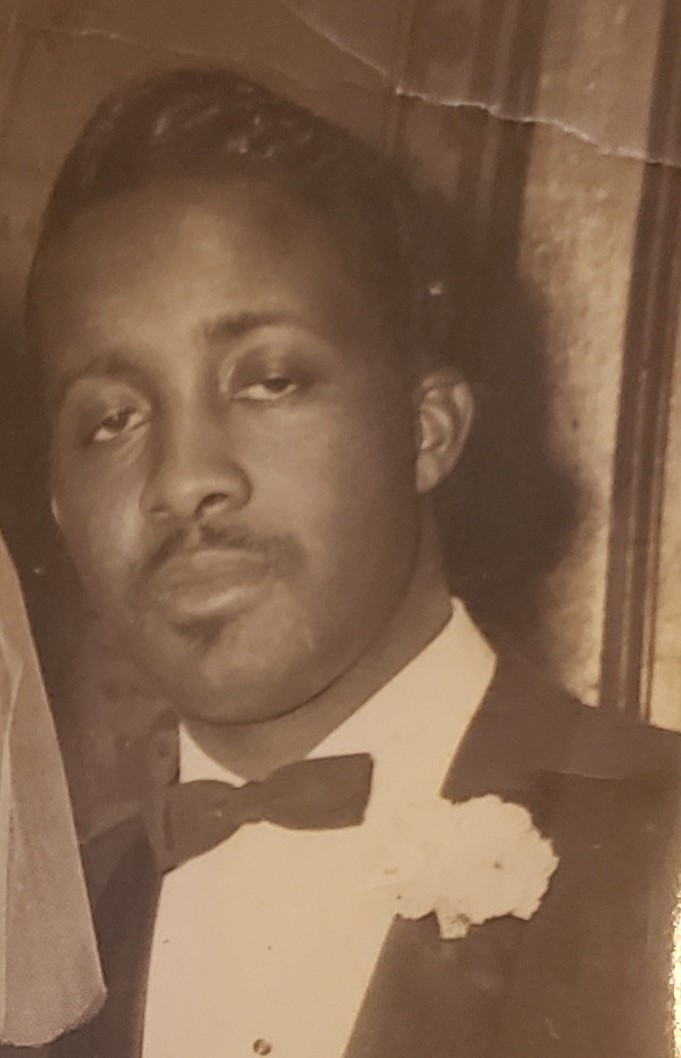
My father was born in the same month and year of what then was called “Negro History Week.” Historian Carter G. Woodson and the Association for the Study of Negro Life announced that the second week of February would be “Negro History Week.” This week was chosen because it coincided with the birthday of Abraham Lincoln, “the Great Friend of the Negro,” on February 12, and that of Frederick Douglass on February 14. My father was born in the same month and year as this announcement – February 15.
This month, my father would have turned 100. During my life, he was the living embodiment of “Black History.” He grew up in the segregated South, in North Carolina, and as a teenager was drafted into the segregated U.S. Army during World War II. After the War, my father migrated to New York City, where years later he would meet and marry my mother, a first-generation Bajan. My father never talked about growing up in the segregated South or serving in the segregated U.S. Army. He never took me South, though every year, around the Fourth of July, my father would make a pilgrimage to the South to visit his family. Of my four siblings, once he took my “Irish twin” – we were not born in the same year, but four months apart — for four months we are the same age.
I never understood why my father never took me South until I became a student of history and African American literature. (For a couple of years, I have been an adjunct at Bard College, teaching African American Literature in the 20th Century.”) I can’t imagine what, as a native New Yorker, born at the very beginning of what Samuel Yette, the first Black national correspondent at Newsweek, called the Decisive Decade (1960-1970), it was like growing up in the segregated South! Through reading Richard Wright’s “The Ethics of Living Jim Crow, an Autobiographical Sketch” (1937), I got a peek into the window of that other peculiar institution. But I would have preferred living testimony from my father and his father – I’ve traced my roots in the slaveholding and segregated South to 1805, where I lose track, because white folk are hiding in the family tree. Make no mistake about it, though, when I was born in 1960, and Richard Wright died, my birth certificate was stamped “Negro.” Eight years later, Martin Luther King, Jr. would be assassinated, so large swaths of the patchwork quilt of America were still living under Jim Crow!
During the Black Arts Movement (1960-1975), Black educators and Black United Students at Kent State University first proposed Black History Month in February 1969. The first celebration of Black History Month took place at Kent State a year later, from January 2 to February 28, 1970.
Six years later, Black History Month was being celebrated all across the country when President Gerald Ford recognized Black History Month in 1976, during the celebration of the Bicentennial of the United States. He urged Americans to “seize the opportunity to honor the too-often neglected accomplishments of Black Americans in every area of endeavor throughout our history.”
In this day and age, I beseech Americans to do as President Ford urged.
Happy Birthday, Black History Month, and Happy Birthday, Daddy!


 Easy Waters