Abstract
This essay situates The Black Blood of Poetry within a transnational lineage I term dark substance poetics—a tradition in which poetry materializes itself through bodily substances (blood, milk, breath, ink) that are subsequently darkened, inverted, or corrupted. Moving from nineteenth-century moral-symbolic uses of “blood” to twentieth-century catastrophic inversions and late-century internalizations of poetic materiality, the essay argues that The Black Blood of Poetry represents a decisive escalation: poetry is no longer a medium that represents violence but becomes the substance in which violence inheres. This shift reframes poetic language as a site of historical hemorrhage, particularly within the long-term of anti-Black violence.
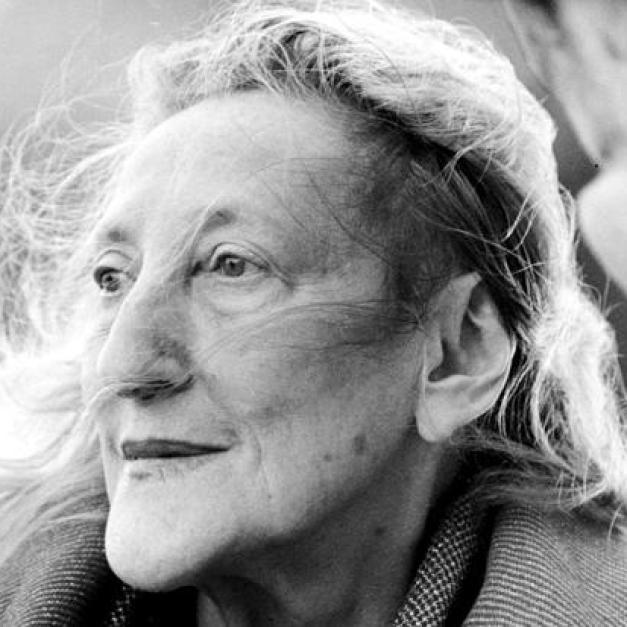
Nina Cassian, whose phrase “the black blood of poetry” provides the conceptual hinge for this essay.
I. Introduction: Substance, Inversion, and the Body of Language
Poetry has long trafficked in metaphor, has long bled through the black body of metaphor, but certain traditions insist on something more literal, more corporeal: the transformation of language into substance. In these traditions, poetry does not merely describe the body; it becomes bodily. Breath becomes line; ink becomes blood; voice becomes wound. What distinguishes dark substance poetics is the further step whereby these life-sustaining substances—milk, blood, breath—are darkened, rendered toxic, or inverted. Vitality is not simply diminished but corrupted at the level of matter itself.
Within this lineage, the phrase, “the black blood of poetry,” appearing in Nina Cassian’s late poem “Truly Your Forgiveness I Implore,” marks a pivotal moment. It collapses the distance between poetry and substance: poetry is not about blood; poetry is blood. Yet this essay contends that The Black Blood of Poetry advances that collapse into a full poetics, an ontological claim about what poetry is and what historical pressures it bears.
Poetry is not about blood; poetry is blood.
II. Moral Blood and the Early Poetics of Substance
The genealogy begins with the symbolic but materially charged language of nineteenth-century European poetry. In Mikhail Lermontov’s “Death of the Poet” (1837), written in reaction to the death of Alexander Pushkin, “black blood” functions as a moral index. Blood signifies guilt, corruption, and violence; the poet stands as witness, chronicler, martyr, or judge. Crucially, blood here is adjacent to poetry, not internal to it. The poet speaks about blood; he does not yet speak as blood.
Similarly, in Charles Baudelaire’s Les Fleurs du mal (The Flowers of Evil), the poetic field is saturated with decay—perfume that rots, beauty that putrefies, bodies that dissolve. Baudelaire aestheticizes corruption, inaugurating a poetics in which degradation itself becomes generative. Yet even here, substance remains metaphorically external. The poem stages corruption; it does not yet claim that language itself has been materially altered.
III. Catastrophic Inversion: The Blackening of Substance
The decisive rupture occurs in the mid-twentieth century with Paul Celan. In “Todesfuge” (“Deathfugue”), the line “Black milk of daybreak we drink you at night” enacts a radical inversion: milk, the paradigmatic substance of nourishment, is rendered black. This is not a metaphor in the ornamental sense; it is a material contradiction that encodes historical catastrophe—the Holocaust—within the very logic of sustenance.
Celan’s innovation lies in making the substance itself unreliable. Milk no longer nourishes; it testifies. The body is no longer the site of recovery but of ingestion—of history, of death. With Celan, language becomes contaminated matter. Poetry ceases to be a transparent medium and becomes instead a substance through which history circulates.
Postwar Polish poets—Tadeusz Różewicz, Zbigniew Herbert, and Czesław Miłosz—extend this logic but with a different emphasis. Their work often strips language down to an ethical minimum. Blood appears frequently, but it is not aestheticized; it is documentary, forensic. The poem becomes a site of witnessing, where substance registers the residue of violence without transfiguration.
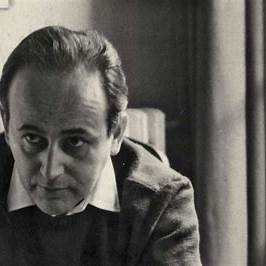
Paul Celan, whose “black milk of daybreak” marks a decisive turn in the blackening of poetic substance.
Milk no longer nourishes; it testifies.
IV. Internalization: The Poet’s Body as Medium
By the late twentieth century, the locus of substance shifts inward. In Sylvia Plath, the body becomes both stage and instrument. Blood is theatrical, performative, and inseparable from the act of poetic production. The poet’s body is not merely represented; it is the medium through which the poem occurs.
In Amiri Baraka, this internalization becomes explicitly political. (Baraka, writing during the Black Arts Era [1960–1975], is in a consanguineous union with the politics of Black Power.) Poetry is not only embodied; it is insurgent. Language is heated, urgent, and collective. It does not describe struggle; it participates in it. Here, poetry begins to approximate what might be called a circulatory system of resistance, where words move like blood through a social body.
V. Cassian’s Hinge: Poetry as Darkened Blood
It is in this context that Cassian’s line—“the black blood of poetry”—must be understood. Writing in exile, in English rather than her native Romanian, Cassian collapses the distinction between poetry and substance entirely. Poetry is not compared to blood; it is blood. And not just blood, but blackened blood—already altered, already bearing the mark of history.
This is a crucial hinge in the lineage of dark substance poetics. Where Celan inverts milk and where earlier poets situate blood alongside poetry, Cassian internalizes and darkens the very substance of poetic language. Poetry becomes a wounded circulatory system, a medium in which history is not only recorded but actively hemorrhaging.
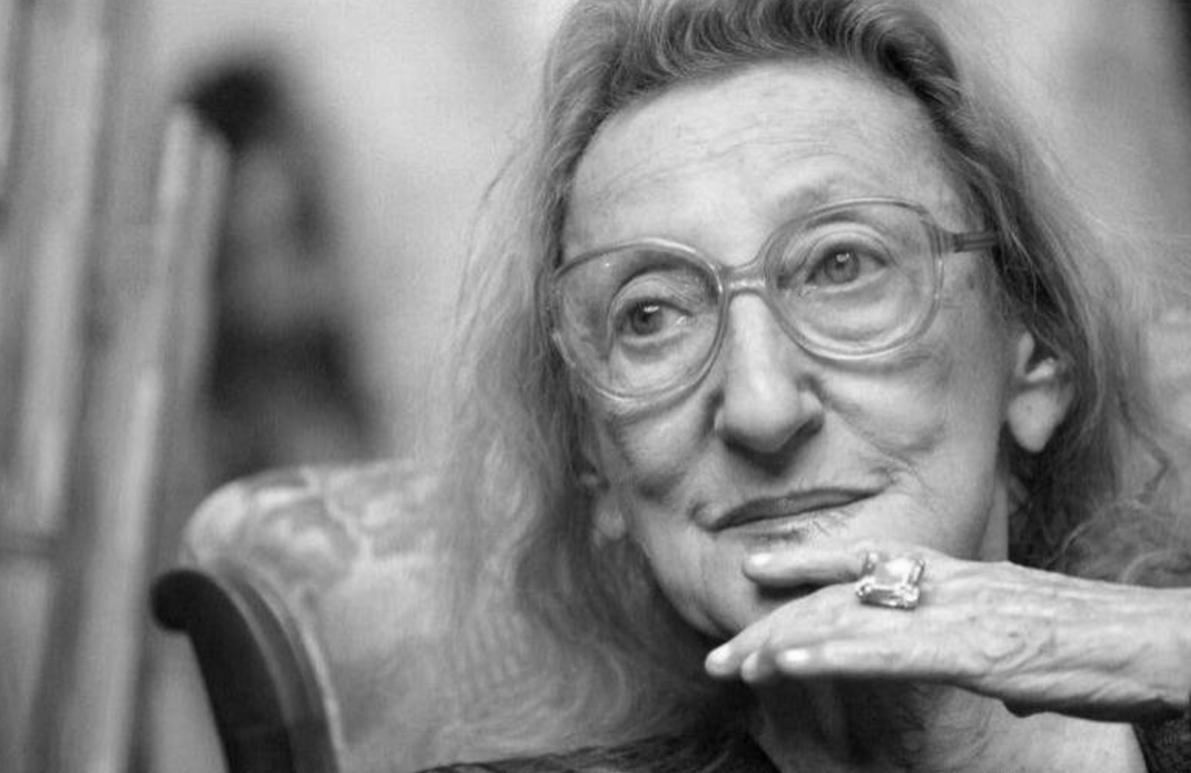
Nina Cassian in later life, a fitting visual for the essay’s return to her line, “the black blood of poetry.”
VI. The Black Blood of Poetry: Toward an Ontological Claim
The Black Blood of Poetry advances Cassian’s insight from a single line to a governing principle. The title does not merely describe a poetic image; it asserts a poetics. It proposes that poetry itself is constituted by a darkened life-force—that language carries within it the residue of violence, memory, and survival.
Three key shifts occur:
- From Image to System
Cassian’s formulation is momentary; The Black Blood of Poetry renders it systemic. The metaphor becomes the architecture of the work. - From Representation to Ontology
Earlier traditions used blood as a symbol or witness. Here, poetry is defined by its substance. It is not about blackened blood; it is made of it. - From European Catastrophe to Black Historical Continuum
While Celan and postwar European poets respond to specific historical ruptures, The Black Blood of Poetry situates darkened substance within the long-term of anti-Black violence—lynching, displacement, incarceration, and structural inequity. The “blackness” of the blood is not merely metaphorical; it is historically and racially charged.
In this sense, my work re-centers dark substance poetics. It shifts the axis from European trauma to a broader, ongoing history in which violence is not an event but a condition. Poetry becomes the medium through which this condition is both endured and articulated.
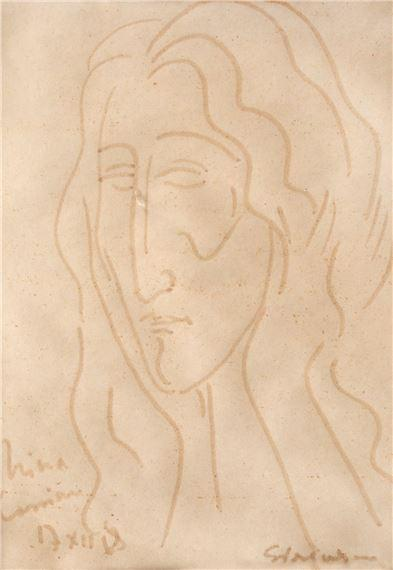
A line drawing of Nina Cassian, useful as a quieter closing visual before the essay’s conclusion.
VII. Conclusion: Poetry as Hemorrhage
The trajectory traced here—from Lermontov’s moralized blood to Celan’s inverted milk to Cassian’s blackened poetic substance—culminates in a poetics where language itself is inseparable from the histories it bears. The Black Blood of Poetry represents a decisive articulation of this trajectory. It does not merely participate in dark substance poetics; it consolidates and extends it.
In this framework, poetry is no longer a vessel that contains meaning. It is a substance that bleeds meaning. It circulates, carries, and sometimes spills the histories embedded within it. To write poetry, then, is not simply to arrange words but to engage a material that is already marked—already darkened—by the conditions of its production.
What remains is not the illusion of purity but the recognition of poetry as historical matter: dense, embodied, and, at times, irreducibly blackened.
Poetry is no longer a vessel that contains meaning. It is a substance that bleeds meaning.
Author’s Note
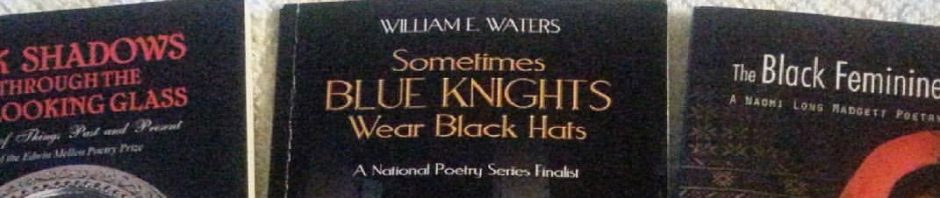
When I first encountered the phrase, “the black blood of poetry,” in Nina Cassian’s poem, “Truly, Your Forgiveness I Implore,” I thought that it would be a great title of a book, that it would be a title for a collection of my poetry. It took nearly thirty years and my fourth book of poetry—all with “black” in the title—to make this a reality. Over that time period, I wrote poems, not thematically, but with my blood, with this “dark substance” that is in The Black Blood of Poetry.


 Easy Waters