Triumphing Through Levels of Grief

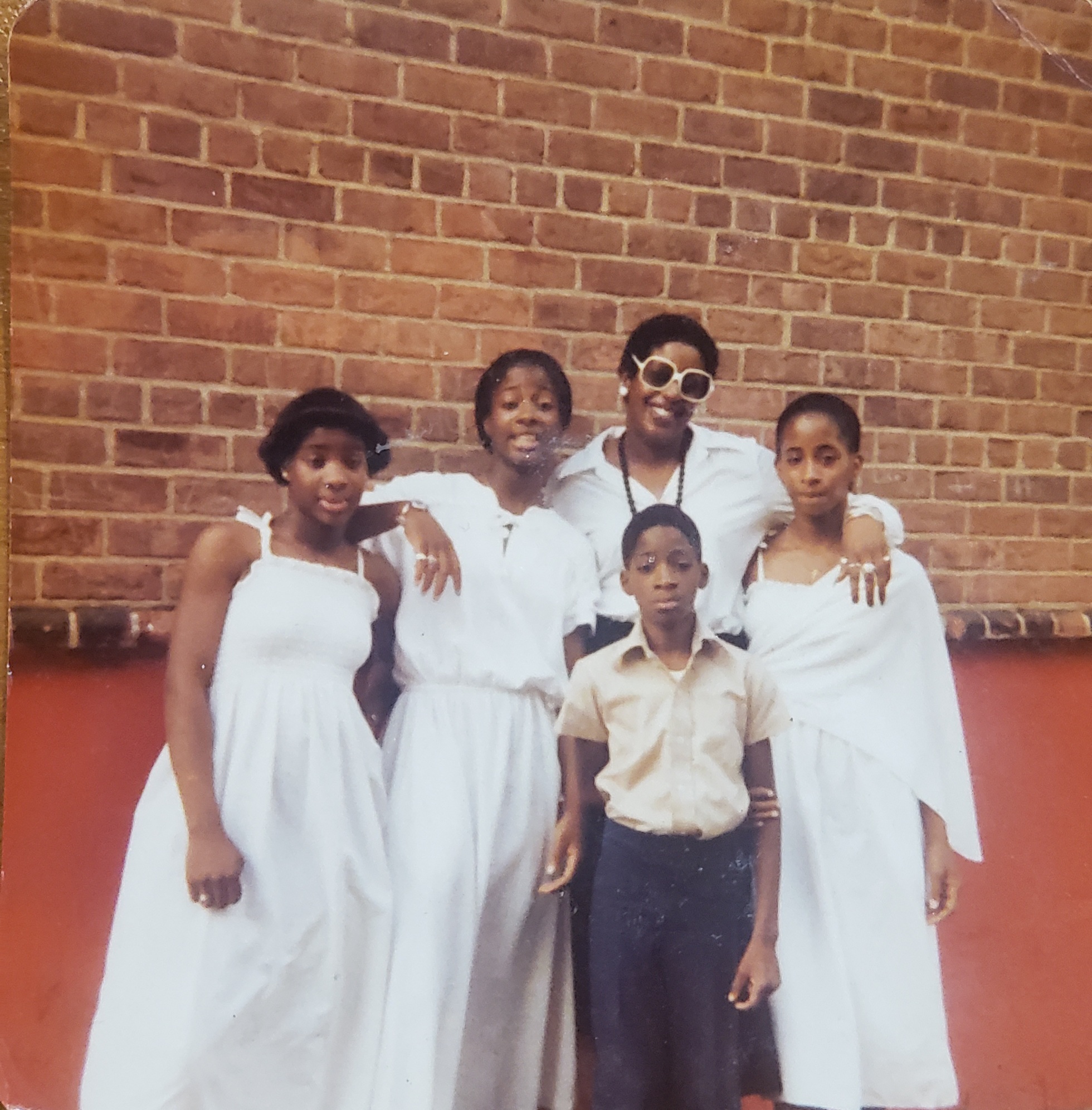
My Sisters in White, my Bother, and our Cousin, the Day of our Mother’s Funeral

Today is International Women’s Day.  During Black History Month and these first couple of days in Women’s History Month, I have uplifted women, mostly women authors.  Today, though, I want to uplift a woman near and dear to my heart, the heart of our family, my sister Jeanette.

At 19, when our mother died, Jeanette became the Matriarch of our family, the connective tissue that held us together – at this time, we said, “We only have each other.”  And although our father was alive – he would die almost four years later – and was always there for us, he was an old school Native Southern Son who limited his role to Provider.  We don’t argue about that.  His role didn’t change when our mother died, but Jeanette’s role dramatically changed, including deferring her dreams.

At 19, Jeanette became the “mother” to our younger siblings, my “Irish” twin, Cheryl (17), Wanda (13), and our baby brother Whitney, “not Houston” (10).  Whitney, more than our other siblings, in part because he was the youngest, truly became Jeanette’s child.

I don’t believe that life is a Tragedy, but that there are tragic events in our lives.  Less than a year ago, Whitney passed away, the greatest tragic event in our lives, and twice as tragic for Jeanette, because not only was Whitney her brother, but also her “son.”

Less than a year ago I didn’t know there are levels of grief.  Losing a parent when you are a teenager is a deep and profound form of grief, although parents do not expect to outlive their children, and children do not expect their parents to die.  Still, there’s no preparation, no playbook, for dealing with this grief, not as a teenager, and not as an adult.  On another level of grief, losing a sibling is like losing a body part – one hears those stories of people who have lost a limb “feeling” it (muscle memory?) long after it is gone –  a member of the family.  It cuts even deeper than the loss of a parent.  Losing a sibling, the youngest in your family tree, produces a grief far more profound than losing a parent.  I cried more in the week after our baby brother’s death than I had in my 60 years of life.  (My childhood friends have said they never saw me cry.)  Tears form in my eyes as I write this. . . .

Tears are still forming and falling from Jeanette’s eyes.  There is nothing that can assuage her grief.  Her grief is double our siblings, in that she not only lost a bother, but also a son.

But this post is not about tears.  It is about fortitude and strength in the face of tragedy.

My sister, Jeanette, is the strongest woman I know, and if there is life after death, then I hope that she and Whitney are reunited.

Posted in being a teenager, Black Shadows and Through the White Looking Glass, ezwwaters, Family, Fatherhood, Fathers, Growing Up, juveniles, Lest We Forget, Mother's Messages, raising black boys, Relationships, Religion, Urban Impact | Tagged | Leave a comment

The “new” Jim Crow is as old as the Union

Ever have a “Eureka!” moment?  During my legal research in the early 1980’s, I came across something that, beyond a reasonable doubt, confirmed what people had been talking about without much evidence, beyond the Thirteenth Amendment to the U.S. Constitution, to wit: “Neither slavery nor involuntary servitude, except as a punishment for crime whereof the party shall have been duly convicted, shall exist within the United States, or any place subject to their jurisdiction” (emphasis added).  (See the chart below, “A Comparison of New York State Laws and Regulations and Slave Codes.”)

Call the Thirteenth Amendment the Exception to the Emancipation Proclamation Clause.  Herein lies the origins of hyperincarceration, not “mass incarceration,” because people formerly enslaved (Africans and their descendants) were the targets of this “Constitutional” Amendment.

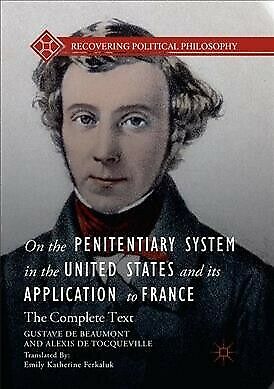
Even before the “end” of “legal slavery,” in the 1820’s, Black people in America were disproportionately imprisoned.  Gustave de Beaumont and Alexis de Tocqueville – the very same De Tocqueville who is famous for Democracy in America – came to America to study her penitentiary system.  They found the disproportionate imprisonment of “Negros” in the Southern states.  Their findings were documented in On the PENITENTIARY SYSTEM in the UNITED STATES and its APPLICATION to FRANCE (1833).  Even before the Thirteen Amendment, when the peculiar institution was a powerful source of social control and punishment of Black people, white Southerners still found use for the penitentiary, which provided absolutely no penance for those in it.

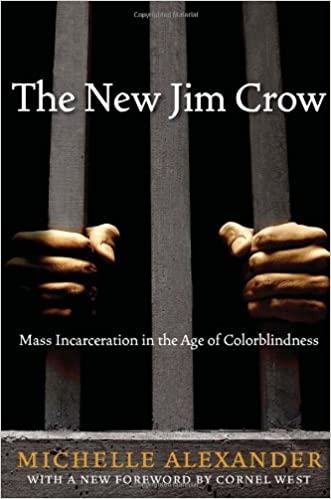
One hundred and seventy-seven years later, Michelle Alexander picks up this thread from De Beaumont and De Tocqueville, in The New Jim Crow: Mass Incarceration in the Age of Colorblindness.  One could argue that this book is the most important book in the last 50 years about the criminal legal system and its byproduct: “mass incarceration” (read hyperincarceration).

Alexander puts this age-old American problem in a context people seem to readily understand, that is, legal segregation, also known as Jim Crow.  There is no official “end” date for segregation in America.  Even legally speaking, it’s hard to argue that the U.S. Supreme Court decision in Brown v. Board of Education in 1954 ended legal segregation. When the Reverend Dr. Martin Luther King, Jr. was assassinated in 1968, 14 years after the Brown decision, he was fighting this protracted Civil Rights War against both legal (de jure) and de facto segregation.  In the 1980’s, a Harvard University study found that New York City had one of the most segregated public school systems in the United States.  Nonetheless, The New Jim Crow got masses of people to look at the criminal legal system in ways it had never been looked, through a lens that provided some clarity.

I would like to think that it’s clear that “mass incarceration” is not the new Jim Crow, but slavery reimagined, with bars.

A Comparison of New York State Laws and Regulations and Slave Codes

New York State Laws and RegulationsSlave Codes*
Correction Law ⸹170(1).  Contracts prohibited.  The commissioner of correction shall not, nor shall any other authority whatsoever, make any contract by which the labor or time of any prisoner in any state prison, reformatory, penitentiary of jail in this state, or the product or profit of his work, shall be contracted, let, farmed out, given or sold to any person, firm, association or corporation; except that the convicts in said penal institutions may work for, and the products of their labor may be disposed of to, the state or any political division thereof or for or to any public institution owned or managed and controlled by the state or an political division thereof.Art. 174.  The slave is incapable of making any kind of contract, except those which relate to his own emancipation.  (LA)   Art. I, ⸹1005.  No master, overseer, or other person having the charge of a slave, must permit such slave to hire himself to another person, or to hire his own time, or to go at large, unless in a corporate town, by consent of the authorities thereof, evidenced by an ordinance of the corporation.  (AL)   XXXIII.  [N]o owner, master or mistress of any slave…shall permit or suffer any of his, her or their slaves to go and work out of their respective houses or families, without a ticket in writing under pain of forfeiting the sum of current money, for every such offence.  (SC)
  
Civil Rights Law ⸹79(1).  Forfeiture of office and suspension of civil rights.  Except as provided in subdivision two a sentence of imprisonment in a state correctional institution for any term less than for life or a sentence of imprisonment in a state correctional institution for an indeterminate term, having a minimum of one day and a maximum of natural life, forfeits all the public offices, and suspends, during the term of the sentence, all the civil rights, and all private trusts, authority, or powers of, or held by, the person sentenced.Art. 177.  The slave is in capable of exercising any public office or private trust.  (LA)
  
Department of Correctional Services Directive #4201.  The inmate shall write to the Superintendent expressing an intent to marry.Art. 182.  Slaves cannot marry without the consent of their masters, and their marriages do not produce any of the civil effects which result from such contract.  (LA)
  
Standards of Inmate Behavior, 104.10.  Inmates shall not conspire or take any action which is intended to or results in the takeover of any area of the facility, or, acting in a group, engage in any violent conduct involving threat of violence.   Standards of Inmate Behavior, 104.11.  Inmates shall not engage in any violent conduct or conduct involving the threat of violence.   Standards of Inmate Behavior, 104.12.  Inmates shall not lead, organize, participate, or urge other inmates to participate in work-stoppages, sit-ins, lock-ins, or other action which may be detrimental to the order of the facility.   Standards of Inmate Behavior, 104.13.  Inmates shall not engage in conduct which disturbs the order of the facility.Art. I, ⸹1015.  Riots, routs, unlawful assemblies, trespasses, and seditious speeches by a slave, are punished, by the direction of any justice before whom he may be carried.  (AL)
  
Standards of Inmate Behavior, 105.10.  Unauthorized Assembly or Activity.  The unauthorized assembly of inmates in groups is prohibited.  The size of the group is determined by local policy (generally five people).Art. I, ⸹1020.  Not more than five male slaves shall assemble together at any place off the plantation, or place to which they belong, with or without passes or permits to be there, unless attended by the master or overseer of such slave, or unless such slaves are attending the public worship of God, held by white persons.  (AL)
  
Standards of Inmate Behavior, 105.11.  Religious services, speeches or addresses by inmates other than those approved by the Superintendent or designee are prohibited.Art. I, ⸹1022.  Any slave who preaches, exhorts, or harangues any assembly of slaves, or of slaves and free persons of color, without a license to preach or exhort from some religious society of the neighborhood, and in the presence of five slave-holders, must – be punished.  (AL)
  
Standards of Inmate Behavior, 109.13.  Inmates who are on outside work assignments such as community service projects, or outside ground details shall not leave their assigned area.Art. I, ⸹1008.  No slave must go beyond the limits of the plantation on which he resides, without a pass, or some letter or token from his master or overseer, giving him authority to go and return from a certain place.  (AL)
  
Standards of Inmate Behavior, 113.10.  Inmates shall not make, possess, sell or exchange any item or contraband that may be classified as a weapon by description, use or appearance.   Standards of Inmate Behavior, 113.18.  Inmates shall not be in possession of tools without authorization.Art. I, ⸹1012.  No slave can keep or carry a gun, powder, shot, club or other weapon, except the tools given him to work with, unless ordered by his master or overseer to carry such weapon from one place to another.  (AL)

_________________________

*The Slave Codes are followed by their states’ abbreviation.  The Louisiana Slave Code of 1824; the Alabama Slave Code of 1852; and the South Carolina Slave Code of 1740.

Posted in Black Shadows and Through the White Looking Glass, crime, ezwwaters, Lest We Forget, Martin Luther King, Politics, Slavery | Tagged , , , , , , , , , , , | Leave a comment

Spirit-Busting Patriarchy

Have you ever read the translation of an author’s work and had a strong desire to read it in the original?  One Hundred Years of Solitude, by Gabriel García Márquez, for me, was that book.  During a three-year period I read the book three times, listened to audio tapes in Spanish, and intensely studied the language, building on the years I learned basic Spanish in intermediate school and high school, for the sole purpose of reading this great book in the original language it was written.  In fact, when I was courting my wife, whose first language is Spanish, I gave her a copy of Cien años de soledad to read, since it’s my favorite book by a Latin American author.  With my understanding of the book (through three readings), I was able to read, follow, and appreciate the story in Spanish.  One may wonder why I am mentioning a male author in Women’s History Month.

I am mentioning Gabriel García Márquez today for two reasons: one, today, March 6th, is the anniversary of Márquez’ death; and two, the mere mention of his name in a New York Times book review, introduced me to this writer, Isabel Allende.

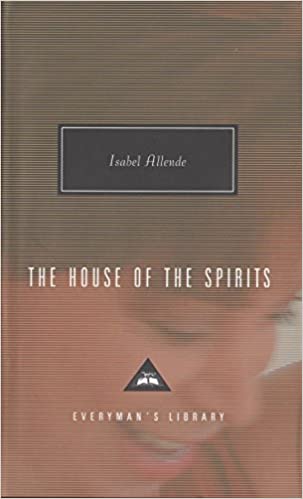
In the Times book review of her first book, The House of the Spirits (1982), there was a reference to Márquez’ One Hundred Years of Solitude.  If an author is mentioned in the same sentence as Márquez, then I am going to read her.  So, my book recommendation today is Allende’s The House of the Spirits.  If the surname sounds familiar, her father was a first cousin of Salvador Allende, President of Chile from 1970 to 1973.

Isabel Allende is a great woman writer to uplift this Women’s History Month, in that, “Her history of oppression [as a woman] and liberation is thematically found in much of her fiction, where women contest the ideals of patriarch leaders.”

Having been mentioned in the same breath as Gabriel García Márquez, considered the most influential writer in Spanish since Cervantes, Isabel Allende has been called “the world’s most widely read Spanish-language author.”

During Black History Month, I mentioned a couple of Black women writers, storytellers in the tradition of Scheherazade.  Allende is also among that group of great storytellers.

Posted in Uncategorized | Tagged , , , | Leave a comment

A Statue for the Unknown Slave Woman?

Today, in honor of Women’s History Month, I’m going to do something slightly different: honor an unknown woman — in fact, unknown women — by sharing a poem from my third collection of poetry, The Black Feminine Mystique. It is entitled, “A Statue for the Unknown Slave Woman?”

Her broad hips had launched a thousand slave ships.

On the transatlantic “trip” her fate was sealed;

She was repeatedly raped, bore slaves for an alien race.

On the auction block she stood protuberantly pregnant,

While White men gathered around her, rubbed her belly,

And then fiercely bid to own her fertile body.

America harbors the Statue of Liberty on Liberty Island,

A torch upraised in one of her hands, lighting the way,

For the tired, poor, huddled White masses yearning to be free.

Perhaps off the coast of the Carolinas, on Sullivan Island,

America should erect a statue, call it Lady Slavery,

For the stolen, shackled Black masses also yearning to be free.

Untold wealth had issued from Lady Slavery’s womb.

Why not a statue for this unknown woman, or a tomb?

Posted in ezwwaters, race, Slavery | Tagged , , | Leave a comment

Ida B. Wells: The Black Woman Crusader Against White Knights

Ida B. Wells was born into slavery on July 16, 1862.  She was “freed” by presidential proclamation and executive order (the Emancipation Proclamation) issued by President Abraham Lincoln on September 22, 1862, during the American Civil War.

Ida B. Wells became a journalist, and her most famous writing is in her pamphlet, Southern Horrors: Lynch Law and All Its Phases.  Wells was the first person to extensively document lynchings, and dispelled the myth that lynchings were reserved for Black “criminals.”  Wells exposed lynching as a practice of white men, often inspired by the siren song of white women, to intimidate and oppress Black Americans who created economic and political competition for whites.  Think the destruction of the Black Wall Street in 1923, and the mass murder of its Black residents.

Wells’ work is noteworthy for its real-time reporting on the “incendiary propaganda about Black rape that was used to justify the practice” of lynching.

If the Black Church had saints, then Ida B. Wells would be part of that celestial lineup.

In my collection of poetry, The Black Feminine Mystique, there is a poem, one of my Almost Sonnets, dedicated to Ida B. Wels, entitled “Strange Fruit.”

She waged a just war against White knights,

This patron saint of the anti‑lynching crusade.

She wielded her pen like a crusader her sword,

Exposed emasculators who’d reduced Black men

To icons to be destroyed.

Self-proclaimed Christians hell‑bent on destroying this African Priapus,

This ancient Black God who made them feel inadequate.

They castrated him and crucified him on a tree,

Commemorated this day as The Day of the Rope.

She was Isis reincarnated, the devoted sister‑wife‑mother.

She attacked with the relentlessness of a warrior‑goddess,

Revealed that mostly innocent Black men

Were victims of this strange justice.

If slavery is America’s original sin,

Then America’s Eve falsely accused the snake of seduction.

She told this story again and again, until the myth had become a reality

In the popular White imagination.

This Women’s History Month, all women, but especially white women, should read Ida B. Wells’ Southern Horrors: Lynch Law and all its Phases.

Posted in Black Shadows and Through the White Looking Glass, crime, ezwwaters, Lest We Forget, Poetry, Politics, race, raising black boys, Religion, Slavery | Tagged , , , , | Leave a comment

We Be Watchin’ You God!

Their Eyes Were Watching God!  That is one of the greatest and most meaningful titles to come out of the Harlem Renaissance.  And Zora Neale Hurston was one of the coolest women during that era, holding her own with all the male Harlem luminaries, shining as brightly.

Yeah, God, we be watchin’ you, thru 246 years of slavery, thru 72 years of sharecropping ‘n’ segregation, but we still faithful, e’en when white folk curse us, call us sons ‘n’ daughters of Ham, Uncle Toms, Toby, ‘n’ Aunt Jemimas!

Readers might find the vernacular hard to follow, but no harder than Uncle Tom’s Cabin.  Hurston had a better handle on the vernacular of Black people in the South than Harriet Beecher Stowe.  In fact, I made it through Their Eyes Were Watching God easier than Uncle Tom’s Cabin.  If the vernacular is difficult to follow – actually, it’s like a foreign language, maybe developed by Black folk in order to communicate with each other without having massa and missus any wiser – then listen to the audio book, superbly performed by Ruby Dee.

Posted in Black Shadows and Through the White Looking Glass, Lest We Forget, race, Religion, Slavery | Tagged , , , , | Leave a comment

“My Lord, What a Morning”

On the penultimate day of Black History Month, I participated in a Black History Month Celebration at my church, St. Michael-St. Malachy.  I was asked to recite a poem.  A number of youth were present at the celebration, and even though poetry should not be explained, but experienced, I provided a little context for the following poem, dedicated to Marian Anderson, the great Black Opera Singer.

If timing is everything, I chose this poem over something from my first book, Black Shadows and Through the White Looking Glass: Remembrance of Things Past and Present, simply because I thought it would resonate more with the audience.  It just so happened that Marian Anderson was born on this day, February 27th, in 1897.

I confess that I’m not a lover of opera, but I have listened to it.  My High School Music Teacher at Alexander Hamilton High School, now Paul Robeson High School, Mr. R., a Black male, introduced us to opera.  He said, even if we didn’t like it, we would have had at least experienced it.  He would mix it up though, give us some James Brown and Beethoven, Marvin Gaye and Mozart, Sarah Vaughan and Vivaldi.  At 14 years of age, I had already watched Porgy and Bess, my only claim to having experienced an Opera.

My Lord, What a Morning, is a “Negro Spiritual.”  Sometimes Anderson is credited with writing it, but she wasn’t the writer, but a great interpreter of it, and of  the Spirituals.  This song though must’ve had great significance for Anderson because it’s the title of her autobiography.

I briefly told the audience a little Marian Anderson history, that she was famous in Europe before her 1935 debut in the States.  She was a contralto.  She had a three-octave range.  The famous conductor, Arturo Toscanini, said that Marian had “a voice one hears once in a hundred years.”

The racism of some Americans didn’t want to hear Marian’s voice.  In 1939, the Daughters of the American Revolution (DAR) refused to allow Anderson to sing to an integrated audience in Constitution Hall in Washington, D.C.  The First Lady, Eleanor Roosevelt, who was a member of the DAR, resigned from it, something that endeared me to FDR’s wife.  Instead of singing at Constitution Hall, on Easter Sunday, April 9, 1939, on the Lincoln Memorial steps, Marian sang before an integrated audience (which included the President and First Lady, who made this event happen) of more than 75,000 people, and a radio audience in the millions.

So, it is only appropriate that this poem bears the same name as the spiritual and Anderson’s autobiography

My Lord, What a Morning

I am Black and proud,

O Daughters of the American Revolution,

Like the soil of Creation,

Like the land of Mother Africa.

Do not look at me with contempt because I am Black.

Your mythology says I am sun‑burnt,

That my forefathers were cursed.

My forebears sold my ancestors into slavery,

Made generations toilers of the land;

But the land I made great rejected me

When I came up from slavery.

You found other ways to keep me down,

Would not allow me to sing my song

In this land that is mine as well as yours.

My forefathers fought in the American Revolution,

My foremothers supported the Civil War,

My father fought to make the world safe for democracy,

My brother would fight to end all wars.

How dare you not allow me to sing my song!

I will lift my voice and sing,

I will sing a song of sweet liberty,

I will sing so loud the earth will be torn asunder,

I will sing so loud those war dead will rise.

Listen, and hear the angels weep,

Listen, the temple’s curtains have been rent,

Listen, and know that God speaks through me.

Hear my voice, O Daughters of the American Revolution,

Hear my voice and eat your hearts out!

The Black Feminine Mystique

Posted in Black patriotism, Black Shadows and Through the White Looking Glass, ezwwaters, Lest We Forget, Poetry, race, Religion, Slavery | Leave a comment

The Three Pillars of American Society: Slavery, Segregation, and Hyperincarceration

America stands on three pillars: slavery, segregation, and hyperincarceration (incorrectly referred to as “mass incarceration”).  These “pillars” implicate and impact mostly Black people, but also all people living in America or dreaming about coming to America.  In fact, the U.S. Constitution and its Amendments, as well as major U.S. Supreme Court decisions, revolve around the first two pillars.  The third, hyperincarceration, has not yet been addressed by the High Court in a meaningful way.

Whenever anyone attempts to relegate “Black History” to one month, think about the above three pillars.  The Black experience, and not just the pain and the agony, is woven through the American tapestry.  Indeed, the very soil of America has been fertilized by Black bodies, and watered with Black blood.

In honor of Women’s History Month, I will uplift not only women writers, but also women who are phenomenal, and otherwise.  I’ll begin with Angela Davis, with a book recommendation that addresses these three pillars upon which America stands.

Are Prisons Obsolete? is a short, provocative polemic.  I used it as a primary text in a course, “The Psychological Impact of Prison on Society and Families,” I taught at York College.

President Calvin Coolidge, during the “Roaring Twenties,” said, in a 1925 speech to newspaper editors, “The business of America is business.”  Jessica Mitford, in her 1974 book, Kind & Usual Punishment: The Prison Business, could very well have said, “The business of America is imprisonment.”

For the last twenty years, the U.S. has held the dubious distinction of imprisoning more people than any other nation in the world, and of holding people in prison longer than any other nation in the world.  And the stats go on and on. . .

I was first introduced to Angela Davis through George Jackson’s prison letters in Soledad Brother.  Jackson was serving an indeterminate sentence of one year to life for a $70 gas station robbery.  Ten years later he was dead, shot and killed by guards during an alleged attempted escape from prison.

Angela Davis looks at prisons and asks us are they really necessary?  I would add, are prisons necessary at the scale we have built them?

At one time Americans could not imagine a society without slavery.  Granted, it took a bloody Civil War that lasted a little more than four years to put an end to that peculiar institution.  Sharecropping and segregation immediately replaced slavery, with the stamp of approval of the U.S. Supreme Court in its 1896 decision, Plessy v. Ferguson.  It took the High Court 58 years – “the law’s delay” – to revisit and overturn this ruling in Brown v. Board of Education.  Segregation, of course, did not end with this landmark decision in 1954.

In his inaugural speech as Governor of Alabama, on January 14, 1963, George Corley Wallace said, and it’s worth quoting in full:

Today I have stood, where once Jefferson Davis stood, and took an oath to my people. It is very appropriate then that from this Cradle of the Confederacy, this very Heart of the Great Anglo-Saxon Southland, that today we sound the drum for freedom as have our generations of forebears before us done, time and time again through history. Let us rise to the call of freedom-loving blood that is in us and send our answer to the tyranny that clanks its chains upon the South. In the name of the greatest people that have ever trod this earth, I draw the line in the dust and toss the gauntlet before the feet of tyranny . . . and I say . . . segregation today . . . segregation tomorrow . . . segregation forever.

— Governor George Corley Wallace

Let’s just state, for the sake of argument, that segregation ended under Lyndon Johnson’s Great Society.  Immediately thereafter, in 1968, Richard Nixon ran a successful campaign for president against the Great Society, declaring that it was “lawless.”  Here, I’ve argued, is the beginning of the modern War on Crime, and the erection of the third pillar upon which America stands: mass incarceration (read hyperincarceration).

From this point on, peaking in the 1980’s, even in New York under a “liberal” Governor, Mario Cuomo (the Master Prison Builder), prisons become the business of America.  But Angela Davis argues, those first two pillars, slavery and segregation, people thought were “forever.”  Why not prisons?

There’s a movement to “decarcerate” the nation, and there are also prison abolitionists, who have a harder sell.  I read somewhere, from an FBI profiler, that if we wanted to imprison people as punishment, not for punishment, then it wouldn’t be “mass imprisonment,” but there would be a focus on the “truly dangerous.”  He reckoned this at less than 10% of the population currently imprisoned.  Imagine decarcerating by 90%!

The fundamental problem with the prison business is that it doesn’t address crime causation.  It doesn’t even attempt to “prevent” crimes.  It is reactionary, which doesn’t enhance public safety, because the “deed” has been done.  And imprisonment doesn’t deter those not yet arrested because, for the most part, people who commit crimes do not leave their homes and say, “Today, I’m going to commit a crime and get caught.”  But that’s another conversation.  The business of locking people up as our first response to crime hasn’t worked.  I would like to believe that the architects of prisons and the people who think that “more police, more prisons, and longer prisons sentences” know better, that we cannot solve historical social problems that stem not only from gross inequality, but slavery and segregation.  And we certainly should not use prisons as a means of social control of young Black and Brown men.  (Read Charles E. Silberman’s Criminal Violence, Criminal Justice on this point.)

If Americans are willing to not simply parrot those self-evident truths about life, liberty and the pursuit of happiness from the Declaration of Independence, but to actively promote them, then prisons will become obsolete.

Posted in Black Shadows and Through the White Looking Glass, crime, ezwwaters, Justice Chronicles, Lest We Forget, Life Sentences, Politics, race, Slavery, Sometimes Blue Knights Wear Black Hats, Streets of Rage | Tagged , , , , , , , , , , , , , , , , , | Leave a comment

A Farewell to Black History Month, 2022

Black History Month is in the shortest month of the year.  Caesar Augustus, thinking that the month in honor of his name was too short, took days from February, short changing what would become Black History Month.  In fact, when Black History Month was first celebrated, in February 1926, the month and year my father was born, it was only a week long and was called Negro History Week. 

I previously mentioned how my original birth certificate (I was born at the beginning of the Decisive Decade, the 1960s) lists me as a “Negro.”  (Elsewhere I mentioned how my maternal grandfather came to America from Barbados by way of Panama – he was working on the Panama Canal – through Ellis Island, and in the Ellis Island records he is listed as “African.”  I would wager that a clerk on Ellis Island recorded him as “African” to differentiate him from American born descendants of Africans, that is, “Negros.”  This naming, which was probably not claimed by my maternal grandfather, was just one more ploy to divide and conquer Africans in the Diaspora, and the tragedy is how, to this very day, people from the Caribbean look to differentiate themselves from native born Black folk in America.  The irony is that Black folk in America bore the brunt, the whips and scorns of American society, and challenged laws that would even deny  Black folk from other countries where the slave ships docked their fundamental Constitutional and human rights, and made it easy for them to emigrate to these here United States.  In fact, anyone who emigrates to the United States should thank Black folk, because Black folk have always challenged America to live up to her professed ideals to become a “more perfect Union,” and they are beneficiaries of Black folk’s struggles, and triumphs.)

Carter G. Woodson launched “Negro History Week.”  He is considered the “father of black history.”  He was born in 1875, just 10 years after the Confederate Rebels’ defeat in the Civil War.  He was the second Black person to obtain a PhD from Harvard University, in 1912, after W.E.B. DuBois, and he is the only individual whose parents were enslaved in the United States to obtain a PhD.

Carter was one of the first scholars to study the history of the Diaspora, including Black history.  He founded The Journal of Negro History in 1916.  Speaking of “Negros,” another scholar I mentioned this Black History Month, Rayford W. Logan (1897-1982), preferred the term “Negro” to that of Black,” as did many of his contemporaries.  But note DuBois’ The Souls of Black Folk, published in 1903.  (Note these Black Scholars, born in the late 1800s, and what they achieved.)

My last book recommendation is from the Father of Black History.  His The Mis-Education of the Negro, in effect, states that Negros are being “culturally indoctrinated,” not “educated.”  This holds true to this day, but I would add Americans, writ large, are miseducated. 

In Truth, our history was not knowing; it was being shielded from the truth. That was the American way.

— James Patterson

I hope the books I have recommended this Black History Month will help you find the way to the truth about Black history.

A farewell to Black History Month, 2022.

Posted in Black Shadows and Through the White Looking Glass, Lest We Forget, race, Sometimes Blue Knights Wear Black Hats, Streets of Rage | Tagged , , , , , | Leave a comment

Roots — Strange and Forbidden Fruit

“Roots!”

I hate “slave movies,” perhaps more than white Americans hate addressing the issue of slavery and the black shadows it casts on America and American history to this very day.

Not a day goes by in America where race doesn’t rear its ugly head, even in seemingly innocent encounters, even in a place as diverse (and segregated) as New York City.  I have lost count of how many times, on the subway and on the crowded streets of New York City, I’ve made fleeting eye contact with a white woman and I see fear, and fantasy, play across her forehead like a small flat screen TV.  You could chalk this up to my overly active imagination as a writer, or the fact that I am well-read and there are hundreds of years of plays and stories and movies and TV shows that play on this fear, and fantasy, think Othello the Moor; Aaron the Moor (from Shakespeare’s Titus Andronicus), Mandingo; Jack Johnson; Joe Christmas (from William Faulkner’s Light in August, which should be read alongside James Weldon Johnson’s The Autobiography of an Ex-Colored Man);  Bigger Thomas; Emmett Till; and The Exonerated Five (the NYC Central Park Jogger Case).  I know what images flash across white women’s minds, because they flash across mine, too, because we have been conditioned to buy into all the stereotypes about each other, but mine is informed by the collective unconscious and all those voices in my head from Black men who hung from poplar trees, and the fact that Black and white in America share a history that spans hundreds of years of violence, most perpetrated against Black people by white people.

Using 1619 as a starting point of slavery in the “United States,” and 1865 as the end of slavery in the U.S., that’s 246 years of slavery.  The nation itself is only 246 years old.  Let’s then say that legal segregation began in 1877, at the end of Reconstruction, and “ended” in 1977, for the sake of argument, when Roots’ first episode aired on TV.  That’s 100 years of Black dreams denied and destroyed.  And the era of “mass incarceration” (hyper-incarceration), beginning in 1968 and ending in 2000, I’ll leave for another time.

Roots, by Alex Haley, was published when America turned 200 years old, in 1976.  If timing is everything, then it’s release was perfect.  A year later, the miniseries aired to a record-breaking audience of 130 million viewers. This was probably the first time in American history that collectively Americans, Black and white, took an honest look at slavery and its legacy.

Given this legacy, and the times we currently live in, Roots should be re-read, and introduced to a new generation.

Although I hate “slave movies,” I love books.  Roots opened up the idea of exploring my roots, and with the science of DNA, we can DNA time travel and get a sense of our ancestors.

Roots!

Posted in Genealogy, Lest We Forget | Tagged , | 2 Comments