On this day in American history, August 7, 1930– Mob of 10,000 Lynches Two Black Men in Marion, Indiana

On August 7, 1930, a white mob lynched Thomas Shipp and Abram Smith in Marion, Indiana. The two young black men, 18 and 19 years old respectively, had been arrested that afternoon. They were accused of attacking a young white couple, beating and fatally shooting the man, and attempting to assault the woman. Once the men were detained, word of the charges spread and a growing mob of angry white residents gathered outside the county jail.

Around 9:30 p.m., the mob attempted to rush the jail and was repelled by tear gas. An hour later, they successfully barreled past the sheriff and three deputies, grabbed Shipp and Smith from their cells as they prayed, and dragged them into the street. By then numbering between 5000 and 10,000 people (half the white population of Grant County) the mob beat, tortured, and hung both men from trees in the courthouse yard, brutally executing them without benefit of trial or legal proof of guilt. As the men’s bodies hung, members of the mob re-entered the jail and grabbed 16-year-old James Cameron, another youth being held for the crime. The mob beat Cameron severely and were preparing to hang him alongside the others when a member of the crowd intervened and insisted he was innocent. Cameron was released and the mob later dispersed.

Enraged by the lynching, the NAACP traveled to Marion to investigate, and later provided United States Attorney General James Ogden with the names of 27 people believed to have participated. Though the lynching and its spectators were photographed, local residents claimed not to recognize anyone pictured and no one was charged or tried in connection with the killings. A photograph of Shipp’s and Smith’s battered corpses hanging lifeless from a tree, with white spectators proudly standing below, remains one of the most iconic lynching photographs. After seeing the photo in 1937, New York schoolteacher Abe Meeropol was inspired to write “Strange Fruit,” a haunting poem about lynching that later became a famous song recorded by Billie Holiday.

“The Equal Justice Initiative (EJI) is proud to present A History of Racial Injustice – 2018 Calendar.  America’s history of racial inequality continues to undermine fair treatment, equal justice, and opportunity for many Americans.  The genocide of Native people, the legacy of slavery and racial terror, and the legally supported abuse of racial minorities are not well understood.  EJI believes that a deeper engagement with our nation’s history of racial injustice is important to addressing present-day questions of social justice and equality.

Posted in Uncategorized | Tagged , , , , , , , , , , | Leave a comment

On this day in Amrican history, August 5, 2014 — Black Workers Sue Memphis Cotton Gin for Racial Discrimination

In June 2014, after months of racial discrimination, harassment, and threats from a white supervisor, Untonio Harris and Marrio Mangrum, two African American workers at the Atkinson Cotton Warehouse, filed a federal complaint with the Equal Employment Opportunity Commission (EEOC) in June 2014. The supervisor of the Memphis, Tennessee cotton gin refused them permission to drink from a “whites only” water fountain, referred to them using racial slurs, and even threatened them with hanging.

The discrimination occurred daily. African American employees were called “monkeys” and told “you need to think like a white man.” The supervisor would yell: “Hey, black boy, get over there and get my cotton.” Mr. Harris even recalls that the supervisor “pulled his pants down in front of us and told us to kiss his white tail.”

Mr. Harris used his cell phone to record the racist comments. When Mr. Harris asked to use a microwave the supervisor told him he couldn’t, “because you are not white.” The supervisor, in reference to a water fountain said: “I need to put a sign here that says ‘white people only’.” When Mr. Harris asked what would happen if he drank from the fountain, the supervisor replied: “That’s when we hang you.”

The discrimination faced by the employees is a reminder of the not so distant legacy of the Jim Crow era. In the recording, the supervisor recalls the days of segregation favorably. “Back then, nobody thought anything about it. Now everybody is made to where to think it’s bad,” says the supervisor.

After the reports of discrimination became public, the owner of the warehouse claimed no knowledge of the abuse and stated that warehouse management outsourced to another company. The management company, Federal Compress, has since stated that the supervisor is no longer employed with them.

However, on August 5, 2014, Harris, Mangrum and a third employee named Vashone Ford filed a federal lawsuit against the warehouse owners, seeking anti-discrimination training for all employees and future monitoring of the business environment. All three men were fired in early 2014 after reporting the racist conditions to their supervisors.


“The Equal Justice Initiative (EJI) is proud to present A History of Racial Injustice – 2018 Calendar.  America’s history of racial inequality continues to undermine fair treatment, equal justice, and opportunity for many Americans.  The genocide of Native people, the legacy of slavery and racial terror, and the legally supported abuse of racial minorities are not well understood.  EJI believes that a deeper engagement with our nation’s history of racial injustice is important to addressing present-day questions of social justice and equality.

Posted in Uncategorized | Tagged , , , , , , , , , , | Leave a comment

On this day in American history, August 4, 1964 — Bodies of Murdered Civil Rights Workers Found in Mississippi

In 1964, Michael Schwerner, a white New Yorker working with the Congress of Racial Equality (CORE), traveled to Mississippi to organize black citizens to vote. Schwerner worked extensively with James Chaney, a black CORE member from Meridian, Mississippi. The activist pair led an effort to register black voters and helped Mt. Zion Methodist Church, a black church in Longdale, Mississippi, create an organizing center. These developments angered local members of the Ku Klux Klan, and on June 16, 1964, while Schwerner and Chaney were absent, Klansmen torched the church and assaulted its members.

On June 21, 1964, Schwerner and Chaney were joined by a new white CORE member named Andrew Goodman. The trio investigated the church burning and then headed for Meridian, Mississippi. Aware that they were in constant danger of attack, Schwerner told colleagues in Meridian to search for them if they did not arrive by 4:00 p.m. While passing through the town of Philadelphia, Mississippi, the three men were stopped by Neshoba County Deputy Sheriff Cecil Price.

A member of the Ku Klux Klan, Price had been monitoring the activities of the civil rights workers and he arrested and jailed them that day. After about seven hours of detention, the three men were released on bail and Price escorted them out of town. Price returned to Philadelphia to drop off another officer and then raced to intercept the men. He again arrested them but was soon joined by fellow Klansmen who planned to murder the three civil rights workers. Michael Schwerner, James Chaney, and Andrew Goodman were shot dead and buried a few miles from Mt. Zion Methodist Church. More than a month later, after national news coverage and an intensive search by federal authorities, their remains were discovered on August 4, 1964.


“The Equal Justice Initiative (EJI) is proud to present A History of Racial Injustice – 2018 Calendar.  America’s history of racial inequality continues to undermine fair treatment, equal justice, and opportunity for many Americans.  The genocide of Native people, the legacy of slavery and racial terror, and the legally supported abuse of racial minorities are not well understood.  EJI believes that a deeper engagement with our nation’s history of racial injustice is important to addressing present-day questions of social justice and equality.

Posted in Uncategorized | Tagged , , , , , , , , , , , | Leave a comment

On this day in American history, August 3, 1919 — Race Riots End in Chicago, Illinois, with 38 Dead

During the Great Migration, Chicago, Illinois, was a popular destination for many black migrants leaving the South in search of economic opportunity and escape from racial violence. The city’s black population swelled from 44,000 in 1910 to 109,000 in 1920, joining thousands of whites who relocated to Chicago in search of work. Many black newcomers settled next to neighborhoods of European immigrants on Chicago’s south side, where industrial jobs were plentiful. Although they had escaped the Southern brand of racial violence, blacks in Chicago still faced racial animosity due to overcrowding, employment disputes with whites, poor relations with police, and segregation enforced by custom rather than law.

In the 1910s, segregation in Chicago was not as strict or legally regulated as in Southern cities, but beaches were informally segregated by custom. On July 27, 1919, a black youth named Eugene Williams drowned at a Chicago beach after a white man struck him with a rock for drifting to the “white” side of the ocean. Responding police declined to arrest the rock thrower and instead arrested a black man for a minor offense. Blacks protested the arrest and racial confrontations ensued, sparking violence that lasted until August 3, 1919.

During the riots, white mobs entered black sections of Chicago’s south side and set fire to more than 30 properties. Police repelled an attack against Provident Hospital, which served mostly black patients, and 6000 national guard troops were called in to restore order. At the riot’s end, 23 blacks and 15 whites were dead, 537 people were injured, and about 1000 people were left homeless.


“The Equal Justice Initiative (EJI) is proud to present A History of Racial Injustice – 2018 Calendar.  America’s history of racial inequality continues to undermine fair treatment, equal justice, and opportunity for many Americans.  The genocide of Native people, the legacy of slavery and racial terror, and the legally supported abuse of racial minorities are not well understood.  EJI believes that a deeper engagement with our nation’s history of racial injustice is important to addressing present-day questions of social justice and equality.

Posted in Uncategorized | Tagged , , , , , , | Leave a comment

On this day in American history, August 2, 1964 — Claims of Police Brutality Spark Riots in Jersey City, New Jersey

The Jersey City Riots began on August 2, 1964, when police attempted to arrest Dolores Shannon, a 26-year-old black woman, in the Booker T. Washington housing project for alleged disorderly conduct. Walter Mays, 34, a black man sitting on his nearby porch, objected that police were handling Ms. Shannon too harshly. Though police claimed Mr. Mays attacked them, witnesses insisted police physically attacked Mr. Mays and then arrested him. A crowd of black people who had gathered at the scene chanted “police brutality!” in protest, and responding patrolmen were pelted with rocks and garbage. In the three days of riots that followed, black community members angered by police mistreatment and economic depression stoned cars and looted from local stores.

Experiencing the most extreme impacts of the city’s economic downturn, Jersey City’s African American community of 280,000 people was primarily comprised of low-income families living in racially segregated neighborhoods plagued by police brutality, limited recreational resources, and poor environmental maintenance from the city government. When the riots erupted, leaders from the local NAACP chapter and the Congress of Racial Equality (CORE) stepped forward to mediate between the African American community and Jersey City authorities led by Mayor Thomas J. Whelan.

Through these leaders, the black community presented Mayor Whelan with a list of demands: accessible recreational areas for black youth; more black police officers; and better living conditions. NAACP and CORE leaders urged city officials to consider the demands, but Mayor Whelan was resistant and accused the leaders of bringing “hooligan youth” to meet with him. A first meeting, held on August 3rd amidst continuing rioting, lasted just twenty-six minutes and made no progress.

The rioting ultimately ended on the third night of unrest, August 4th, when city officials dispatched 400 police officers to the streets. That same night, black clergy traveled through the city urging an end to the riots using NAACP bullhorns and sound equipment to announce that one of the community’s demands had been met: the city had agreed to re-open two closed local parks.

The Jersey City riot, one of the first race riots to occur after the passage of the Civil Rights Act of 1964, left 46 people injured, 71 homes and businesses damaged, and 52 people under arrest.

“The Equal Justice Initiative (EJI) is proud to present A History of Racial Injustice – 2018 Calendar.  America’s history of racial inequality continues to undermine fair treatment, equal justice, and opportunity for many Americans.  The genocide of Native people, the legacy of slavery and racial terror, and the legally supported abuse of racial minorities are not well understood.  EJI believes that a deeper engagement with our nation’s history of racial injustice is important to addressing present-day questions of social justice and equality.

Posted in Uncategorized | Tagged , , , , , , , , , , | Leave a comment

On this day in American history, August 1, 1944 — White Philadelphia Transit Workers Strike to Protest Promotion of Black Employees

As the United States entered World War II, Philadelphia, Pennsylvania, quickly became one of America’s largest war production sources. As many as 600,000 workers relied on the Philadelphia Transportation Company (PTC) for transportation to factories and other workplaces.

On August 1, 1944, white PTC employees started a strike to protest the company’s decision to promote eight black workers to the position of trolley driver, a job previously reserved for white men. The men were promoted after President Franklin D. Roosevelt issued Executive Orders 8802 and 9436, which prohibited companies with government contracts from discrimination based on race or religion and forced companies to include a nondiscrimination clause in their contracts.

White PTC employees James McMenamin, James Dixon, Frank Thompson, and Frank Carney led the strike, which they threatened would continue until the black workers were demoted. The strike grew to include over 6000 workers, crippling war production and impacting the entire city. It prevented nearly two million people from traveling and cost businesses almost $1 million per day.

On August 3, 1944, the third day of the strike, President Roosevelt authorized the War Department to take control of the PTC. Two days later, 5000 United States Army troops moved into Philadelphia to prevent uprisings and protect PTC employees who crossed the picket line. Despite the military presence, the strike sparked thirteen acts of racial violence, including several non-fatal shootings.

After more than a week, the strike ended and PTC employees returned to work after being threatened with termination, loss of draft deferments, and ineligibility for unemployment benefits. By September 1944, the PTC’s first black trolley drivers were on duty.

“The Equal Justice Initiative (EJI) is proud to present A History of Racial Injustice – 2018 Calendar.  America’s history of racial inequality continues to undermine fair treatment, equal justice, and opportunity for many Americans.  The genocide of Native people, the legacy of slavery and racial terror, and the legally supported abuse of racial minorities are not well understood.  EJI believes that a deeper engagement with our nation’s history of racial injustice is important to addressing present-day questions of social justice and equality.

Posted in Uncategorized | Tagged , , , , , , , , | Leave a comment

On this day in history — July 31, 1919 — White Mobs Set Over 30 Fires in Chicago’s Black Communities

Before noon on July 31, 1919, angry white mobs had started more than thirty fires in the African American residential area of Chicago. Far from an isolated incident, these instances of arson were part of an extended barrage of violence perpetrated against Chicago’s black community in the summer of 1919 – a season that came to be known as “Red Summer” for the extensive racial violence that erupted in major cities throughout the country during that season. The five days of riots and attacks that upended Chicago are widely considered the worst of the Red Summer race riots.

The Chicago Riots began on July 27, 1919, after Eugene Williams, an African American teenager, drowned in Lake Michigan after being struck in the head by a rock thrown by a white man angry that Williams and friends had drifted into the “white side” of the beach. Responding police refused to arrest the white man who was identified as having thrown the rock, and instead arrested a black man at the scene. When black onlookers complained they were met with violence, and widespread rioting between African American and white Chicagoans soon spread throughout the city’s black residential areas.

When the riots ended on August 3rd, after intervention by the state militia, five days of gunfire, beatings, and burnings had left 15 whites and 23 African Americans killed, 537 people injured, and 1000 African American families homeless.

“The Equal Justice Initiative (EJI) is proud to present A History of Racial Injustice – 2018 Calendar.  America’s history of racial inequality continues to undermine fair treatment, equal justice, and opportunity for many Americans.  The genocide of Native people, the legacy of slavery and racial terror, and the legally supported abuse of racial minorities are not well understood.  EJI believes that a deeper engagement with our nation’s history of racial injustice is important to addressing present-day questions of social justice and equality.

Posted in crime, Lest We Forget | Tagged , , , , | Leave a comment

On this Day in History, July 4, 1910 — Jack Johnson Wins Fight of the Century Against “Great White Hope” Jim Jeffries

Jack Johnson, an African American man born in Galveston, Texas, in 1878, began a professional boxing career in 1897. At the turn of the 19th century, boxing was new on the commercialized sports scene and racial discrimination permeated the sport in both spectatorship and competition. Black boxers were often barred from competing in championship title matches. After much success, Johnson wanted to arrange a fight with reigning heavyweight champion James Jeffries, a white boxer. Jeffries, who refused to fight black boxers, turned Johnson down and retired undefeated in 1905.

Canadian boxer Tommy Burns replaced Jeffries as the heavyweight champion and, after being taunted by Johnson numerous times in previous fights, agreed to face him in an interracial match. On December 26, 1908, at 6-foot-1 and 192 pounds, Johnson defeated Burns convincingly in a 14-round match that had to be stopped by police. Officials deemed Johnson the winner by technical knockout, making him the first black heavyweight champion in boxing history.

Prompted by white supporters outraged by a black world champion, Jim Jeffries came out of retirement to fight Johnson for the heavyweight title. The undefeated Jeffries was nicknamed the “Great White Hope,” and racial tension was high leading up to the fight. Finally, on July 4, 1910, the anticipated showdown occurred in Reno, Nevada, in front of 20,000 spectators. Johnson retained the heavyweight title and shocked the nation when Jeffries, who had been knocked down twice, threw in the towel in the 15th round to avoid a knockout loss.

Posted in Uncategorized | Tagged , , , , | Leave a comment

Prison Walls v. Love — Review of “Memoirs of a Prison Lawyer/Prison Wife,” by Claudette Spencer-Nurse

Memoirs of a Prison Lawyer/Prison Wife, by Claudette Spencer-Nurse, is a love story.  It is an improbable love story.  It is a love story that has defied the odds.  It is a love story for the ages.  It is a love story that is real, yet it has a mythic quality.  The author herself sees this.  In reflecting on this love, she writes:

In 1987, when CBS began airing Beauty and the Beast, an American fantasy-drama series about a relationship between a mythic man-beast named Vincent and a New York City assistant district attorney named Catherine, I felt like I was watching the story of my life.

Ms. Spencer-Nurse begins the story of her life, like many good story-tellers, in medias res.  It is a snowy day in November 1984.  As an attorney who has been practicing law for a couple of years, she has returned to New York City, the city of her birth, after having graduated from Temple Law School and living in Philadelphia for a couple of years.  She is now working for the Prisoners’ Rights Project (PRP) of the Legal Aid Society of New York.  She is visiting Elmira Correctional Facility, once called a Reformatory when it first opened in 1876, to interview men confined there about Ku Klux Klan activity at the prison.

At the prison it could just as well be 1876, when the first incarnation of the KKK was dying as Reconstruction was coming to an end.  Ms. Spencer-Nurse is there because a man incarcerated at Attica Correctional Facility, one of New York’s most (in)famous prisons, wrote a letter to PRP alleging that when he was at Elmira he had been dragged out his cell by guards clothed in white sheets, assaulted and called racial slurs.  He also alleged that some guards bragged about being members of the KKK.

One of the men Ms. Spencer-Nurse interviews, Ernest Nurse, who would become her husband, has not been at the prison very long.  He doesn’t know much about any KKK activity going on at Elmira.

After the visit, Ms. Spencer-Nurse tells her law school buddy, Beverly, about Ernest.  For ages, poets have written about the power of love, that when it truly happens, you know, that it can conquer all (omnia vincit amor), that it is…inexplicable.  As for “love at first sight,” it’s a myth, until it happens.  Both Claudette and Ernest experience the same thing, the gravitational pull of love that applies even in the prison universe.

Ernest tells Claudette his story.  He killed a man.  He is serving 25 years to life.  He won’t be eligible for parole until November 2002, for nearly another 18 years.

Over the next 18 years, Claudette visits Ernest in various prisons.  They marry in 1989, shortly after an individual in prison, Richard Langone, and his fiancée, successfully challenge a law prohibiting marriage of people serving sentences with a maximum of life.

The life of a prison wife is not easy.  As Claudette later points out in the book, many of these marriages fail.  According to various researchers, the U.S. divorce rate is about 50%.  Surely, the prison divorce rate is probably much higher, especially post-release.  Claudette notes, “Of the approximately fifty women I’d met who married a man in prison or had been married to a man before his incarceration, I know of only four couples besides myself and Ernest who are still together after their release.”

After seven years of marriage, Claudette tells Ernest she wants a divorce.  She works on the petition but doesn’t file it.  She can’t bear the thought of spending the rest of her life without Ernest.  And then there are people, including family and friends, who question the sanity of women who marry men in prison, probably the main reason why many keep this a secret from them.  Certainly, something must be wrong.  Claudette can’t help but wonder if something is wrong with her.  In the very beginning, when she realizes that she is falling in love with a man who might be spending the rest of his life in prison, she begins to see a psychologist.

Claudette doesn’t report if this prison love has a diagnosis.

Although this is a love story, Claudette lives her life, personally and professionally, while her husband is in prison.  Many other women in such relationships put their lives on hold and let it revolve around their incarcerated men.

As an attorney for the Prisoners’ Rights Project, Claudette is involved in many significant cases.  She is most proud of the work she did on the case that first brought her to Elmira, Santiago v. MilesIn that case, the Judge ruled that “the plaintiffs had proved the existence of a pattern of racism at Elmira that went ‘beyond verbal taunts and racial slurs uttered by guards to minority inmates.’”

As an attorney, Claudette’s work was not simply confined to prison issues.  Long before #BlackLivesMatter, she was involved in protests over the killings of unarmed Black men, beginning with the killing of West African immigrant Amadou Diallo on February 4, 1999.

Claudette states that she is most proud of her work in Santiago v. Miles, but the work she did on parole reform, founding and spearheading the Coalition for Parole Restoration (CPR), is the work that probably led to her husband being released at his very first parole board hearing, when less than 5% of men similarly situated were granted parole on their first appearance.  It is important to note that long before other organizations and attorneys jumped on the band wagon of parole reform, Claudette was zealously advocating for meaningful parole reform.  Indeed, almost any positive movement towards parole reform can be credited to Claudette’s work with CPR.

In conclusion, this book is a good and easy read, not bogged down in legalese.  It is a book that has something for various audiences, including families impacted by the prison-industrial complex, people in prison – they would want to read the full transcript of Ernest’s parole interview, which is practically a primer on how to present oneself at the parole board – advocates for prison reform, and people who love a good love story.

_________________________

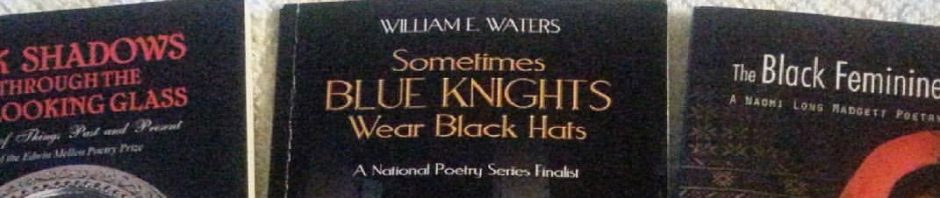
William E. Waters is the author of three books of poetry, including the award-winning Black Shadows and Through the White Looking Glass, and a novel.  He’s an advocate for a just society.  He has worked with Claudette Spencer-Nurse at CPR for parole reform.  Check out and subscribe to his blog at www.ezwaters.wordpress.com.
Posted in Amadou Diallo, Black Shadows and Through the White Looking Glass, crime, Family, Justice Chronicles, Life Sentences, Parole, parole board, police involved shooting, police-involved killing, race, Reentry, Relationships, remorse | Tagged , , , , , , , , , , , , , , , , , , , , , , , | 1 Comment

On this day in history, June 9, 1963 –Fannie Lou Hamer Arrested and Beaten in Winona, Mississippi

On June 9, 1963, while returning from a voter registration workshop in South Carolina, Fannie Lou Hamer and other civil rights activists were arrested in Winona, Mississippi. Ms. Hamer and the other activists had been traveling in the “white” section of a Greyhound bus despite threats from the driver that he planned to notify local police at the next stop. When the bus arrived at the Winona bus depot, the activists sat at the “white only” lunch counter inside the terminal. Winona Police Chief Thomas Herrod ordered the group to go to the “colored” side of the depot and arrested them when one of the activists tried to write down his patrol car license number.

At the county jail, white jailers forced two African American prisoners to savagely beat Ms. Hamer with loaded blackjacks and she was nearly killed. As she regained consciousness, she overheard one of the white officers propose, “We could put them SOBs in [the] Big Black [River] and nobody would ever find them.”

Ms. Hamer never fully recovered from the attack; she lost vision in one of her eyes and suffered permanent kidney damage, which contributed to her death in 1977 at age 59. Lawyers with the Student Non-violent Coordinating Committee filed suit against the Winona police who brutalized the activists but an all-white jury acquitted them. Despite the trauma she experienced, Ms. Hamer returned to Mississippi to continue organizing voter registration drives and remained active in civil rights causes until her death.

“The Equal Justice Initiative (EJI) is proud to present A History of Racial Injustice – 2018 Calendar.  America’s history of racial inequality continues to undermine fair treatment, equal justice, and opportunity for many Americans.  The genocide of Native people, the legacy of slavery and racial terror, and the legally supported abuse of racial minorities are not well understood.  EJI believes that a deeper engagement with our nation’s history of racial injustice is important to addressing present-day questions of social justice and equality.

Posted in Uncategorized | Leave a comment