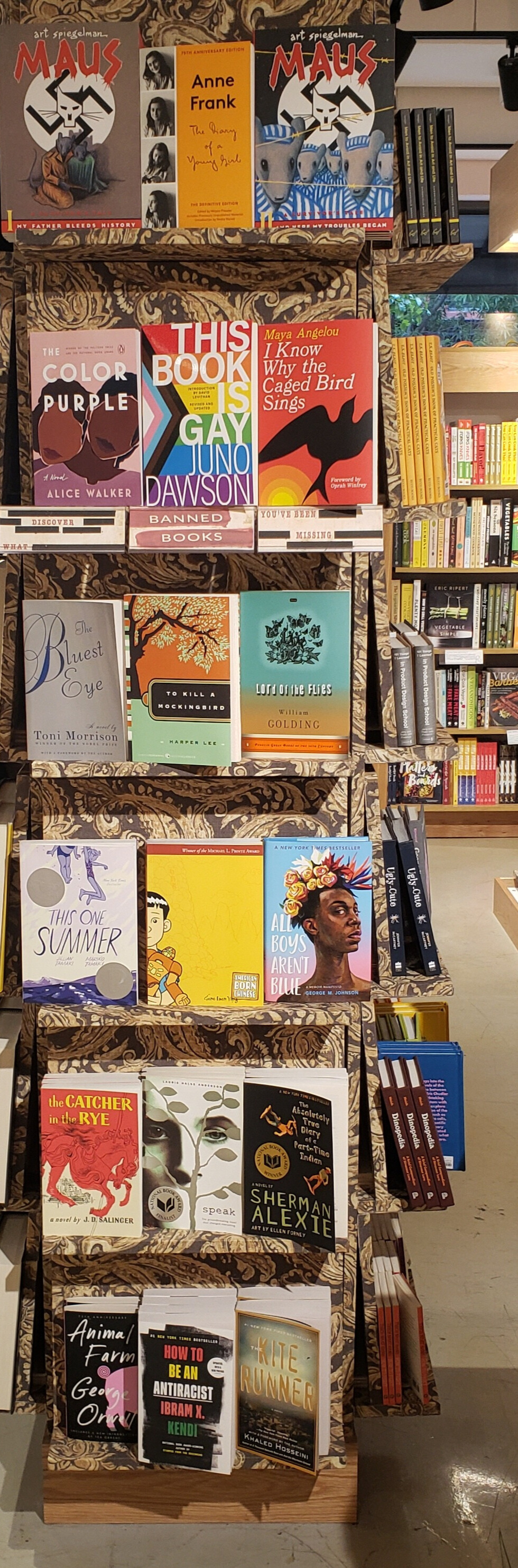
You’re Once, Twice, 34 Times a “Felon”

Recently, in “The President’s Brief” from The Marshall Project, Carroll Bogert penned an op-ed piece in The Washington Post.  She wrote:

Since Donald Trump was convicted of 34 felonies last week, gleeful headlines have sprouted across the media, with a new descriptor for the former president: “felon.”

“Donald Trump, Felon.” The New York Times

“Trump is a felon. Here’s why that should matter in the 2024 race.” The Washington Post

“Injustice: First Felon President.” New York Post

Ms. Bogert goes on about how the word felon had fallen into disuse, and that “the impetus behind the sudden widespread use of the word ‘felon’ is to take Trump down a peg, to label him as no better than a common criminal. And that is the problem.”

Years ago, that word (“felon”) was fraught with stigma, a stigma that stuck for a lifetime, but it mostly stuck to Black and Brown people, not the rare Great White Defendant.

More than 20 years ago, people impacted by the criminal legal system pushed back on the various stigmatizing terms inherent in the criminal legal system and advised the use of people first language.  Eddie Ellis, founder of the Center for Nuleadership on Urban Solutions and considered by many impacted by the criminal legal system the Dean of the Criminal Legal System and the Nontraditional Approach to the Criminal Legal System, wrote about people first language when talking or writing about people impacted by the criminal legal system.  Trump is no exception, in the sense of using people first language, despite his conviction on 34 felonies.

Note though to the President of The Marshall Project. People first language as it relates to people impacted by the criminal legal system was first uplifted by Eddie Ellis, and others who refused to wear those stigmatizing labels. Even if we concede that people first language was used by “disability” advocates, it was people impacted by the stigmatizing language of the criminal legal system that put this language on trial, and won, in that it made its way all the way up to the U.S. Attorney General’s office under President Obama. And the language changed at the top and had a trickle-down effect.

We’ve come a long way from copspeak. Let’s not let Trump derail something else.

In my next blog I’ll write about some writing projects in the mix.

Posted in crime, ezwwaters, Justice Chronicles, Politics, race, The New York Post | Tagged , , , , , , , , , , , | Leave a comment

A Red Record Redux

Ida B. Wells-Barnett, in A Red Record (1895), about the bloody murders of Black people at the hands of white people, lists three “excuses” white people gave for the wholesale murder of Black people by whites.

The excuses are:

…the necessity of the white man to repress and stamp out alleged “race riots.”

In a government “of the people, for the people, and by the people,” the Negro’s vote became an important factor in all matters of state and national politics.  But this did not last long [1870-1877].  The southern white man would not consider that the Negro had any right which a white man was bound to respect, and the idea of a republican form of government in the southern states grew into general contempt.  It was maintained that “This is a white man’s government,” and regardless of numbers the white man should rule.  “No Negro domination” became the new legend on the sanguinary banner of the sunny South, and under it rode the Ku Klux Klan, the Regulators, and the lawless mobs, which for any cause chose to murder one man or a dozen as suited their purpose best.

Negroes had to be killed to avenge their assaults upon [white] women.

The Rape of the Negro Girl, by Christiaen van Couwenbergh

Most crimes, including rape, are intra-racial.  Nearly all of the miscegenation that happened in America was the rape of Black women by white men.  “The Rape of the Negro Girl” by Christiaen van Couwenbergh captures the unadulterated lust in the eyes of three white men as they assault (rape)  a Black female.  This painting is not based on a fantasy, but on the evidence, the progeny of miscegenation (the rape of Black women by white men).

As Wells-Barnett outlines in A Red Record, white people came up with one excuse or another to rationalize their violence against Black people.  The “rape excuse” is the most enduring one, till this very day. Wells-Barnett points out that during the Civil War, when white men went off to war, there are no documented cases of Black men raping their “unprotected” white women.

Nonetheless, because we are in a political season that some people believe will be the test of the resiliency of American democracy, it is worth revisiting Excuse Number 2, how when Black men in America first got the vote in 1870 with the passage of the Fifteenth Amendment, political violence began and was unabated for nearly 100 years.  (Think of the assassination of the Rev. Dr. Martin Luther King, Jr. in 1968.)  The political violence continued with the January 6th Insurrection, and Trump and his coconspirators, including Rudy Giuliani, the man once erroneously dubbed “America’s Mayor,” targeted two Black women election workers in Georgia in what they (thieves) framed as “Stop the Steal.”

For those who think voting does not matter, then read A Red Record.  Wells-Barnett continues:

It was a long, gory campaign; the blood chills and the heart almost loses faith in Christianity when one thinks of Yazoo, Hamburg, Edgefield, Copiah, and the countless massacres of defenseless Negroes, whose only crime was the attempt to exercise their right to vote.

But it was a bootless strife for colored people.  The government which had made the Negro a citizen found itself unable [unwilling] to protect him.  It gave him the right to vote, but denied him the protection which should have maintained that right.  Scourged from his home; hunted through the swamps; hung by midnight raiders, and openly murdered in the light of day, the Negro clung to his right of franchise with a heroism which would have wrung admiration from the hearts of savages.  He believed that in that small white ballot there was a subtle something which stood for manhood as well as citizenship, and thousands of brave black men went to their graves, exemplifying the one by dying for the other.

The white man’s victory soon became complete by fraud, violence, intimidation, and murder.  The franchise vouchsafed to the Negro grew to be a “barren ideality, “and regardless of numbers, the colored people found themselves voiceless in the councils of those whose duty it was to rule.

Voting mattered in 1895 and matters even more in 2024, where the presumptive Republican candidate is under indictment in many states, a Republican candidate that proudly muses out loud that he’s been indicted more times than the Roarin’ 20s gangster, Al Capone, and says that a fictional serial killer, Hannibal “the Cannibal” Lecter, is a “great” man.

I wish I were making this stuff of!  This is not American Fiction.  This s the real deal, where history is written in blood, and thus a Red Record.

In my next blog I will continue this theme, and the writing of poetry based on the Equal Justice Initiative’s “A History of Racial Injustice.

Posted in crime, ezwwaters, Lest We Forget, Martin Luther King, Politics, race, raising black boys, Relationships, Revolution, Slavery, Streets of Rage | Tagged , , , , , , , , , , , , , , , , , , | Leave a comment

A Red Record

In my last blog I indicated that in the next one I would write something about crime and punishment.  For more than half my life, I have written extensively on the subject, in letters to editors, editorials, essays, and anthologies.  In fact, I am working on collecting this work into a collection, tentatively entitled, “No Rights that Are Bound to Be Respected,” which speaks to the white supremacist thinking outlined in the United States Supreme Court decision in Dred Scott (1857).  My most recent piece is in the textbook:

As a writer, inspiration comes from many sources.  Each day I read and post on my social media accounts the Equal Justice Initiative’s (EJI) “ History of Racial Injustice,” which mostly documents, though not exclusively, the stories of “Black victims of racial terror,” and other people of color.

For a couple of years I have been reading “A History of Racial Injustice,” yet just the other day I was struck by how I should write a collection of poetry on EJI’s stories of “Black victims of racial terror.”

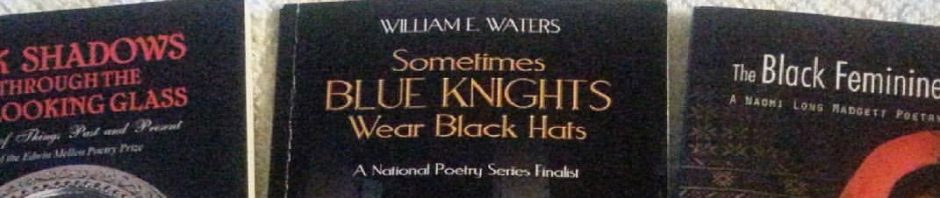
More than twenty years ago, I started writing poems on cases of law enforcement misconduct that was reported in the news.  I didn’t set out to write a collection, but after a little more than a year I had enough poems on law enforcement misconduct to put in a collection.  This was long before #BlackLivesMatter and law enforcement’s response, #BlueLivesMatter.  Of course, their lives matter, but not as a counterpoint to Black lives or as propaganda to detract from some officers’ misconduct.  Many of the “cases” that ended up in my collection, there seemed to be a better way to resolve than with deadly force.  I understand how tough a job it is being a police officer.  I know I couldn’t be a police officer, because I would end up in a similar collection to Sometimes Blue Knights Wear Black Hats, which was a National Poetry Series Finalist.

Since we are entering a political season, there will be much ado about law and order and crime and punishment, a tried but tired method of politicians, both Dems and Republicans, as their bona fides of “toughness.”  It’s easy to talk tough when other people, specifically police officers, are putting in the work as well as putting their lives on the line. Political mantras mean nothing when heroes are dead and or they make a deadly “mistake” and there is a civilian casualty.  To add insult to injury, law enforcement almost never owns up to questionable killings of civilians, and thus the creation of #BlackLivesMatter,

Crime and punishment should not be a partisan issue, but in an historically separate and unequal nation, most glaring in the criminal legal system, Lady Justice is seen as wielding her sword against people of color, striking them down without mercy.

In my next blog I will write about the process I am engaged in writing poetry that speaks to EJI’s history of racial terror.

Posted in ezwwaters, NYPD, police involved shooting, police-involved killing, Politics, race, raising black boys, Sometimes Blue Knights Wear Black Hats | Tagged , , , , , , , , , | Leave a comment

Neither Snow nor Rain nor Heat nor Gloom of Night Stays Hate Mail from Being Delivered

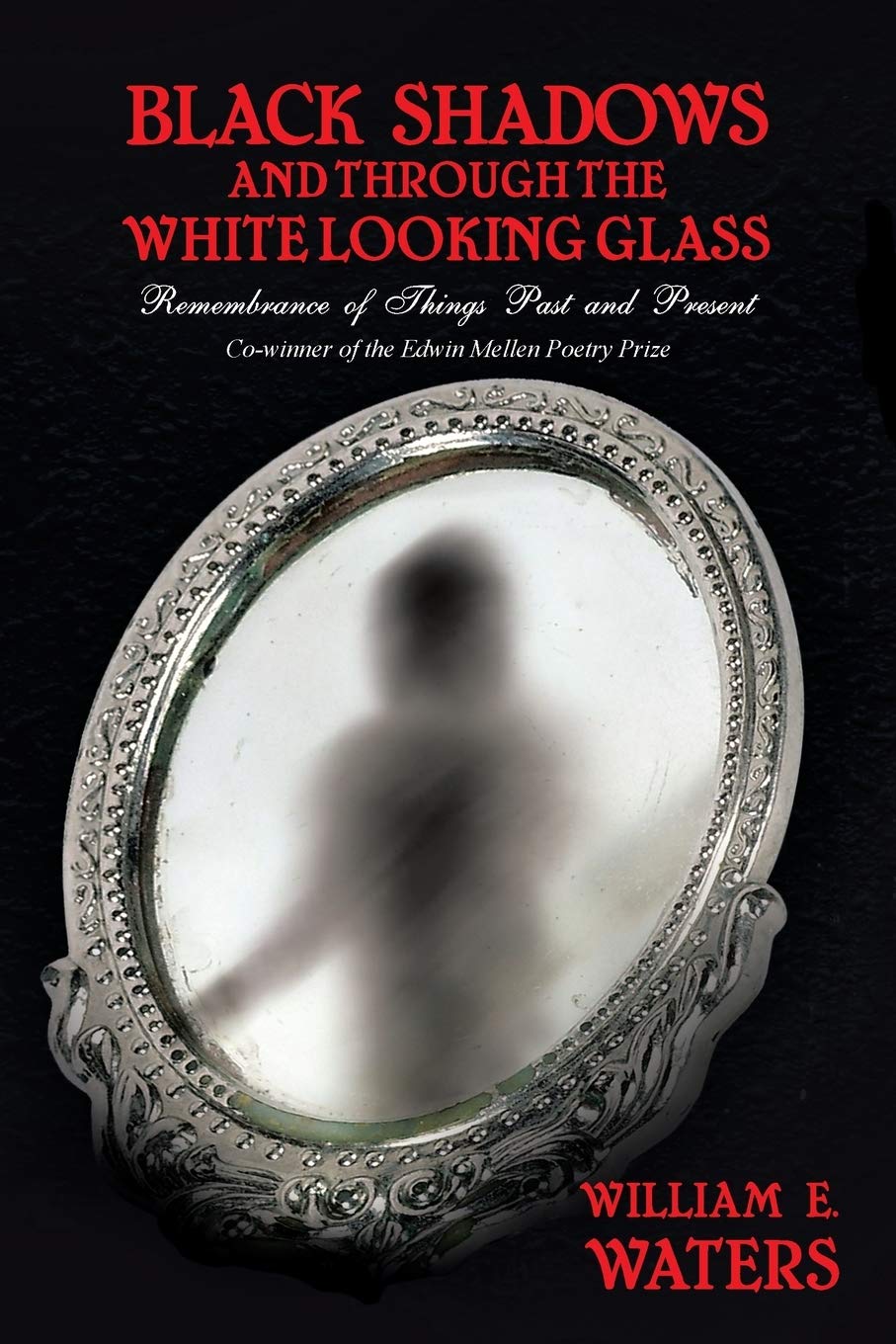
Long before my first, award-winning book, Black Shadows and Through the White Looking Glass: Remembrance of Things Past and Present, an epic poem on the captivity, exploitation and suffering of Black people in America, was published (2000), I knew I had arrived as a writer because I had received my first piece of hate mail in response to a guest editorial in Newsday, the daily paper of Long Island, NY.

ENDLESS PUNISHMENT IS A CRIME

My guest editorial in Newsday was about the quality of mercy. Gov. Mario Cuomo, dubbed Hamlet on the Hudson, on New Year’s Eve in 1985, granted executive clemency to Gary McGivern. Granted, McGivern was an unlikely candidate for executive clemency, which has been described as an “extraordinary form of relief.” Most New York governors have been extremely parsimonious in granting executive clemency to people convicted of crimes of violence, going back to Gov. Nelson Rockefeller, who granted such clemencies more so than all his successors to the current governor, Kathy Hochul.

Gary McGivern was serving time in prison when he, and two others, allegedly attempted to escape from custody when they were being transported. During the attempted escape, according to the theory of the crime the prosecutor put forward, McGivern and the two others killed a deputy sheriff. (One of the two others, Robert Bowerman, with McGivern was also killed during the attempted escape.) McGivern’s defense, as well as Chuck Culhane, offered that it was the other individual who attempted to escape, not them. Nonetheless, McGivern and Culhane were convicted of felony-murder and sentenced to death. They successfully challenged the sentence of death and were sentenced to 25 years to life. Throughout, McGivern maintained his innocence.

In commuting McGivern’s sentence through executive clemency, Gov. Mario Cuomo was not suggesting that he believed that McGivern was innocent, but that taking everything as a whole, including McGivern’s rehabilitational efforts, that an appearance before a parole board was in order to determine McGivern’s “parole readiness.” McGivern would appear before a parole board panel, and it would make a determination whether he should be released to parole supervision. Granting McGivern clemency was politically risky, and the talk in the prison yard was that there were worthier candidates for clemency than McGivern. In some ways, Gov. Mario Cuomo exercised political courage in being clement in this particular case, though there were hundreds if not thousands of other people in prison with more compelling cases than McGivern. My guest editorial in Newsday spoke to Mario Cuomo’s political courage and the quality of mercy as articulated by Shakespeare’s Portia in The Merchant of Venice.

About two weeks after my guest editorial was published in Newsday, I received my first piece of hate mail, from Hicksville, NY. The hater quickly devolved into an ad hominem attack, stating that he was sick of my “kind,” and that it did not matter what my race was. Note that my guest editorial was about the quality of mercy, and race did not enter the equation. For the record, a white governor granted executive clemency to a white person who had been found guilty of killing a white deputy sheriff! Of course, in matters of crime and punishment, race seems to find its way into the equation, even when it’s not part of the formula. The Hickvillian assumed that I was Black.

Photo Credit: Saskia Keeley

Writers who choose to put skin in the game have toughened themselves against ad hominem attacks. When we are personally attacked as opposed to the ideas we put out to the public, then we know we have touched a nerve of raw truth.

Truth be told, haters don’t deter me. It would be a stretch to state that haters inspire me. Nonetheless, I continued to write even more editorials and letters to editors on crime and punishment, because it is a subject that not only touches raw nerves, but also the subject where truth is most wanting.

In my next blog I’ll write about crime & punishment.

Posted in Black Shadows and Through the White Looking Glass, ezwwaters | Tagged , , , , , , , , , , | 2 Comments

The Writing Life: Writing An Award-Winning Epic Poem

My epic poem, Black Shadows and Through the White Looking Glass: Remembrance of Things Past and Present, was a co-winner of the 1998 Edwin Mellen Poetry Prize for an epic poem on the theme, “the captivity, exploitation, and suffering of Black people in America.”  I added, and their “triumph,” for the Black experience in America is more than a tale of woe.

When the contest was announced, as a poet and a history buff, I knew I could write something compelling on the subject.  I knew I could win this contest.  In fact, I was so sure of wining the contest that I stated to myself, albeit without much conviction, that I would retire pen and paper and give up the writing life if I didn’t win.  To understand the import of this, at this stage of my writing career, I was considered by my peers and even my enemies as a writer.  In fact, I could not imagine breathing without writing.  I reframed Rene Descartes’ famous statement to: “I write; therefore, I am.”  I was nothing, I was not alive, without my identify as a writer.

I would write this award-winning book!

Before beginning my epic poem, I made a list of all the “Black history” books that influenced my thoughts and understanding of Black history, including all of the works of J.A. Rogers, to name a few World’s Great Men and Women of Color, the three-volume set of Sex & Race, and Africa’s Gifts to America, Lorraine Hansberry’s To Be Young, Gifted, and Black, and the book would be anchored by the thought of W.E.B. DuBois, who wrote about the gifts Africans and their descendants in the so-called New World gave to America: the gift of sweat and brawn; the gift of story and song; and the gift of the spirit.  These “gifts” would serve as a counterpoint to the “woes” that were articulated as the subject of the epic in the contest announcement.

Even though this was an epic poem, I began with the ending in mind.  I knew that I would have passages where Black folk, past and present, would lift up their Voice.  Thus, the ending would move towards the hopeful lines in the Negro National Anthem:

Sing a song full of the faith that the dark past has taught us,

Sing a song full of the hope that the present has brought us…

— Lift Every Voice and Sing

And since the story begins, based on the theme, in some ways, in America, the beginning of the epic would be framed Constitution-like, with a Preamble.  In writing the book, I sketched out sections, or “books,” for the epic, since there was no “unity” in the strict Aristotelian sense; and many poems I wanted to be able to stand on their own.  Ironically, my epic was not informed by the greatest epics in Western literature, The Iliad and The Odyssey, though there are parallels in Greek tragedy with the Black saga in America, the ongoing wars with periods of uneasy truces, exemplified in the Civil War and ending with the Hayes-Tilden Compromise (1877).

(Swing low, sweet chariot,

Coming for to carry me home,

Swing low, sweet chariot, Coming for to carry me home.)

— Swing Low, Sweet Chariot

 Additionally, I needed to address an ongoing problem with American history, that is, the whitewashing and sanitized version of it written by white historians. (America likes to think of herself as “great,” and in many ways she is, but the treatment of Black folk for hundreds of years wreaks havoc on the narrative in history books, which has a mythological quality).  Thus the title of my epic, the distortion of American history through a self-serving looking glass that distorts.  Think The Picture of Dorian Gray; its public-facing picture is beautiful, though its doppelganger in the attic, distorted by the whips and scorns of time, is the real face, hidden away from the world. The world has been treated to American mythology posing as history. American streets are not paved with gold.  In each cobblestone there is the blood, sweat, and tears of Black folk.  And this we need to remember.  This history should not be relegated to the Shadows!

In my next blog I’ll discuss knowing that I was a writer when I got my first piece of hate mail.

Posted in Black Shadows and Through the White Looking Glass, ezwwaters, Lest We Forget, Politics, race, Slavery | Tagged , , , , , , , , , , , , , , , | 1 Comment

Streets of Rage Redux

When my childhood friend, Isa Rock, read and reviewed my novel, Streets of Rage, he wanted more.  A few mornings ago, I started to think about more, and thus the process began in my head.  My process as a writer of fiction begins with the end in mind.  Where is the final destination I want to take the reader?  Then I work on the beginning.  If I can begin, with much thought and scribbling on whatever is at hand, a napkin, an envelope, a sheet of paper, then the process begins in dead earnest.

This is me teasing out the process for more: “There was something liberating about killing a white man.”

How’s that for an opening line?  Now maybe you’ll want to read Streets of Rage in preparation for the second act?

There was something liberating about killing a white man.

In this day and age, a writer simply doesn’t write; a writer also needs to help with marketing his or her work.  (I came up with the idea for the book covers for all four of my books and wrote information for the dust jacket.)  This is what would appear on the dust jacket for Streets of Rage Redux: “As a teenager, he got away with murder.  That murder changed his life.  Instead of going to prison, he went to college.  Forty years later, looking back, he tells his story after that fateful day when he became a god.”

Order Streets of Rage

In my next blog I’ll discuss the process of writing my award-winning epic poem, Black Shadows and Through the White Looking Glass: Remembrance of Things Past and Present.

Posted in being a teenager, crime, ezwwaters, juveniles, Murder, Nation of Islam, raising black boys, Streets of Rage | Leave a comment

Advancing Alice Walker — and Her Nonfiction

I have a love-hate relationship with the body of work of Alice Walker.  I love Walker’s nonfiction, and even some of her autobiographical sketches, where her prose, even when it is expressing anger, is righteous anger.  Her nonfiction is clear, logical, and hard to argue with.  I hate, although hate is too strong of a work, Walker’s fiction.  Thus, I’ll use the negative designation of hate in the love-hate equation.  I hate that most of Walker’s fiction, at best, is melodramatic; at its very worst, it is pathological.

In Walker’s first two short story collections, and her first three novels, The Third Life of Grange Copeland, Meridian,` and the famous-infamous The Color Purple, there is only one Black man, Grange Copeland – and note that both Grange and his son Brownfield are earlier manifestations or sketches of Mr. from The Color Purple – who redeems himself, who is a positive role model, but that comes so much later, in his “third” life.  From the Black father who cuts his college-attending daughter’s breasts off because she’s dating a white male to Grange Copeland who, in a premeditated fashion, murders his own son, because he knows it is the only way to save his granddaughter, Ruth, from his son’s, Ruth’s father’s, hate.  Still, it takes Grange three metaphorical lifetimes to get it right.  In his first life, he fathers Brownfield, who was literally born in a field, and abandons his son and embarks on his second life, where he is a “rolling stone.”  In his third life, Grange returns to his origins, learns that he has a granddaughter, Ruth, who he learns to absolutely adore.  In the meantime, Brownfield is soon to be released from prison, having served time for murdering Ruth’s mother.  As Brownfield prepares to be released and reenter society, he is not thinking about reintegrating into society and his family and atoning for murdering the mother of his child, but asserting some evil possessive claim on his daughter.  Grange realizes that he played an outsized role in creating the monster that Brownfield has become because of, in large part, his absence and abandonment.  Grange knows that for Ruth to live, Brownfield must die.  And thus Grange’s redemption comes in the bloody act of premeditated filicide.

After I made my way through Alice Walker’s first five books of fiction, for which I was going to write a thesis for an MFA on Alice Walker’s world after I read the rest of her works, is when I came across and found Walker’s nonfiction, In Search of Our Mothers’ Gardens.  In this collection of essays, and especially the title essay, Walker seems to lift the veil of what appears to be hatred of all men, but especially Black men, and explains her “poetics.”  Walker’s hatred of men, and Black men in particular, if I may, and it’s not that simple, is not hatred towards the male species, but what the male has done to womankind.  And Walker could care less about white men, because she believes Black folk to be superior to white folk, in all things, but especially morally.  (Read “Advancing Luna – and Ida B. Wells.)

In “Advancing Luna – and Ida B. Wells, an autobiographical sketch, Walker writes:

I thought black people superior people.  Not simply superior to white people, because even without thinking about it much, I assumed almost everyone was superior to them; but to everyone.  Only white people, after all, would blow up a Sunday-school class and grin for television over their “victory,” i.e., the death of four small black girls.  Any atrocity, at any time, was expected from them.

Advancing Luna — and Ida B. Wells

The above passage alone endeared me to Alice Walker’s nonfiction.  It was our meeting point, where we both could unequivocally agree about something.  Additionally, Walker had launched a charge at Black men, that we do not read Black women authors, but that Black women read almost everything written by Black men that came down the pike.  Accepting that challenge, I began to read Black women writers, including but not limited to Dorothy West, Anne Petry, Alice Childress, Margaret Walker (Jubilee), Gwendolyn Brooks, Lorraine Hansberry (A Raisin in the Sun), Audre Lorde, Sonia, June Jordan, Nikki Giovanni, Maya Angelou (her five autobiographical novels) – I had already read nearly everything by our Muse – Paule Marshall (Brown Girl, Brownstones) – my mother is a first generation Bajan and her family secured three brownstones — Toni Morrison (Jazz), Octavia Butler (Wild Seed and Kindred), Ntozake Shange (for colored girls who have considered suicide/when the rainbow is enough), Bebe Moore Campbell (Brothers and Sisters), Jamaica Kincaid, Gloria Naylor (The Women of Brewster Place), Rita Dove, Edwidge Danticat, and Suzan-Lori Parks (Topdog/Underdog).  I owe Alice Walker a debt, for the challenge, which I accepted, of immersing myself in the worlds and words of Black women writers.

Alice Walker is a significant writer.  She probably does not consider any of her novels “protest” literature, but in a way, they are, though they are not appealing to or directed to a white audience, as protest literature did.  In short, Walker she cares what happens to Black men in the wide world, but whatever happens there, the degradation at the hands of white folk, the psychological and sometimes physical emasculation at the hands of white folk – nothing, absolutely nothing, justifies coming home and taking their feelings of rage at the white world out on their women and children.  No Black male can argue with that logic.

Posted in ezwwaters, Fatherhood, Fathers, race, raising black boys, Reentry, Relationships, Short Stories | Tagged , , , , , , , , , , , , , , , , , , , , , , , , , , , , , , , , , , , , | Leave a comment

On this day, April 9, 1939, in American History…

…Marian Anderson Performs for 75,000 Outside Lincoln Memorial, because she was banned from indoor venues because of her race. See https://calendar.eji.org/racial-injustice/apr/09.

My poetic tribute to Marian Anderson, in my collection, The Black Feminine Mystique:

“My Lord, What a Morning”

I am Black and proud,

O Daughters of the American Revolution,

Like the soil of Creation,

Like the land of Mother Africa.

Do not look at me with contempt because I am Black.

Your mythology says I am sun‑burnt,

That my forefathers were cursed.

My forebears sold my ancestors into slavery,

Made generations toilers of the land;

But the land I made great rejected me

When I came up from slavery.

You found other ways to keep me down,

Would not allow me to sing my song

In this land that is mine as well as yours.

My forefathers fought in the American Revolution,

My foremothers supported the Civil War,

My father fought to make the world safe for democracy,

My brother would fight to end all wars.

How dare you not allow me to sing my song!

I will lift my voice and sing,

I will sing a song of sweet liberty,

I will sing so loud the earth will be torn asunder,

I will sing so loud those war dead will rise.

Listen, and hear the angels weep,

Listen, the temple’s curtains have been rent,

Listen, and know that God speaks through me.

Hear my voice, O Daughters of the American Revolution,

Hear my voice and eat your hearts out!

Posted in Black Shadows and Through the White Looking Glass, ezwwaters, Poetry, race | Tagged , | 1 Comment

The Assassination of Dr. King – My first “political memory”

My first political memory, at age 7, is the assassination of the Rev. Dr. Martin Luther King Jr.  I was too young to remember the assassinations of JFK and Malcolm X, and although RFK would be assassinated later in the same year as MLK, I don’t have a memory of his assassination.  In my world, MLK was more important than RFK, and we were still mourning King’s killing.  And I can remember, to this very day, the sadness in the air, that weighed so heavily on the souls of Black folks – we couldn’t breathe then.  And I remember the refrain, “They killed another good [read Black] man!”  Later, I would learn that “they” were white people.  Much later, when I read The Choice: The Issue of Black Survival in America, by Samuel F. Yette, I learned that I was born at the very beginning of what Yette calls the Decisive Decade.

One byproduct of growing up in the Decisive Decade is that you did not, could not, see the world through rose-colored glasses.  It was in color, but only three colors: black, white, and red.

Death is the theme of the Decisive Decade.  There’s a long list of deaths, mostly of Black people, including James Chaney of Mississippi Burning (1964) infamy, but also of white people, JFK and RFK, and Chaney’s “partners,” Andrew Goodman and Michael Schwerner.  I was too young to know that Mississippi was burning, that the world was on fire, until April 4, 1968.  Burn, Baby, Burn!  There was “rioting” in the streets.  MLK, prior to his assassination, had said: “A riot is the language of the unheard.”

Long before the chants of “No Justice, No Peace,” I heard the language of the unheard; there was the language of the unheard, in their music, in their slogans and songs, and in their poetry – poetry for my people.

The title poem of my most recent collection of poetry, which I am shopping around, is The Black Blood of Poetry, which eulogizes so many of these individuals’ deaths, including MLK:

The King is dead, his Black blood spilt on a Southern Motel Balcony!

This Black Prince of Peace, dead from white violence at thirty-nine;

His autopsy reveals a heart of 60 years, from the stress of fighting Ole Jim Crow.

“Take My Hand, Precious Lord,” for “I’ve seen the Mountaintop.”

This Black Prince of Peace, a victim of white violence at thirty-nine.

Nonviolence begat violence: Southern hate, water hoses and police batons.

“Take My Hand, Precious Lord,” for “I’ve seen the Mountaintop.”

He still dreams in Technicolor, in a deeply demarcated black-and-white world.

Nonviolence begat violence: Southern hate, water hoses and police batons.

But he still had dreams, dreams of that Oneness that’s part of Christians’ creed.

He still dreams in Technicolor, in a deeply demarcated black-and-white-world.

This Native Southern Son waged a peaceful campaign across the South.

His dreams are of that Oneness that’s part of Christians’ creed –

May his Lord safekeep his soul till the Second Coming, or the fire next time.

This Native Southern Son waged a peaceful campaign across the South,

But a misguided white brother spilt the Prince of Peace’s Black Blood on a Balcony.

On this day, the anniversary of the assassination of MLK, let us remember what happened on that Balcony.  Let us not look at the monumental murder of MLK through rose-colored glasses.  And hard as it may seem, I’ve seen, in smaller communities, such as Communities for Healing and Justice, the beloved community. 

Amen, I say to you, Dr. King.  Amen.

Posted in Black Shadows and Through the White Looking Glass, crime, ezwwaters, Growing Up, John F. Kennedy, Lest We Forget, Malcolm X, Martin Luther King, Murder, Poetry, Politics, race, raising black boys, Revolution, Sometimes Blue Knights Wear Black Hats, urban decay, Urban Impact | Tagged , , , , , , , , , , | 1 Comment

Poetry Matters

April is National Poetry Month. It was launched by the Academy of American Poets in April 1996. It is a month to celebrate poets’ integral role in our culture. #poetrymatters.

This National Poetry Month, read one of my books of poetry. All are available on Amazon:

Posted in Black Shadows and Through the White Looking Glass, ezwwaters, NYPD, Poetry, police involved shooting, police-involved killing, Sometimes Blue Knights Wear Black Hats | Tagged , , , , | Leave a comment