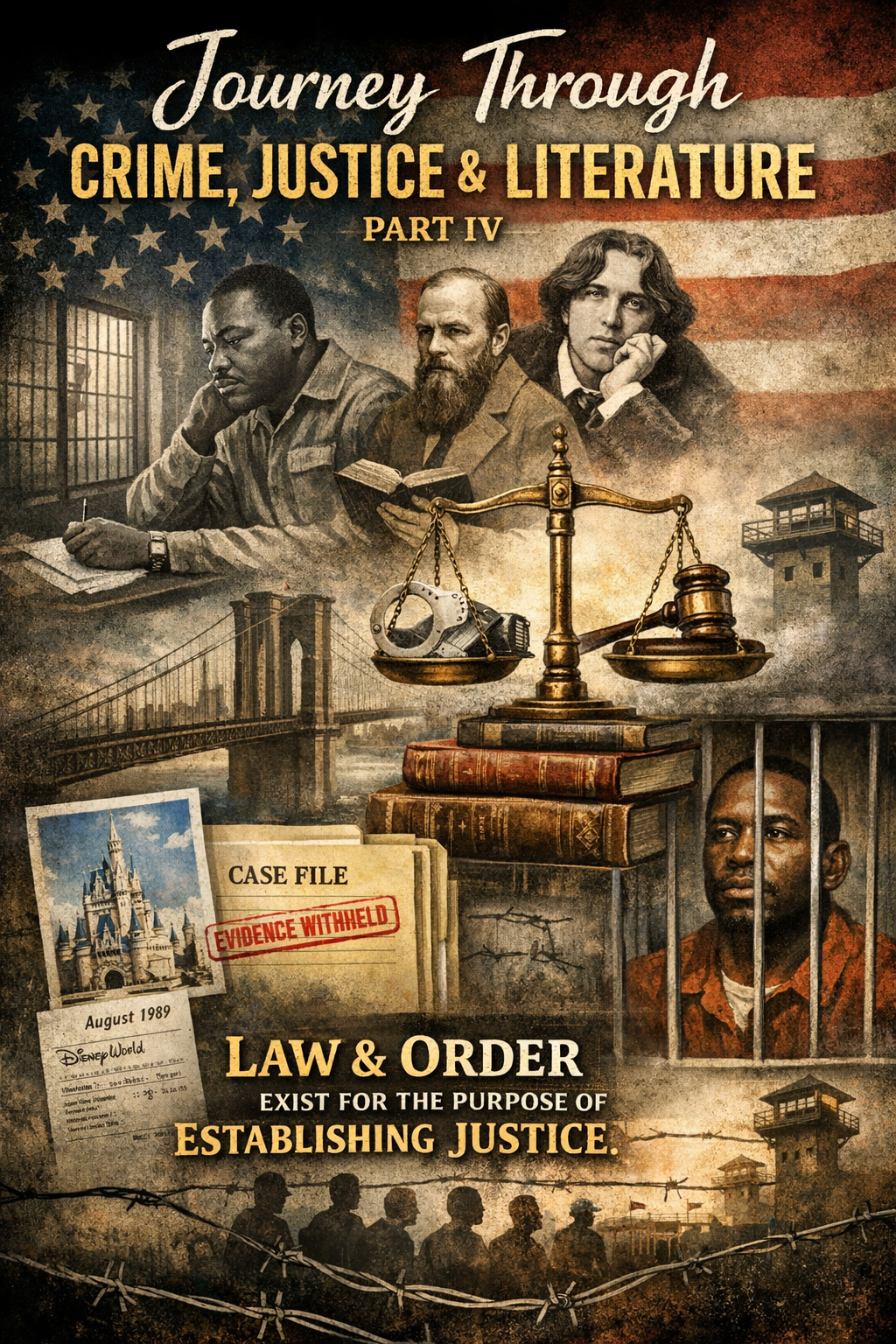
I Know Why the Caged Poet Sings

Some of my favorite poets happen to be named William – William Shakespeare, William Blake, William Wordsworth, and William Carlos Williams.

When I meet most people, I often ask them what their names mean or the backstory of their names.

When I was a teen, I met two juvenile delinquents. They were destined to end up in group homes, reform schools, jails, reformatories, insane asylums, and prisons. When they first started getting arrested, they had to come up with aliases because the truant officers and police never believed their names, perhaps not as a pair. I wish I could do justice to how they tell the story, with affected accents and all. Every time I heard the story, and we had an enduring friendship, meaning I heard it many times, it would bring me to uncontrollable laughter. They could have been a comedy duo. They were George Washington and Thomas Jefferson!

From the very beginning, truant officers and police didn’t believe they were Washington and Jefferson, although those were their surnames.

“The first time I told a cop my real name,” George Washington said, “the cop slapped me upside the head. And, of course, I had to be with Thomas Jefferson! And the first time, the cop said, ‘And your friend is Ben Franklin?’ Then I didn’t know I had the right to remain silent, but I shut up. ‘And you, boy,’ the cop said to my ace boon coon, ‘what’s your name?’ My friend said, and I could see him bracing himself for the blow, ‘Thomas Jefferson, SIR!’ The cop hit him harder upside the head than he had hit me. After several encounters with cops, giving our real names and being punished for the truth, we became George Blackmon and Thomas More, our favorite aliases. In fact, every time we got picked up by cops, we gave them different names. We never asked our parents why they named us after two slavers and a rapist to boot! All we found in those ‘slave names’ was persecution!”

I didn’t ask my parents why they named me William, so I have no backstory, though I say they knew I would become a poet, because there’s a certain providence in naming your children.

Yet do I marvel at this curious thing:

To make a poet black, and bid him sing.

  • Countee Cullen

Posted in Black Shadows and Through the White Looking Glass, crime, ezwwaters, Growing Up, Justice Chronicles, juveniles, NYPD, race, raising black boys, Sometimes Blue Knights Wear Black Hats, Streets of Rage, Urban Impact | Tagged , , , , , , , , , , , , | Leave a comment

Blacklight

I turn on the Blacklight,

And look under America’s skin,

Peeling away layers,

Exposed is her skin disease,

Her obsession with race,

Her legacy of Slavery and Segregation –

Those peculiar institutions!

            The auction block, like a butcher’s block….

The signs of the Color Line.

Approaching the Blacklight,

In the twilight years of my life,

I journey back in time,

To backroads taken, and not,
To look at life through worldly black eyes,

Through the lens of a pandemic,

Yet always through the eyes

Of a Black Boy

Whose Soul is on Ice

A Native Son

Living “Sonny’s Blues”

A Black Man Who Cried I Am

A Manchild in the Promised Land

Who Came Down These Mean Streets

Battle Scarred but not broken

            My Black Life has always mattered!

It was the dawning of Aquarius,

The Psychedelic Sixties,

Of Hippies, Yippies, and Woodstock,

Of free love and peace,

Of music, story, and song –

The songs my People sing.

Sing a song…

Painfully spiritual,

Heartrendingly soulful,

Elegiac and ecstatic,

Up-tempo and uplifting

Raunchy and revolutionary.

Subversive as a drumbeat,

The drumbeat heard at Creation.

The staccato rhythm of a tongue

Twisting itself to tell a story

Through a foreign tongue,

A twisted tongue

That speaks of Truth while lying.

A tongue that cannot

Encompass spiritual pain

Or tortured triumph.

            The gift of story and song.

It was the dawning of

            the Decisive Decade,

A decade of Death and Destruction,

Of chickens coming home to roost,

Of the ascendancy of the New Order of Assassins.

Die Nigger Die!

The Blacklight of my Life

Sines on Death and Destruction,

Of a sniper who kills our King.

Of the Prince who had been assassinated,

Of Camelot revealed as Myth,

Of the Conflagration of the Great Society.

            “Burn, baby, burn!”

The fire next time is always present.

The smoldering embers of Slavery and Segregation,

Easily lit and rekindled on the bonfire of hate.

            “Segregation now, segregation tomorrow, segregation forever!”

Self-evident lies are thrown on the bonfire of hate,

Going up in smoke,

The mythical American Dream.
Going up in smoke,

Laid bare as a Nightmare.

            “To die, to sleep, perchance to dream….”

At night

What nightmares awaken me.

The rise of the South,

The spirits of the Confederate dead rising.

Old Confederate soldiers never die, never die, never die

Old Confederate soldiers never die, never die, never die

The Confederate States of America

Never admitted defeat.

Black Blood still soaks the land,

Fertilizing the soil with Black Blood.

This land that is mine

Perhaps even more than yours (white America)

Since the gift of sweat and brawn

Cultivated American prosperity.

            “This land is my land….”

The Black Wall Street burnt down,

A counterpoint to theories of Black inferiority

            “Burn, baby, burn!”

The smell of Black flesh,

Of Black bodies burning

On the bonfire of hate,

Waft through America’s history,

Permeating the social fabric.

            “Burn, baby, burn!”

As I turn the Blacklight off,

The ghastly scenes of burning Black flesh

Waft through America’s history,

And the collective unconscious of my People.

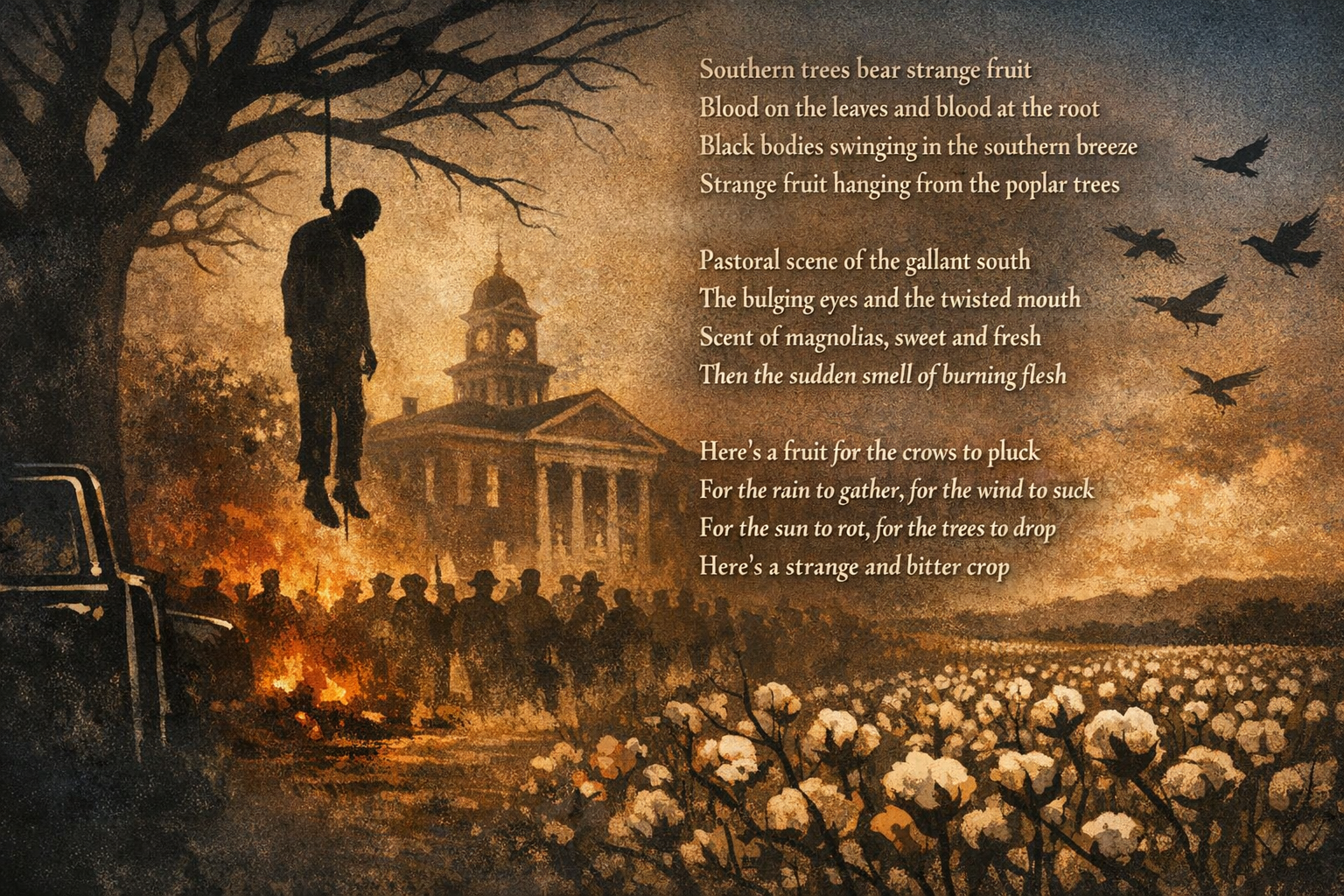
The ghastly scenes

Of strange fruit swinging from red maple trees,

That American dance of Black death,

The metronome of Black Death.

Die Nigger Die!

Die Nigger Die!

But I live,

Because someone must tell this story,

Of Black Blood, The Black Blood of Poetry.

            Because Black Lives have always mattered!

Posted in being a teenager, Black Shadows and Through the White Looking Glass, ezwwaters, race, raising black boys, Sometimes Blue Knights Wear Black Hats, Streets of Rage | Leave a comment

Celebrating 65 Years of Life

I saw the best minds of my generation

drop out of school

and get their education on the streets,

in the schools of hard knocks:

in group homes, reform schools, jails,

reformatories, insane asylums, and prisons.

They dropped out of schools

that didn’t teach

The Pedagogy of the Oppressed;

schools that didn’t understand

the psyche of

The Wretched of the Earth;

schools that didn’t challenge;

schools that placed a premium

on memorization and rote

at the expense of

thoughtfulness and learning;

schools incapable

of tapping into

the creative energy of minds

that were once trained

in the greatest institutions of learning

on Mother Earth,

in Songhai, Ghana, Mali, and Timbuktu;

schools that taught

history that excluded them

and their contributions;

schools that alienated them;

schools that taught cruelty;

schools with low ceilings

and finite possibilities.

I saw the brightest boys of my generation

descend into insanity.

They were in the best high schools

the City had to offer,

but their minds

were light-years ahead of the curriculum.

We knew they were different,

their heads shaped like eggs,

but brilliant,

not of the world they were relegated.

They tutored others

in math and science,

and instead of graffiti

wrote formulas on the walls.

They were bored in lab

so conducted their own experiments,

on stray cats and dogs –

we saw their remains throughout the projects.

They flew homing pigeons

from coops on the projects’ rooftops,

sent esoteric messages

to other egg heads

throughout the City’s housing developments.

They experimented

with mind-altering drugs –

Acid, LSD, and angel dust.

They were our dark angels,

not of the world they were relegated.

They leapt off of tall buildings,

believing they could fly

like their pigeons,

and they did,

for a brief moment in time,

only to crash land in the concrete jungle,

their wings crushed

and their bodies broken.

I saw the best physical specimens of my generation,

the fastest, the strongest,

play three sports with effortless grace,

not become all American.

I saw them earn full scholarships

to play basketball

but drop out of school

in their freshmen year

because they refused to ride the bench

behind any of the starting five

whom they ran faster than

and jumped higher than

and shot hoops

with the accuracy of marksmen.

So, they returned to the streets,

their dreams of playing

pro basketball

dashed on the hardwood floors of colleges

eager to exploit their talent;

instead, they played in the summer leagues,

more dazzling than Earl “the Pearl” Monroe.

And when the sun sets,

not only did the freaks come out –

            The freaks come out at night,

            The freaks come out at night

— but the gamblers

collecting their winnings

from the games,

the pimps, hustlers, conmen, and gang members,

the whole wide underworld.

Then their physical prowess

was put to other tests.

I saw them outrun cop cars

and motorcycles

and police dogs.

I saw them hurdle

five-foot fences

in a single bound,

leap from building to building,

with cops in hot pursuit,

and they seemed to always get away.

Before extreme sports were invented,

they were pushing their bodies

to the outer limits,

redefining the use of space.

I saw them subway surfing

and elevator surfing,

engaged in thrills that could kill.

I saw the boldest boys of my generation,

those that didn’t die young,

graduate from petty to major crimes.

It started innocently enough,

playing hooky from school,

stealing lunch from the bodega,

but gradually escalated

to shoplifting,

burglary, armed robbery,

and even murder.

From juvenile delinquents

to juvenile offenders

to youthful offenders

to adult criminals.

In the projects

they hunted the rats for sport,

with BB guns

and bow and arrows;

and it turned out

that some of the animals’ remains

I saw throughout the projects

was not the result

of the brilliant egg heads’ experiments,

but evidence of their torture.

They were not only the boldest,

but also, the most alienated

of my generation.

They hated a world that hated them –

“The Hate that Hate Produced.”

They hated this world

of low ceilings

and finite possibilities.

They hated this world

that would deny them

their dreams.

Thus, they ended up

in group homes, reform schools, jails,

reformatories, insane asylums, and prisons.

A lawyer would later tell me

that all of this was “inevitable,”

which made me think

of the Watchers,

the Watchers from behind Venetian blinds,

the projects’ old ones in the know,

septuagenarian seers,

who predicted

that many of my generation

wouldn’t amount to anything,

that we’d end up

in group homes, reform schools, jails,

reformatories, insane asylums, and prisons,

that many of us

would not live long,

that many of us,

certainly,

would not live to see fifty years.

I saw the bravest boys of my generation

find their way out of the projects

and into Basic Training.

They knew

there was no way they could be

all they wanted to be

in projects

with low ceilings

and finite possibilities.

They went

from leaping from building to building,

from subway surfing

and elevator surfing,

to jumping out of airplanes

to fight in Granada and Panama.

They were honor guards in championship games,

those games

the best physical specimens of our generation

should’ve been playing in.

They were in the Marines,

in the Army, and Navy.

They swaggered down the streets of Spain,

ran with the bulls,

found cheap thrills in Manila

with “our little brown cousins,”

redefined what it meant

to be a Samurai in Japan,

fished in Korea,

drank beer in Germany

with the frauleins

and convinced them

that Hitler got it wrong,

that these physical specimens

were the Master Race –

you could

take them out of the ghetto –

none of them came back to the projects.

Later, I saw them,

military erect,

at the funerals

of their parents,

and their younger and older siblings,

and so many others

we grew up with

who died

in the summer of their lives

– casualties of

the wars on poverty and crime.

We looked at each other,

nodding,

acknowledging that

we are still here,

Black boys

transmuted into Black men

despite the strange alchemy

of white America,

the low ceilings

and finite possibilities

that would have been our lot

if we weren’t

the brightest,

the boldest,

the bravest

of our generation,

building on the Black philosophy,

of making a way out of no way.

In those moments, we looked at each other,

shared that nod of Black Brotherhood,

acknowledging that we were still here,

unbroken –

celebrating life.

Posted in being a teenager, Black Shadows and Through the White Looking Glass, ezwwaters, Politics, race, raising black boys, Streets of Rage | Tagged , , , , , , | 1 Comment

Cancel Culture Redux

A little more than five years ago, I blogged about “cancel culture.” See https://ezwwaters.com/2020/07/24/the-cancel-culture-conundrum/. Given the backlash in the aftermath of the assassination of Charlie Kirk, rebranded as a “conservative activist,” including canceling nighttime talk show host Jimmy Kimmel for his comments on Kirk, I thought it was time to re-post said blog.

In 1963, when JFK was assassinated and Malcolm X stated that the “chickens had come home to roost,” the Honorable Elijah Muhammad sidelined and silenced Malcolm. (The same thought came to my mind as soon as the killing of Kirk hit the news, and I knew, but not to this extent, that some voices would be silenced!) In 1963, it was all about the optics. Mostly everything in America during the Civil Rights and Black Power era was political, but Elijah Muhammad thought it wise to stay clear of this political minefield. In 2025, it is all about weaponizing the tools at Trump’s disposal to silence detractors, including comedians. Whatever one may think about Trump, it’s indisputable that he lacks a sense of humor; therefore, comedians are on his hit list.

He who controls the narrative, controls the country.

I’ve often said, with tongue-in-cheek, that one of the few things the Founding Fathers got right was the First Amendment. It’s one of the remaining things, albeit under attack, that one should love about America. (Dictators want to control the narrative.) Look at any dictatorship with state-run and controlled Media, and one will see the assassination and imprisonment of truth-telling journalists. In America, we take them off the air, but it might not be long before we imprison and kill them.

NOTE: In attempting to generate an AI image for this post, I got the following error message: “This request has been flagged by the OpenAI moderation system. Please try to rephrase your post.” Even OpenAI – the coders who wrote the algorithms – is in on the cancel culture business.

Posted in crime, Malcolm X, Nation of Islam, Politics, race | Tagged , , , , , , , , , | Leave a comment

“Teaching” Alice Walker

In preparation for a lecture in the course I teach, African American Literature in the 20th Century, I am re-reading excerpts from Alice Walker’s In Search of Our Mothers’ Gardens: Womanist Prose. In her prose, Walker makes nearly perfect sense. I don’t argue against any of her observations. Her fictional world, though, is pathological. As a Black male, Walker’s fiction is hard to digest, because there is not one redeeming Black male character, apart from Grange Copeland from Walker’s first novel, The Third Life of Grange Copeland, though Grange’s son, Brownfield, is the evilest male character in Alice Walker’s fictional world, and Mister.

I don’t think, as a Black male, that I am Walker’s target audience – she does not write for Black men – though I feel like a target is on my back. Ironically, I binge-read hundreds of Black women authors – yes, there are hundreds – at Walker’s instigation. She claimed that Black men, including Black male authors, did not read Black women writers.

This morning, during my commute, I was reading Walker’s essay, “Saving the Life That Is Your Own: The Importance of Models in the Artist’s Life,” in which she writes about giving a reading at a college. One of the audience members asked what Walker considered “the major difference between the literature written by black and white Americans.” Walker muses that it is “not the difference between them that interests me, but, rather, the way black writers and white writers seems to me to be writing one immense story.”

Walker, continuing this line of thought, and it is worth quoting in full:

Still, I answered that I thought, for the most part, white American writers tended to end their books and their characters’ lives as if there were no better existence for which to struggle. The gloom of defeat is thick. By comparison, black writers seem always involved in a moral and/or physical struggle, the result of which is expected to be some kind of larger freedom. Perhaps this is because our literary tradition is based on the slave narratives, where escape for the body and freedom for the soul went together, or perhaps this is because black people have never felt themselves guilty of global, cosmic sin.

This made me think of the “sin” of police brutality, and specifically the 1991 case of Rodney King, who was severely beaten by errant blue knights of Los Angeles Police Department. Despite his severe beating, Rodney King wanted “to let go, to let God deal with it…. I didn’t want to be angry my whole life.”

Maybe Rodney King did not have an inner Bigger Thomas!

Despite his severe beating, Rodney King asked us all to “just get along.”

“Can’t we all just get along?”

I don’t know if this capacity to forgive white folk has been baked or beaten into the being of Black folk, but it is amazing grace beyond what a slaver can even imagine.

Posted in crime, ezwwaters, Justice Chronicles, Lest We Forget, Politics, race, Sometimes Blue Knights Wear Black Hats, Streets of Rage | Tagged , , , , , , , , , , , , , , | Leave a comment

Strategies for Effective Advocacy in Criminal Justice Reform

The Anatomy of Advocacy, Part 1: How “Tough on Crime” Politics Reshaped Justice in New York

In the mid-1990s, New York was gripped by “tough on crime” politics. Headlines were filled with fear, politicians raced to outdo each other on punitive policies, and communities—especially Black and brown communities—bore the brunt. But behind the slogans and soundbites, laws were quietly reshaped in ways that would keep people incarcerated longer and under state supervision for life. One of the most consequential was Governor George Pataki’s push to eliminate parole for “violent offenders.”

In 1995, Pataki entered office promising to restore the death penalty and end parole for people convicted of so-called Index crimes. Within his first month, Executive Order Number 5 ended work release for this group, gutting a key reentry tool.

Though the legislature blocked his attempt to abolish parole outright, Pataki directed the parole board to deny release to people convicted of Index crimes, causing release rates to collapse to nearly zero. In 1998, his signature victory came: Jenna’s Law, requiring determinate sentences for Index crimes.

While not retroactive, the law carried a hidden penalty—a rider eliminating the three-year discharge from parole (Executive Law 259-j) for Class A-1 felonies, including murder and kidnapping. For many with the lowest recidivism rates in the state, this meant lifetime supervision.

This was the backdrop for an extraordinary grassroots fight—one led not by political insiders, but by the very people directly impacted.

The Anatomy of Advocacy, Part 2: Birth of the Ad Hoc Committee on Lifetime Parole

Every advocacy campaign starts with a spark—an injustice so glaring it demands action. For the people sentenced to lifetime parole under Pataki’s policy changes, that spark came when their parole officers told them, plainly: you will never be discharged. That’s when the organizing began.

The Ad Hoc Committee on Lifetime Parole formed to take on the fight. Comprised of people living under lifetime supervision, they began by mapping out possible strategies:

  • Litigation – A challenge under the U.S. Constitution’s Ex Post Facto Clause. But court battles are long, expensive, and uncertain.
  • Media Campaign – Modeled after the “Drop the Rock” campaign, but too risky for their circumstances given potential media distortion.
  • Legislative Advocacy – The most viable path: return to the Legislature to change the law.

The Anatomy of Advocacy, Part 3: Strategy in Action – How They Won the Fight

Successful advocacy is rarely about one big move—it’s about hundreds of small, strategic steps. The Ad Hoc Committee on Lifetime Parole executed a meticulous plan:

  • Research – Partnered with John Jay College of Criminal Justice (quantitative) and the CUNY Graduate Center (qualitative).
  • Bill Drafting – A Columbia Law School professor drafted the new Executive Law 259-j.
  • Political Engagement – Secured Senate Bill 6731, sponsored by Senators Volker, Maltese, and Montgomery; Assembly sponsorship from Members Aubry and Lentol.
  • Legal Direction – Guided by a public interest law firm on meetings and timing.
  • Coalition Building – Aligned with New Yorkers Against the Death Penalty, Osborne Association, Prisoner Reentry Institute, Citizens Against Recidivism.
  • Insider Support – Endorsements from Parole Chairs George Alexander, Robert Dennison, Edward Hammock, and Ramon Rodriguez.

The Victory – On July 21, 2008, Governor David Paterson signed the bill into law as Chapter 310 of the Laws of 2008. By October 2008, many members were officially discharged from parole, in full satisfaction of their sentences.

The Anatomy of Advocacy, Part 4: Lessons Learned from a Winning Campaign

Victories like the 2008 repeal of lifetime parole for Class A-1 felonies aren’t accidents—they’re the product of strategy, discipline, and persistence. The Ad Hoc Committee’s campaign offers a blueprint:

  1. Anchor in Research – Data builds credibility.
  2. Control the Narrative – Choose messaging channels you control.
  3. Build Unlikely Alliances – Bipartisan sponsorship was essential.
  4. Engage Multiple Stakeholders – Legislators, faith leaders, community organizations, and agency insiders together create change.
  5. Work Inside and Outside the System – Legislative advocacy + grassroots mobilization is a winning formula.

The takeaway: no matter how entrenched a policy seems, it can be undone with persistence, strategy, and collective will.

Participatory Research: A How‑To Blueprint

Why this matters: When those most impacted by the criminal legal system become designers, data collectors, and authors of research, the result is deeper truth—and policy that listens.
This blueprint draws on the Incorporating Lived Expertise into Research white paper (May 2025) and our campaign’s scholarship to offer a practical, ethical, and power‑building approach.

Pillars from the 2025 White Paper

  1. Co‑Design the Questions — Start by asking communities what needs to be known to make change. Center measures of thriving (housing, stability, family ties, civic life), not just “recidivism.”
  2. Share Ownership — Define data governance up front (consent, access, storage). Peer researchers should shape analysis and interpretation—not just collection.
  3. Policy‑Ready Framing — Translate findings into testimony, legislative memos, and coalition briefs. Build a dissemination plan before you field a single survey.

The Blueprint (Step‑by‑Step)

  1. Build the Table — Form a community advisory team (impacted people, CBOs/faith organizations, allied scholars). Set values: transparency, reciprocity, non‑extraction.
  2. Co‑Design Methods — Mix qualitative and quantitative: life‑history interviews, focus groups, administrative data linkages, cost analyses. Validate instruments with the advisory group.
  3. Train Peer Researchers — Interviewing skills, trauma‑aware practice, privacy/ethics, note‑taking, and coding. Budget for stipends and ongoing support.
  4. Co‑Analysis & Member Checks — Host analysis circles; test emergent themes with participants. Invite critique and document how feedback shaped results.
  5. Advocacy Integration — Timeline research milestones to legislative calendars and media moments. Prepare one‑pagers, infographics, and scripts for hearings.
  6. Return the Knowledge — Release findings first to participants and communities. Offer teach‑ins, digital toolkits, and data summaries in plain language.

Ethics & Care

  • Do no harm — Minimize risk, honor anonymity preferences, allow withdrawal without penalty.
  • Fair compensation — Pay lived experts and peer researchers for their labor.
  • Credit & Authorship — Co‑author reports and presentations; cite community collaborators as a norm.

From Evidence to Impact

Participatory research amplified the parole reform movement because it blended data with lived expertise:
quantitative analyses (release patterns, cost models) alongside qualitative narratives (reentry strengths, barriers), framed for policy action.
This is how research becomes a lever for justice.

Research as Resistance: Building Knowledge Together in the Fight for Parole Justice

Note: The following reflection is part of our ongoing series on justice, research, and reform.
As a member of the research team, I saw firsthand how scholarship—conducted with directly impacted people—can shift policy, narrative, and law.

When Evidence Meets Lived Experience

When the Ad Hoc Committee on Lifetime Parole organized, we didn’t just raise our voices—we brought evidence.
From the start, we understood that stories alone, while powerful, could be dismissed. But research, conducted with directly impacted people and not just about them, carried undeniable weight.
It became a cornerstone of our advocacy, demonstrating to lawmakers and the public that long‑term imprisonment was neither necessary for public safety nor justifiable as endless punishment.

Early Foundations (2006–2007)

In 2006, our team presented “Public safety/public interest: Experiences of people who have served long terms in prison released to the community” at the American Society of Criminology in Los Angeles.
By March 2007, at John Jay College’s Off the Witness Stand conference, we shared “To parole or not to parole: Using science to inform parole decisions for people who have been convicted of violent crimes.”

Peer‑Reviewed Anchor (2013)

These studies culminated in “How much punishment is enough? Designing participatory research on parole policies for persons convicted of violent crimes” in the Journal of Social Issues (2013).
See John Jay College
Taylor & Francis Online
ResearchGate.

Extending the Frame (2017–2022)

  • Boudin (2017), “Hope, Illusion and Imagination.” Law review article that cites and builds on our JSI piece to reframe punishment and parole.
  • DeVeaux (2022), “Not just by rates of recidivism.” Taylor & Francis study centering how NYC Black men define success after prison—work, relationships, mentoring, and civic life.

From Research to Practice (2025)

Our latest internal framework, “Incorporating Lived Expertise into Research” (May 2025), distills what we’ve learned about designing, governing, and sharing research with the people most impacted.
It’s not just a method—it’s a stance: research is resistance.


What’s Next: The Participatory Playbook

Next up, I’ll share a practical guide to participatory research for organizers, advocates, and scholars—how to structure partnerships, protect participants, co‑analyze data, and translate findings into policy.
If you care about justice, you can help produce the knowledge that movements need.

Calls to action:

• Subscribe for the final installment: Participatory Research: A How‑To Blueprint (coming soon).

• Share this post with a colleague in policy, academia, or community organizing.

• If you’re part of an organization seeking to adopt a lived‑expertise model, reach out—we’d love to collaborate.

Posted in crime, ezwwaters, Justice Chronicles, Life Sentences, Murder, Osborne Association, Parole, parole board, Politics, Reentry | Tagged , , , | Leave a comment

Leadership Mini-Series: Joseph, Ethics, and Leading with Conviction – The Leadership Challenge of Remembering

Modeling the Way: Joseph’s Forgotten Leadership

Joseph models integrity, vision, and resilience even when forgotten in prison. James Kouzes & Barry Posner’s The Leadership Challenge highlights that leaders must “Model the Way” and “Inspire a Shared Vision.” Joseph does this long before Pharaoh recognizes his gifts.

The cupbearer’s forgetfulness shows the shadow side: without memory, visions wither. Leadership is not only about personal strength—it is about communities that remember and amplify the gifts of others.

👉 How are you ensuring that the people you lead are not forgotten? Can you think of any historical or contemporary examples of Joseph?

When I look at the historical record on leadership for a comparison to Joseph, I do not think there is an American counterpart. Booker T. Washington comes closest. On the world stage, it would be Nelson Mandela.

👉 What do you think?

Postscript: Drawn from one of my spiritual reflections, “The Burden of the Cupbearer,” which evolved into “The Moral Imperative of the Cupbearer” — Listen to the sermon here: The Moral Imperative of the Cupbearer, Ciulla’s Ethics: The Heart of Leadership, and Susan P. Sturm & Haran Tae’s “Leading with Conviction: The Transformative Role of Formerly Incarcerated Leaders in Reducing Mass Incarceration.”

Posted in crime, ezwwaters, Justice Chronicles, Leadership, Reentry, Religion | Tagged , , , , | 1 Comment

Leadership Mini-Series: Joseph, Ethics, and Leading with Conviction – Joseph, Cupbearers, and Ethical Memory

To Forget Is to Fail Ethically

The story of Joseph in Prison in Egypt is one of my favorites. It is a story that is relevant today as we dismantle what has been called “mass incarceration,” and as we witness the role of formerly incarcerated people advocating for a just criminal legal system.

Joseph’s plea to the cupbearer, who is going to be released from prison after Joseph correctly interprets his dream, is a plea most people in prison make to people they have done time with who are being released: “Remember me!” It is more than a request; it is a moral imperative. My Biblical reflection on the Joseph story, “The Burden of the Cupbearer,” reminds us: forgetting is not neutral—it is failure.

As Joanne Ciulla notes in Ethics: The Heart of Leadership, leadership is at root a moral relationship between leaders and followers. To forget those we lead—or those who lifted us up—is to abandon that responsibility.

👉 Who are you ethically bound to remember in your leadership journey?

Postscript: Drawn from one of my spiritual reflections, “The Burden of the Cupbearer,” which evolved into “The Moral Imperative of the Cupbearer” — Listen to the sermon here: The Moral Imperative of the Cupbearer, Ciulla’s Ethics: The Heart of Leadership, and Susan P. Sturm & Haran Tae’s “Leading with Conviction: The Transformative Role of Formerly Incarcerated Leaders in Reducing Mass Incarceration.”

This is Part 1 of a 4-Part Mini-Series, beginning Sunday, September 7, 2025.

Posted in ezwwaters, Justice Chronicles, Parole, Reentry, Relationships, Religion | Tagged , , , , , , , , , | 1 Comment

The Anatomy of Advocacy, Part 4: Lessons Learned from a Winning Campaign

Victories like the 2008 repeal of lifetime parole for Class A-1 felonies aren’t accidents—they’re the product of strategy, discipline, and persistence. The Ad Hoc Committee’s campaign offers a blueprint:

  1. Anchor in Research – Data builds credibility.
  2. Control the Narrative – Choose messaging channels you control.
  3. Build Unlikely Alliances – Bipartisan sponsorship was essential.
  4. Engage Multiple Stakeholders – Legislators, faith leaders, community organizations, and agency insiders together create change.
  5. Work Inside and Outside the System – Legislative advocacy + grassroots mobilization is a winning formula.

The takeaway: no matter how entrenched a policy seems, it can be undone with persistence, strategy, and collective will.

⬅ Back to Part 1: The Landscape »

Posted in Uncategorized | Tagged , , , , , , , , | Comments Off on The Anatomy of Advocacy, Part 4: Lessons Learned from a Winning Campaign

Participatory Research: A How‑To Blueprint

Why this matters: When those most impacted by the criminal legal system become designers, data collectors, and authors of research, the result is deeper truth—and policy that listens.
This blueprint draws on the Incorporating Lived Expertise into Research white paper (May 2025) and our campaign’s scholarship to offer a practical, ethical, and power‑building approach.

Pillars from the 2025 White Paper

  1. Co‑Design the Questions — Start by asking communities what needs to be known to make change. Center measures of thriving (housing, stability, family ties, civic life), not just “recidivism.”
  2. Share Ownership — Define data governance up front (consent, access, storage). Peer researchers should shape analysis and interpretation—not just collection.
  3. Policy‑Ready Framing — Translate findings into testimony, legislative memos, and coalition briefs. Build a dissemination plan before you field a single survey.

The Blueprint (Step‑by‑Step)

  1. Build the Table — Form a community advisory team (impacted people, CBOs/faith organizations, allied scholars). Set values: transparency, reciprocity, non‑extraction.
  2. Co‑Design Methods — Mix qualitative and quantitative: life‑history interviews, focus groups, administrative data linkages, cost analyses. Validate instruments with the advisory group.
  3. Train Peer Researchers — Interviewing skills, trauma‑aware practice, privacy/ethics, note‑taking, and coding. Budget for stipends and ongoing support.
  4. Co‑Analysis & Member Checks — Host analysis circles; test emergent themes with participants. Invite critique and document how feedback shaped results.
  5. Advocacy Integration — Timeline research milestones to legislative calendars and media moments. Prepare one‑pagers, infographics, and scripts for hearings.
  6. Return the Knowledge — Release findings first to participants and communities. Offer teach‑ins, digital toolkits, and data summaries in plain language.

Ethics & Care

  • Do no harm — Minimize risk, honor anonymity preferences, allow withdrawal without penalty.
  • Fair compensation — Pay lived experts and peer researchers for their labor.
  • Credit & Authorship — Co‑author reports and presentations; cite community collaborators as a norm.

From Evidence to Impact

Participatory research amplified the parole reform movement because it blended data with lived expertise:
quantitative analyses (release patterns, cost models) alongside qualitative narratives (reentry strengths, barriers), framed for policy action.
This is how research becomes a lever for justice.

Posted in crime, Education, ezwwaters, Justice Chronicles, Life Sentences, Parole, parole board, Reentry | Tagged , , , | Comments Off on Participatory Research: A How‑To Blueprint