“Memories”

“Memories,” by Barbara Streisand, is one my favorite songs. I love the lyrics:

Memories
Light the corners of my mind
Misty watercolor memories
Of the way we were
Scattered pictures
Of the times we left behind
Smiles we gave to one another
For the way we were

Can it be that it was all so simple then
Or has time rewritten every line
If we had the chance to do it all again
Tell me — Would we? Could we?…

In the blog I previously posted there are those scattered pictures. There’s this picture of me at 8, and I write about this because at 8 I have my first “political memory.” I remember the death of Martin Luther King., Jr. in 1968. I don’t remember the death of Robert F. Kennedy, Malcolm X or John F. Kennedy, but I remember the King’s. The year, 1968, part of what one historian has called the Decisive Decade, was a decade of Death.

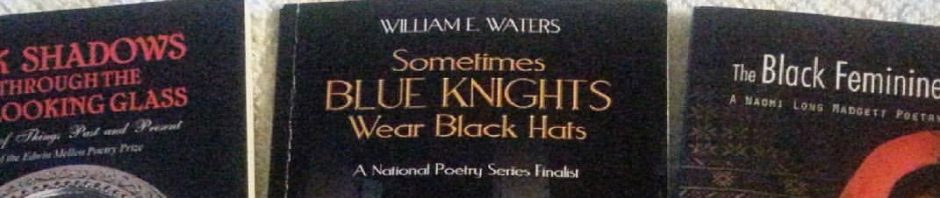
In researching my roots, I have also searched the corridors in my mind, tapping into memories. What I know is that we all experience the same event differently, that is, our response to the event. With Dr. King, for the first time in my life that I can recall, the earth moved. I knew that something monumental had happened, something that would change the world, even though I didn’t understand it. Later, in poetic form, I would capture these memories in my epic poem, Black Shadows and Through the White Looking Glass: Remembrance of Things Past and Present.

Twelve years ago I began writing notes for a memoir. Scattered pictures have memories flooding my mind. I have to revisit and get to writing or….

Posted in Black Shadows and Through the White Looking Glass, John F. Kennedy, Malcolm X, Martin Luther King, Poetry, Politics | Leave a comment

Spring Cleaning and Discovering My Roots

Last night I stopped by my sister Jeanette’s place — she’s the eldest, I’m the second eldest — and helped with some Spring cleaning.  We looked through a box, an old box, a box she probably hasn’t looked in for nearly 30 years, and unearthed a treasure of family history — photos; birth; baptismal and death records; elementary school class pictures and report cards.  Our mother saved everything, created scrapbooks.  In the family Bible there was hair from our first haircuts.  The greatest thing though we discovered was the “book of memories” my mother created for Jeanette, in which she recorded all the important events of my sister’s life: her birth, her baptismal, her first word, “Da Da, and even what she enjoyed doing as a toddler — dancing.  We had to laugh at this, because at 2 my sister was dancing, and she’s still dancing, and loves dancing!  The most important part of this discovery though were the words my mother wrote for my sister, what she hoped for in my sister’s life.

My discovery was a scrapbook of first cards: birthday, baptismal and Christmas.  (My mother even recorded the gifts that were given.”

These “discoveries” are very important to me.  I have been tracing our family’s roots, and now I have pictures of grandparents, aunts and uncles, cousins — I had no pictures of them.  

One of the most difficult things tracing our family’s roots is that my mother was the youngest of her siblings, having siblings 15, and 20 years older than her, so we are the youngest part of the family in our generation, and our parents died young, while we were young.  For example, when my mother was a child she was already an aunt.  My mother’s nephew, my first cousin, Roland, was my godfather.  Our mother died when I was 17, my father when I was 21, so I never had “adult” conversations with them and didn’t mine family history and lore.  Despite this, as I wrote about, I’ve traced our family roots back, on both maternal and paternal sides, 200 years.

Posted in Family, Genealogy | Tagged , | 1 Comment

“I’ll Always Love My Mama” (Part 2) — What I learned from my Mother about Restorative Justice

Yesterday, Veterans’ Day, I remembered my father, a World War II vet.  Today, I want to remember my mother.  The 35th anniversary of my mother’s death is fast approaching.  It’s hard to believe that it’s been so long, yet, it’s like it’s only yesterday.

There are almost all these lessons from yesterday.  This lesson, my mother’s death, at 44, taken by cancer, doesn’t seem connected to the subject at hand.  Why one’s mind may make seemingly unconnected connections is not as important as the connections made.

This lesson is from the world of restorative justice.  I’ve been involved in the criminal justice world and work for more than 25 years.  About five years ago I began some work revolving around long-term imprisonment and parole, and in this work a core group of criminal justice advocates reached out to advocates of “victims’ rights.”  Oftentimes these two groups have been seen as advocating for separate and distinct things, but they’re not.  Both are looking for a system of justice where victims are not slighted by the very system that prosecutes in their names, and those convicted of crimes are not stereotyped into non-humans. 

The bottom line is that both groups are looking to realize a system of justice that is just.

In our conversations, what became quickly apparent was that we were talking about the same thing in different languages.  We weren’t even sure what to call the main characters in the criminal justice narrative – “victims,” “survivors,” “perpetrators,” “offenders,” etc.

Inevitably, the language of “closure” came up.  Criminal justice advocates have talked about “closure” in a way that has been translated by victims’ rights advocates as “get over it (the crime).”  What, if anything, could be more insensitive?

In this moment, thanks to some great people seemingly on both sides of this issue, I got it.  The lesson though came through my Mama.  She died of cancer, not as the victim of a crime, and at the time of the conversations with victims’ rights advocates, my mother had been dead about 30 years.  Was there closure for me?  Emphatically, no.  Then how, for a loved one whose life has been taken violently, could there ever be closure?  How could people on “the other side” even presume such was a possibility?  Then, I knew, I would never use that word in the same way.

One thing I learned from the death of my mother is that there’s never closure, that we simply learn to live with their physical absence from our lives, that each day the acceptance of this reality becomes a part of our reality, yet for survivors of crime, and their families, this “acceptance,” if I may call it such, is so much different and even more difficult.

Posted in Justice Chronicles, Reentry | Tagged , , , , , , , , | 1 Comment

Memorial Day (2013) — Remembering My Daddy

It’s Memorial Day, when we remember the men and women who have and are serving in our armed services. Today, I remember my father. He served his country during World War II. He enlisted in the Army on October 31, 1944, at the age of 18. He stayed through the end of the war and ended his service in 1946. Prior to that he supported the war effort working in a munitions factory. He died in 1982. He and my mother are together in Long Island National Cemetery. They live on in the memories of their children.

Posted in Uncategorized | Tagged | Leave a comment

Those annoying popups (ads)

I was on Ancestry.com doing further research into my roots when I went to print out a Census record, I got the following ad:

“Attention Visitors”

“For a short time, we are offering visitors a Complimentary Background Check.

“Perform discreet background checks on yourself, anyone you know, or people before you meet them. This background check is available today (Sunday, May 26, 2013)

*Find out if they are really who they say they are
* People who are known rapists and murderers often commit crimes again
*Search national and local criminal records and the sex offender registry”

Why would anyone do a background check on themselves? To make sure there is no erroneous information gathered on them?

“People who are ‘known’ rapists and murderers often commit crimes again.” If they are “unknown” do they not commit crimes again?

In any event, I wanted to address the clearly erroneous information in this ad. I have worked in the criminal justice system for more than 20 years, and people convicted of murder have the lowest recidivism rate of all people convicted of crimes. In fact, murder is a once in a lifetime crime and is often the only crime the individual has committed. It is also the crime people serve substantial amounts of time in prison, more than any other crime, with rape running second. In fact, in the criminal justice system rape is often seen as the most despicable crime, with no justification. Homicide, on the other hand, could be deemed justifiable homicide, depending on the circumstances. For example, a woman who kills her abuser might “get off” without a murder conviction, maybe a lesser offense, or no conviction at all.

I will do a little research and look at the recidivism rate for people convicted of rape.

Posted in Genealogy, Justice Chronicles | Tagged | Leave a comment

The Challenges of Tracing Roots

I previously blogged about tracing my roots back to 1805 and how it’s getting hard to go back further in time because almost all my white ancestors in the South (North Carolina) are not on the tree. One of the most challenging and frustrating things about tracing my roots is how the Census changes in different years in terms of classifying an individual’s race. For example, one ancestor is listed as a Negro in one Census and as a Mulatto in another. I have only clearly identified one White (woman) ancestor. Ironically, she is the one born in 1805, as far back as I’ve gotten thus far. This is the exception to the rule, that is, a White woman ancestor — an exception in that she is clearly identified. What I am saying, the overwhelming majority of Mulattos are the result of the “union” between Black women and the White male slavers who took liberties with them, and the White men are almost never identified. When I learn more I’ll know if my theory is true that some of the children were given the middle names of these fathers as a way for the mothers to clearly identify and attach responsibility to those responsible. There are a number of other things that stand out that I’ll write about another time.

Posted in Genealogy | Leave a comment

“My Lord, What a Morning”

Hard at work on my third book of poetry, tentatively titled, “The Black Feminine Mystique.” It’s a collection of poetry for and about women of color, from myth to reality, from history to my story. Here is one of my favorites, “My Lord, What a Morning” — which is the title for Marian Anderson’s autobiography. About Marian Anderson’s voice, Arturo Toscanini, an Italian conductor and one of the most acclaimed musicians of the late 19th and 20th century, said: “a voice like hers comes but once in a century.”

(For Marian Anderson)

I am Black and proud,
O Daughters of the American Revolution,
Like the soil of Creation,
Like the land of Mother Africa.
Do not look at me with contempt because I am Black.
Your mythology says I am sun burnt,
That my forefathers were cursed.
My forebears sold my ancestors into slavery,
Made generations toilers of the land;
But the land I made great rejected me
When I came up from slavery.
You found other ways to keep me down,
Would not allow me to sing my song
In this land that is mine as well as yours.

My forefathers fought in the American Revolution,
My foremothers supported the Civil War,
My father fought to make the world safe for democracy,
My brother would fight to end all wars.
How dare you not allow me to sing my song!
I will lift my voice and sing,
I will sing a song of sweet liberty,
I will sing so loud the earth will be torn asunder,
I will sing so loud those war dead will rise.
Listen, and hear the angels weep,
Listen, the temple’s curtains have been rent,
Listen, and know that God speaks through me.
Hear my voice, O Daughters of the American Revolution,
Hear my voice and eat your hearts out!

Posted in Poetry, Uncategorized | Tagged , , , | Leave a comment

From my book, Black Shadows and Through the White Looking Glass — one of my favorite passages

II

On the auction blocks,
male and female and even child,
bronze bodies oiled and buffed,
prepared to be sold
like used furniture.
Bare black breasts weighed
with rough white hands,
squeezed like fruit.
Teeth exposed,
dirty white fingers
rubbed across pink gums.
Large, piano-shaped
ivory teeth tapped,
new music emanating
from this mouth forced open –
the gift of song.
The span of hips
measured with lecherous eyes,
calculating the number
of children she can bear.

Demure white ladies
who’d insisted to come along,
hatted and veiled,
fan in hands,
covering their faces
up ‘til their eyes,
batting them in disbelief
at the strange fruit hanging
from sturdy tree trunk-like
ebony legs.

Their eyes did their
own calculating,
sized them up.
Was it possible to –
no, impossible!
A lady couldn’t
she just couldn’t.
They had to stifle screams
just at the thought of it.

There were screams.
Screams as they were taken
from Mother Africa.
Screams as they were shackled
in holding pens.
Screams as they were forced
on slave ships.
Screams as they jumped
to their death,
into the waiting arms
of the deep,
or into the jaws of sharks
who knew the itinerary
of the triangular trade.
Screams in the holds of ships,
where the rapes began.
Screams when they alighted
on foreign land.
Screams when they were separated
and placed on auction blocks.
Screams at the bodily invasions.
Screams in the slave quarters,
where the rapes continued.

Screams when they’re beaten
into submission,
‘til they’re beaten into silence.

These screams are now
thought to be silent,
but they can still be heard.
They echo off the walls of history.
They are remembered and relived
in the collective unconscious.
They can still be seen,
in every woman of color,
the different shades of color –
fifty-five strains.
Look deeply into her eyes.
See the past reflected there.
Glance at the descendants
of the children
she was forced to bear.
And scream,
scream,
scream.

Posted in Uncategorized | Tagged | Leave a comment

“I’ll Always Love My Mama (Part 1)

Today, Mother’s Day, if one turns on the radio one is bound to hear The Intruders’ “I’ll Always Love My Mama,” inspired by one of The Intruders’ (Kenny Gamble) Mama, Ruby. Although the song, released in 1973, didn’t make it to Number One on the Music Charts — R&B #6, Pop#36 — today it will be the Number One Song.

In the song one hears how Mama is “one of a kind” and that “you only get one, you only get one.”

Anyone who has never herd this song must Google it today; watch one of the videos or read the lyrics.

To all the Mothers: Happy Mother’s Day!

Posted in Uncategorized | Tagged | Leave a comment

“Prison-Based Gerrymandering” and the 3/5ths Compromise

                The U.S. Census Bureau counts incarcerated individuals at the locations where they are incarcerated rather than at their prior addresses.  This has political as well as economic consequences. 

                Most states’ state prisons are located hundreds of miles from urban centers where the majority of individuals are arrested, tried and convicted.  After convicted and sentenced, these individuals are often transported from the place they call home to distant prisons.  Additionally, because of the disproportionate imprisonment of people of color, including Latinos, the political landscape changes dramatically, that is, because political representation as well as Federal funding is based on the number of people in a district.  In terms of political office, especially locally, seats that otherwise would not exist are created in certain districts because of the number of people in the district, including and most importantly counting the incarcerated and, on the other hand, seats are lost or a party that doesn’t have a political advantage in a given district gains one, as well as the entire Caucus.  Needless to say, these districts that benefit from having the incarcerated counted in their districts want to have them counted there. 

     Because of the disproportionate imprisonment of people of color, the 3/5ths Compromise is implicated again.  As any student of American history should know, the 3/5ths Compromise was a Compromise between the North and the South concerning how slaves would, if at all, be counted for purposes of political representation in the U.S. House of Representatives.  The South wanted its slaves (“property”) counted.  The North did not, knowing that this would give the South disproportionate representation in the House, counting individuals that could not vote.  Finally, the Compromise was that every five slaves would be counted as three for purposes of representation in the U.S. House of Representatives.  Still, this weighed in favor of the South.

     Sometimes the connections aren’t obvious, but tell me there’s no connection between prison-based gerrymandering and the 3/5ths Compromise.


Posted in Justice Chronicles, Uncategorized | Tagged , , , | Leave a comment