Virginia on My Mind

There is something that keeps drawing me back to Virginia.  Although my father was born in North Carolina, he grew up in Virginia and returned there in 1946 after he was discharged from the segregated U.S. Army.  He was drafted as a teenager to serve in the Army during World War II.  Virginia advertises itself as the state for lovers, but I know that is not what draws me back to her.

Growing up, every year, around the Fourth of July, my father would jump in his Cadillac and make the trek to Virginia to visit his family.  Afterall, he was a Native Southern Son and, despite the South’s history, I think there is something there that draws Native Southern Sons and Daughters back.  I am a Native New Yorker, so I know this is not the case for me.  My father never took me, his first-born son, on his treks to Virginia.  I resented him for this until I learned the history of the South, in which we were still living when I was a child.  For me, the trips would have been during the mid-1960s and early 1970s, when segregation in the South still reigned supreme.  With this knowledge of the history of the South, I came to understand why my father did not take me on his treks down South.  This was a way for my father to protect me from the ways of white folk in the South.  He knew, once he crossed the Mason-Dixon line, that his ability to protect me was greatly diminished.

So what draws me back to Virginia again and again?  I think that part of my father’s soul is here, and that I am searching and seeking to commune with him – he passed away when I was 21.  I have so many questions for him: Did you aspire to be a writer, as I have heard from one of my oldest cousins on my maternal side? Why exactly did you leave the South?  For a better life?  Or did you flee because of white folk?  As a veteran, were you targeted by white folk because you dared to wear your uniform in public?  (Note that during the race riots of 1919, that Red Summer, Black World War I veterans were targeted by white folk, to put them back in their place, in case they got any ideas about fighting for freedom in America, and this targeted violence continued against Black World War II veterans.)

On this Virginia trip, it struck me, that my father not only did not bring me on his treks down South to protect me from white folk, but also to protect himself, his secrets. I think most if not all parents have secrets they do not tell their children, and if your parents die before you can have adult conversations with them, then they take those secrets to the grave.

My oldest sister, Jeanette, thinks that I am obsessed with our ancestry, our family history.  In unearthing some of the family secrets, I am back in 1805, in Bath County, North Carolina.  Looking at a census report, I see that one of my paternal ancestors is listed as a Negro and head of household.  His wife is also listed as a Negro.  One of their daughters is listed as a Mulatta.

This is no secret, the miscegenation, most of it white men raping Black women, in the South.  What is a secret in my family tree is the white father of my 1805 Mulatta ancestor.  Regardless of how hard I shake the family tree, this white father will not fall out.

History, at its best, fills in the blanks of the historical record.  In the final analysis, I am simply filling in the blanks, the gaps in knowledge, of my family history, with Virginia on my mind.

Posted in Black Shadows and Through the White Looking Glass, ezwwaters, Family, Fatherhood, Fathers, Genealogy, Growing Up, race, Slavery | Tagged , , , , , , , , , | 1 Comment

Remembering My Father as I Remember Maceo Snipes, Black Veteran, Shot to Death After Voting in Georgia Primary — July 18, 1946

As a teenager my father, a Native Southern Son (NC and VA), was drafted to serve in the segregated U.S. Army during World War II. Shortly after he was honorably discharged from the Army in 1946, he moved to Brooklyn, NY. He never talked about growing up in the segregated South or serving in the segregated U.S. Army, but every summer around the 4th of July he would get in his Caddy and drive South to visit family — the 1960s and early 70s. He never took any of us South. I often wonder if, as a WWII veteran, he was targeted by white racists and decided to flee the South. Later, as a student of American history, I came to understand that my father did not want to subject his first-born son to the ways of white folk in the South, and he probably knew that I would not be able to navigate the racist rules because I grew up NOT afraid of white folk. If he ever thought about me joining him on his road trip South, then he probably thought about Emmett Till and quickly abandoned that idea.

Lest we forget!

Posted in Black patriotism, Black Shadows and Through the White Looking Glass, crime, ezwwaters, Family, Fatherhood, Fathers, Growing Up, Lest We Forget, Murder, Politics, race, raising black boys, Relationships | Tagged , , , | Leave a comment

The Inexplicable Endurance of the N Word

As some of you know, I am currently teaching a course, African American Literature in the 20th Century, for Bennington College.  The primary text for the course is The Norton Anthology of African American Literature, 3rd Edition.  In the anthology there is an excerpt from James Weldon Johnson’s book, The Autobiography of an Ex-Colored Man, ostensibly about “passing.”  I first read this book more than 30 years ago.  Note that this book was written more than 100 years ago.  In it, the narrator is at an establishment where colored men are playing pool.  People are betting on each shot, talking trash when shots are missed.  The narrator then makes this observation:

I noticed that among this class of colored men the word “nigger” was freely used in about the same sense as the word “fellow,” and sometimes as a term of almost endearment; but I soon learned that its use was positively and absolutely prohibited to white men.

In the late 1960s, during the Black Power Movement, we had hopes that the N Word would die — Die Nigger Die! We also hoped that Jemima and Tom would die, but they are still alive, and the N Word endures.

Posted in Black patriotism, Black Shadows and Through the White Looking Glass, Lest We Forget, race | Tagged , , , , , , | 2 Comments

James Baldwin’s Journey Through Politics

Thirty years ago I wrote an essay, “The Election Time Blues.”  It spoke about how political discourse in America was depressing; at least, it depressed me, and it continues to do so.  When crime is on the platform, it becomes even more depressing.

Both Democrats and Republicans have played the “crime card” in seeking election or reelection.  Think Nixon’s War on Crime (1968), Rockefeller’s War on Drugs (1973), Reagan’s War on Drugs (1980), Bush I’s War on Crime (1988)  (using the Willie Horton Effect), Clinton’s War on Crime, and Terrorism (1992), and Trump’s attempt to use the crime card in his reelection bid (2020).

As we enter the presidential sweepstakes, as the usual suspects line up to run, I’m rereading James Baldwin’s essay, “Journey to Atlanta,” written in 1948.  This election cycle, we already know what to expect.  Democrats will make empty promises to its Black constituency, the most faithful bloc of voters for the Dems, and Black voters will vote for them simply because Democrats appear to be the lesser of two evils.  Trump will ask Black voters, “What do you have to lose?’  And the sad thing is the truth in Trump’s statement, and we know that truth isn’t often uttered from his lips!  But Trump’s point is better said by James Baldwin:

It is considered a rather cheerful axiom that all Americans distrust politicians….  Of all Americans, Negroes distrust politicians most, or, more accurately, they have been best trained to expect nothing from them; more than other Americans, they are always aware of the enormous gap between election promises and their daily lives.  It is true that the promises excite them, but this is not because they are taken as proof of good intentions.

President Biden has indicated that he is running for reelection.  He doesn’t really excite his constituency, although he appears to be a decent fellow.  Other than choosing a Black woman as his running mate, and nominating a Black woman to the United States Supreme Court – and I in no way diminish the import of those two acts – Joe is just another politician who can’t really deliver on campaign promises.  In fact, campaign promises are just that: promises, unpaid promissory notes.

It is worth noting that James Baldwin’s note on election promises holds true today, more than 60 years later.  There’s that saying that the more things change, the more they remain the same.  That isn’t entirely accurate.  I think it’s fair to say that as a nation America is not that far removed from 1948; at least, not as far removed as she should be.  As Joe has said, “We are better than what we present.  The proof, though, Joe, is in the pudding.  As Isabel Wilkerson writes in her phenomenal book, Caste: The Origins of Our Discontents, that stuff we would like to put behind us, the history of slavery and segregation, lies deep within the permafrost of the America tundra.  Blame it on global warming.  The permafrost has melted and those ugly things seemingly frozen in the past have resurfaced.

There was a time when as Americans we talked of “the best and the brightest” aspiring for political office for the good of the nation, people seemingly with convictions and not simply on a power grab, people who rose to meet the moment – think Abraham Lincoln, FDR, Truman and JFK.  It is not enough to wax nostalgic.  We need people to rise to the moment.  We also need people to get out the way and pass the baton.  Lastly, we need to purge the Halls of Congress of Scoundrels and Scalawags and people waiting to die in office.  This is the journey, we, voters, and the people we vote into office, need to take.

Posted in Black Shadows and Through the White Looking Glass, crime, ezwwaters, James Baldwin, John F. Kennedy, Lest We Forget, Patriotism, Politics, race, Slavery | Tagged , , , , , , , , , , , , , , , , | 1 Comment

Aunt Jemima and Uncle Tom Redux

In “Many Thousands Gone,” one of James Baldwin’s essays in Notes of a Native Son, Baldwin writes about white America’s favorite aunt and uncle, Jemima and Tom:

“There was no one more forbearing than Aunt Jemima, no one stronger or more pious or more loyal or more wise; there was, at the same time, no one weaker or more faithless or more vicious and certainly no one more immoral.  Uncle Tom, trustworthy and sexless, needed only to drop the title “Uncle” to become violent, crafty, and sullen, a menace to any white woman who passed by.”

James Baldwin, prophet that he was, given the historical trajectory of the “Negro” at the time he was writing, thought that Jemima and Tom would long be dead by 1991, and certainly by the New Millennium!  Unfortunately, white America’s favorite aunt and uncle are alive, embodied in Candace Owens and Clarence Tom, Associate Justice of the United State Supreme Court!  When Uncle was dropped from Tom’s name during his Senate Confirmation Hearing, when allegations of sexual misconduct took center stage at Tom’s confirmation hearing, he didn’t quite become the opposite of  Uncle Tom, for the allegations of sexual misconduct were levied by a Black woman, Anita Hill.  Nonetheless, Tom invoked the L Word, that terrible word, “lynching,” and said that his hearing was a “legal lynching!”  I have not read anywhere in the annals of American history where white men hung Black men for a sexual indiscretion or sexual misconduct or the rape of a Black woman.  Tom knew or should have known that there was no precedent for this claim but lobbed it in the U.S. Senate like a live grenade anyway.  It is a moot point what the outcome would have been for Tom if his accuser was a white woman. Tom, of course, is married to a white woman, which is beside the point and which, in a way, shows how far we have come since the 1967 U.S. Supreme Court ruling in Loving v. Virginia, in which the court ruled that laws banning interracial marriage were unconstitutional.

Uncle Clarence Tom has shown that he is crafty, and sullen, otherwise he would have long been unceremoniously booted off the bench had he not been deemed trustworthy by white folk.

Posted in James Baldwin, Justice Chronicles, Politics, race | Tagged , , , , , , , , | Leave a comment

Maya Angelou Redux

On this, Maya Angelou’s birthday, I thought I would repost a blog, “Maya Angelous: A Muse for All.”

On this Day of Love, also known as Valentine’s Day, I want to uplift an author and one of her books, I Know Why the Caged Bird Sings.  I love Maya and this book!

Maya Angelou was challenged by none other than James Baldwin, her friend, to write this autobiography, so poetic, so lyrical, that reviewers categorized it as “autobiographical fiction.”

Maya first published this book in 1969, the last year of the Decisive Decade.  It would be the first in a seven-volume series.  Black male authors have penned many coming-of-age stories.  This book features a coming-of-age story by a Black female author.  It begins when Maya is three years of age.

This book is a book for the ages!

Many know Maya through her poetry, single poems as famous as the author.  My favorite, “Still I Rise.”  Maya could do almost anything with poetry, and she tapped into so many forms, even “the toast!”  My second favorite poem by Maya is, “Where We Belong, A Duet.”  I would argue that in this poem she uses some of the features of the toast.

If you don’t know why the caged bird sings, then you must read this book.  If you have, then there are six more in the series, the titles as evocative as the content, and the main character, Maya, a Muse for all ages.

Posted in Black Shadows and Through the White Looking Glass, ezwwaters, Lest We Forget, Poetry | Leave a comment

The Pledge of Allegiance, Little White Lies, and All that Jazz!

It has been more than 50 years since I was in elementary school in the New York City public school system, yet I remember, word for word, the “Pledge of Allegiance.”  At this time, I thought nothing of it, but more than 30 years had passed when I last recited it.  I was at an event, a graduation, and reciting the Pledge of Allegiance was on the Program.  Without hesitation, I recited the Pledge, word for word.  I then thought, what a number had been done on me, enculturating and indoctrinating me as a child!  (James Clavell deconstructs the Pledge in The Children’s Story.)

Similarly, when I was in middle school, I remember studying World War II, in which my father, a native Southern son, was drafted as a teenager.  Specifically, I remember the lesson of the Atomic bombings of Hiroshima and Nagasaki.  Beyond the facts, the instructor said that dropping the bombs on these two Japanese cities were necessary and “saved American lives,” that is, the war ended sooner.  We didn’t learn anything about how 127,000 Japanese Americans, the majority U.S. citizens, were interred in concentration camps in the western interior of the country after Japan bombed Pearl Harbor.

In this country, I was born and designated a “Negro” (on my original birth certificate) at the very beginning of the Decisive Decade (the 1960s), where leaders, Black and White, were assassinated, where there was unrest on the streets.  The mythical Camelot of JFK’s short presidency morphed into LBJ’s Great Society, until Richard Nixon, running for the presidency, declared the modern War on Crime (1968), stating that the Great Society had become “lawless.”  (This is part of the origin story of mass incarceration, but that’s another story.)

That year, 1968, was pivotal.  Although a child, I remember not only the Pledge of Allegiance, but also the slogans of the Black Power Movement, and the hit songs of James Brown – “Say it loud: I’m Black and I’m proud!”  I also remember the assassination of Dr. King, and the refrain of the adults: “They killed another good Black man!”  I was 7 years of age, but from the adults’ response to Dr. King’s assassination, I knew that something cataclysmic had occurred, something that has continued to reverberate in American life and politics, and recently resurfaced in the Culture Wars.

The so-called Culture Wars is a nod to white supremacy, buttressed by “little white lies.”  Those opposed to Critical Race Theory prefer the sanitized and mythological version of American history, where even Rebels who seceded from the Union and formed the Confederate States of America are memorialized with monuments and statues, as if they are heroes, not villains!  Nowhere in the annals of history, except these here United States, to my knowledge, do “losers” in a Civil War get to tell a counter-narrative about what exactly happened.  In short, the Union, hellbent on reuniting the Union, let the Confederate States of America reimagine slavery, in the form of sharecropping, segregation, and a Penal Code that took advantage of the Exception (to slavery) Clause.  (Another part of the origin story of mass incarceration.)

Many white Americans are nostalgic about the “good ol’ days,” but the good ol’ days were very bad, and not only for Black Americans, but also for people of color, including the Japanese, and the Chinese.

I’m not surprised that part of this so-called Culture War is being waged in elementary school.  If we plant certain ideas in fertile young minds, they will grow and proliferate, and we have no such Treaty with ourselves about the Nonproliferation of Propaganda and Little White Lies.

Posted in Black Shadows and Through the White Looking Glass, crime, Growing Up, John F. Kennedy, Justice Chronicles, Lest We Forget, Malcolm X, Martin Luther King, Patriotism, Politics, raising black boys, Revolution, Slavery, Streets of Rage, urban decay, Urban Impact | Tagged , , , , , , , , , , , , , , , , , , , , , , , , | Leave a comment

Racial Reckoning & Reparations

As a society, we (Americans) have talked about a “racial reckoning,” and reparations for the descendants of Africans who built this country.  Neither a racial reckoning nor reparations have happened.

A racial reckoning has not happened because most white folk think the very idea is punitive, that they should not be punished for the sins of their fathers and mothers and grandfathers and grandmothers and great grandfathers and great grandmothers, not to mention their sins of today….  But as Bryan Stevenson, founder and executive director of the Equal Justice Initiative, has stated in talk after talk, the racial reckoning is not about punishing white folk.  Most importantly, the racial reckoning has not happened because we have not developed a language to talk about race, to have a conversation across the racial divide (chasm).  It’s not impossible to create a racial Esperanto, a language that Black and White speak and understand, a language that doesn’t imply that Black is evil and White is pure, a language that doesn’t judge or condemn, a language that is not steeped in anger from historical wrongs that haunt us to this day, a language devoid of “little white lies” and white supremacist notions, a language that isn’t burdened by living history.

We live in the shadows of this history, most of it unreconciled, unreconciled because there’s been no racial reckoning, unreconciled because there’s been no reparations – the two go hand in hand.

Reparations haven’t been paid because there’s a disconnect in white thinking that the wealth of America was not built, in large part, on the unpaid labor of Africans and their descendants.  In fact, this is the very foundation of America’s wealth.

W.E.B. DuBois wrote about the “gift of sweat and brawn” that Africans brought to this land.  America is not a great nation simply because of white folk.  America is a great nation because of her Black and Brown people.  America’s greatness has nothing to do with Manifest Destiny and the White Man’s Burden.  When you think about it, in America, the burden has been borne by Black folk.

The racial reckoning must begin with lifting this burden.  This burden has become almost unbearable over the years because we have been telling the wrong stories, over and over again, stories that make white folk look good, stories where you don’t find bad white folk, as if they don’t exist.  This storytelling has become so distorted, that even villainous white people have been remembered as heroes, and memorials and statues have been erected in their names.  Additionally, we have to admit that much of American history that is taught to the masses, and exported overseas, is actually American mythology, built on “little white lies.”

Little white lies may have sustained America all these years, but it is the root cause of our discontent, on both sides of the racial aisle.  We must develop that racial Esperanto.  I know we can’t talk our way out of this, but the starting point is with a conversation, with a question.  My question to white folk: Why are some of you so afraid of Critical Race Theory?

Posted in Black Shadows and Through the White Looking Glass, ezwwaters, Lest We Forget, race, Slavery | Tagged , , , , , , , , , , | 2 Comments

A Constantly Evolving Lifespan: A Review of “This Life” by Quntos KunQuest

A life sentence in prison is life, that is, there is living to do in prison, even under a life sentence.  Quntos KunQuest, in his novel, This Life, demonstrates that life goes on inside of prison.  Since 1996, KunQuest has been living, and writing, in prison.

I have a long history and engagement with writing and writings from prison, with “prison literature.”  For a number of years, I volunteered with the American affiliate of PEN International, the writers’ organization, PEN America, in its Prison Writing Program (PWP).  As a poet, I sat on the subcommittee that judged poetry submissions from people in prisons and jails from across the nation for PEN’s annual Writing Awards contest.  I, myself, have garnered seven PEN Awards, and four Honorable Mentions, in poetry, drama, and nonfiction.

Writers and aspiring writers in prison would submit their works to the writing contest.  Aspiring writers often begin with poetry and soon, as John Steinbeck wrote, discover that it’s the most demanding form of writing, and move on to the short story, another demanding form of writing, and finally settle on the novel.  Nonetheless, poetry was and continues to be the most submitted to category for PEN’s annual awards contest.  Much is awful religious and love poetry.

In This Life, KunQuest is by terms poetic in his prose, though it is informed by Rap and Hip-Hop culture.  (The book, itself, is divided into “Verses,” not “Parts.”)  KunQuest is a “musician, rapper, visual artist and novelist.”  Note that KunQuest is not described as a poet, which bears mentioning, because there is a fine distinction between a rapper and a poet.

As I read This Life, it struck me how music deeply informs Black culture, wherever Black people are, on the plantation, or in the penitentiary.  KunQuest, born in 1976, the year America celebrated her 200th birthday, is deeply informed and formed by Rap.  As one of the main characters, Lil Chris, KunQuest’s alter ego, or better yet, a composite sketch of young Black men, goes through the brutal prison rite of passage, one sees the evolution of his Rap, from signifying about life on the streets in the Game to a more elevated social commentary, looking at the streets and how they serve as a pipeline to prison, the ultimate social control mechanism.  This social commentary critiques and deconstructs the prison-industrial complex and hyperincarceration (what we call “mass incarceration”), and the forces that led to the United States locking up more people in prison than any other nation in the world, and holding them for longer periods of time than any other nation in the world.

People writing from American prisons, from the very beginning of this uniquely American experiment, critiqued the prison system, as documented by James McGrath Morris in Jailhouse Journalism: The Fourth Estate Behind Bars.  These critiques have made it to the Academy as well as PEN America.  A number of years ago, my colleagues and I participated in an American Studies Association Conference panel we proposed, which was a presentation to argue “prison literature” into the canon of American literature.  And I recall conversations with members of the PWP Committee, where I articulated that I believed there was a writer somewhere in prison in America who was laboring over what could be the next “Great American Novel.”  I don’t think my fellow committee members were convinced of this, nor am I suggesting that This Life is that novel.  But This Life must be added to the canon of “prison literature.”  The author Rachel Kushner writes that “KunQuest has dreamed up, molded, hammered, and shaped a new mode of fiction: American, poetic, wonderfully free.”

From reading thousands of poems from prisons submitted to PEN’s annual writing contest, one would dig through a lot of rubbish, but would ultimately come across all kinds of jewels.  I would hazard a guess that there are jewels among all the other categories, even more remarkable in that the overwhelming majority of people writing from prison have no formal training or education as writers.  They have had to forge their craft in the fires of prison.  In fact, as Jimmy Santiago Baca, award-winning poet and educator, writes in an essay, “Coming Into Language,” in PEN’s anthology, Doing Time: 25 Years of Prison Writing, edited by the late Bell Gale Chevigny, a former Chair of PWP, people in prisons who have taken up the pen have had to emerge from the darkness of illiteracy into the light of literacy.

In This Life, KunQuest illuminates a cast of characters – to name a few: Lil Chris, Gary Law, No Love, and Mansa Musa – as memorable as characters in the best of fiction, including one of my favorite characters, Edmond Dantes, from The Count of Monte Cristo.  Though Alexandre Dumas’ novel is not thought of as a tale of crime and punishment, of reentry and reintegration, it is.  It is also a coming-of-age story, in prison.

One of the tragedies of the American penal system, is that, as Norman Mailer discovered when he was researching and writing The Executioner’s Song, and wrote in his introduction of Jack Henry Abbott’s In the Belly of the Beast:

There is a paradox at the core of penology, and from it derives the thousand ills and afflictions of the prison system.  It is that not only the worst of the young are sent to prison, but the best – that is, the proudest, the bravest, the most daring, the most enterprising, and the most undefeated of the poor.  There starts the horror.

Out of the horrors of the prison system, in spite of, not because of, these proud, brave, and daring men are forged, only to languish in prison for their natural lives or the best years of their lives, only to die shortly after their release.

Rise, one of the main characters in This Life, who is ultimately released through a successful petition to the courts, gives an orientation to the new arrivals at Angola State Penitentiary, a former plantation, nicknamed “The Farm,” in West Feliciana Parish, Louisiana, the setting for this story.  He quotes Marcus Aurelius’ Meditations, comparing God to a blacksmith.  “We are the metal.  The fires of the furnace are the trials of life….  The things we go through in life are what shapes us to become the people we are.”

What has shaped Quntos KunQuest?  What has shaped This Life

 In reading This Life, one will encounter real life characters and leaders who could give master classes on Constitutional Law, Civics, and Philosophy.  They are Lil Chris’ (KunQuest’s) mentors.  Despite the prospect of living their lives and dying on The Farm, these characters find purpose, and become conscious of the “infinite potential…of… [a] constantly evolving lifespan.”  As a society, we must redeem these lives.  Any outstanding debts owed to society can be paid through their contributing their talents to society, not spending the rest of their lives in prison.

Posted in crime, Education, Growing Up, Justice Chronicles, Life Sentences, race, raising black boys | Tagged , , , , , , , , , , , , , , , , , , | 4 Comments

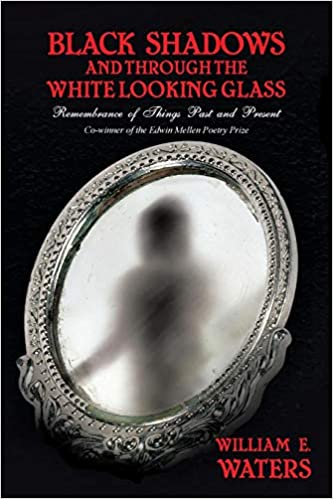
Black Shadows and Through the White Looking Glass: Remembrance of Things Past and Present

My award-winning book.  Perfect reading or gift for this Black History Month!

This Black History Month, read by award-winning book. It’s available on Amazon.

Posted in Black Shadows and Through the White Looking Glass, Education, ezwwaters, race | Tagged , , | 2 Comments