
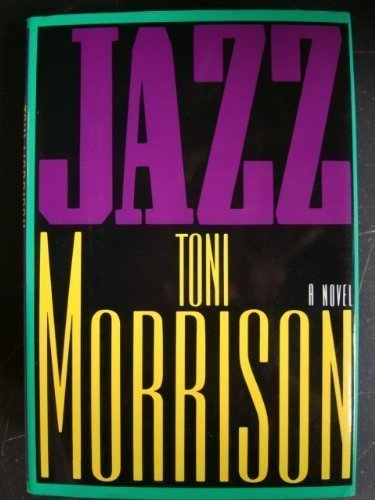
Toni Morrison is a conductor, a composer of language so melodious her prose jumps off the sheet, dances in the streets and sings to a music you feel is meant just for you. Only one other author, James Baldwin, has done this for me, elevated prose to poetry to music to jazz, all that jazz, seemingly improvised but carefully constructed, each note (word) packed with meaning, with emotions, with a story as timeless as the beginning of time, of first loves, of “killing the thing we (men) love.”
Jazz opens in the winter of 1926, the year my father was born, just three days into this new year. Joe Trace, a divorced Black male in his fifties, shoots to death his lover of three months, 18-year-old Dorcas.
From the inside flap, it says, “In a dazzling act of jazz-like improvisation, moving seamlessly in and out of past, present and future…”
Some readers find Morrison hard to follow. For the most part, these are readers not accustomed to jazz. Additionally, Morrison expects more from her readers, as all those (mostly white men) we were required to read in college, a case on point is Faulkner, his works more convoluted than complicated, with nary a note of music. In fact, Morrison liked the works of Faulkner and her master’s thesis was titled, “Virginia Woolf’s and William Faulkner’s treatment of the alienated.”
Alienation is not only a theme in Morrison’s work, but also in so many Black authors. Deconstructing the treatment of Black folk in these here United States, trauma and alienation loom large.
Morrison looms large over American letters. She won a Pulitzer prison for Beloved, a National Book Critics Circle Award for Song of Solomon, and the Nobel Prize. Reading anything by Morrison will transport you. As an artist, Morrison’s gifts are on full display in Jazz.


