
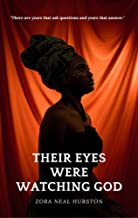
Their Eyes Were Watching God! That is one of the greatest and most meaningful titles to come out of the Harlem Renaissance. And Zora Neale Hurston was one of the coolest women during that era, holding her own with all the male Harlem luminaries, shining as brightly.
Yeah, God, we be watchin’ you, thru 246 years of slavery, thru 72 years of sharecropping ‘n’ segregation, but we still faithful, e’en when white folk curse us, call us sons ‘n’ daughters of Ham, Uncle Toms, Toby, ‘n’ Aunt Jemimas!
Readers might find the vernacular hard to follow, but no harder than Uncle Tom’s Cabin. Hurston had a better handle on the vernacular of Black people in the South than Harriet Beecher Stowe. In fact, I made it through Their Eyes Were Watching God easier than Uncle Tom’s Cabin. If the vernacular is difficult to follow – actually, it’s like a foreign language, maybe developed by Black folk in order to communicate with each other without having massa and missus any wiser – then listen to the audio book, superbly performed by Ruby Dee.


