Maya Angelou, A Muse for All Ages

On this Day of Love, also known as Valentine’s Day, I want to uplift an author and one of her books, I Know Why the Caged Bird Sings.  I love Maya and this book!

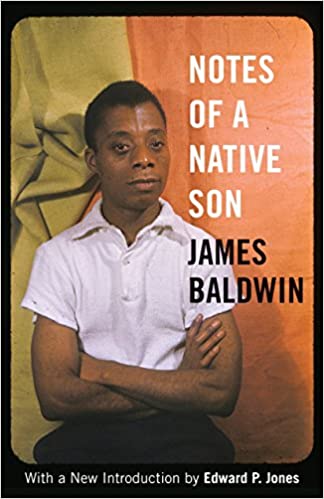
Maya Angelou was challenged by none other than James Baldwin, her friend, to write this autobiography, so poetic, so lyrical, that reviewers categorized it as “autobiographical fiction.”

Maya first published this book in 1969, the last year of the Decisive Decade.  It would be the first in a seven-volume series.  Black male authors have penned many coming-of-age stories.  This book features a coming-of-age story by a Black female author.  It begins when Maya is three years of age.

This book is a book for the ages!

Many know Maya through her poetry, single poems as famous as the author.  My favorite, “Still I Rise.”  Maya could do almost anything with poetry, and she tapped into so many forms, even “the toast!”  My second favorite poem by Maya is, “Where We Belong, A Duet.”  I would argue that in this poem she uses some of the features of the toast.

If you don’t know why the caged bird sings, then you must read this book.  If you have, then there are six more in the series, the titles as evocative as the content, and the main character, Maya, a Muse for all ages.

Posted in Uncategorized | Tagged , , , , , | 2 Comments

The Work of Reconstruction Continues. . .

Black Reconstruction in America 1860-1880, by W.E.B. DuBois, is a must read.  One Amazon reviewer wrote, “This book is a great clue to the puzzle of how we got where we are today.”  Indeed, this period would inform the next 100 years in American history, and even today its’s part of the subtext in political machinations.

As I have written elsewhere, the Hayes-Tilden Compromise (1876-77), effectively ended the Reconstruction years in America.  This period of Reconstruction was America’s first attempt to live up to her lofty ideals, especially for the descendants of Africans forcibly brought to this land even before the Constitution was ratified.  This Compromise is one of many in American history adversely affecting Black people in America, most notably beginning with the founding of the nation and the Three-Fifths Compromise, written right into the U.S. Constitution.

Today, we see politicians on both sides of the aisle looking for advantages in the electorate; we see Democrats attempting to preserve the voting rights of Black people, and Republicans attempting to restrict these rights.  (Here it is worth noting that the party of Abraham Lincoln, called “Radical Republicans” at this point and time in American history, pushed and enacted and to a certain extent promoted the rights of the newly freed “Americans” of African ancestry.)  Ever since Black men were given the franchise with the 15th Amendment of the U.S. Constitution in 1870, there have been efforts to restrict or deny altogether the rights of Black voters.  Southern politicians and their constituents found a way around the 13th Amendment (one of the three post-Civil War Amendments) by creating, passing, and enforcing laws in order to perpetuate slavery under another name, the penal system.  With the 15th Amendment, these very same individuals resorted to intimidation and terror to keep Black men and years later Black women (with the passage of the 19th Amendment in 1920 giving all women the right to vote), from exercising their constitutional right to vote.

One could argue that DuBois, in Black Reconstruction, is putting a “Black spin” on this period, but in actuality he’s correcting the false narrative of white historians, mostly Southerners, who would argue that Reconstruction was a failed experiment.  But what do you expect from treasonous Rebels and their supporters who call the American Civil War “The War of Northern Aggression?”  Just look at all the Confederal iconography standing more than 100 years after the South’s defeat we are only recently removing from public spaces.  These Confederate monuments and memorials exist in large part because the South did not lose the Civil War.

Today, the white lies in the historical narrative, when corrected, is called “cancel culture.”  The genocide of the indigenous people, slavery, and Jim Crow, are true examples of “cancel culture,” not asking white men to behave and to be held accountable in this brave new world.

DuBois eventually left these here United States and emigrated to Africa, to Ghana, because the way he understood the historical record, White America would not change, at least not in his lifetime.

And so, the work of Reconstruction continues. . .

Posted in Uncategorized | Tagged , , , | Leave a comment

Octavia E. Butler — Amen I Say to You! Amen!

Octavia E. Butler went where no Black women writers had gone before – her writing is out of but of this world!  Butler was the first science fiction writer to ever receive the MacArthur Fellowship.  And though Butler can be considered a science fiction writer, she was much more.  Indeed, Butler did not want to be shackled to a genre, for very good reasons.  Her “science fiction” is unlike the science fiction written by white males, who dominate the genre.

I was not a big science fiction fan.  I am not a Trekkie, even though I sporadically watched the Star Trek series as a kid and I’ve watched a number of the various movies.  I didn’t come to science fiction as a fan until my early 20’s, when my “book buddy” recommended Dune.  I read the first book and then devoured the next four in the series.  Shortly thereafter I discovered Octavia E. Butler, who is considered the godmother of Afrofuturism.  Butler’s sci-fi is different than the typical fare because Black writers look at the world through a different lens than white writers, although some of the same themes are addressed.  My favorite book by Butler is Wild Seed, which has two Black Immortals, Doro and Anyanwu.  My next favorite books by her are The Parable of the Sower (1993), which was a New York Times Notable Book of the Year, and The Parable of the Talents.  Biblically literate people will know these parables, but they should read Butler’s take on them.  Can I get an Amen?

This book recommendation, Kindred, is probably Butler’s most well know novel, and if you haven’t read her, then begin with this book.

I would recommend any book by Butler, for anyone who likes a good story.  Don’t think of Butler as a genre writer.  She defies being categorized!

I hope, with my book recommendations this Black History Month, that I have become your “book buddy.”

Posted in Uncategorized | Tagged , , , , , | Leave a comment

A Love Letter to George Jackson

“When was the last time you hand wrote a personal letter?”

Twice a year, in the fall and spring semesters, for a number of years, Lawrence Mamiya, Professor Emeritus of Religion and Africana Studies at Vassar College, who passed away on September 15, 2019, invited me to his class to lecture on “prison literature.”  I began my lectures with that question to a classroom of approximately 40 students. One, maybe two hands, went up.

“Writing letters are important in the history of writing – Belles Lettres – and, for the most part, letter-writing is becoming a lost art.  Who writes letters?”

“Prisoners!” a couple of eager students would shout out as their hands went up.  They know this because Professor Mamiya had been bringing Vassar students into Green Haven prison for more than 25 years – the maximum sentence in New York for people convicted of class A-1 felonies – and all of these students have been to Green Haven!  At Green Haven, these students got an education that couldn’t be bought or taught at Vassar!  In fact, Professor Mamiya’s classes often changed students’ career trajectories, becoming lawyers, and even professors teaching for colleges that have/had higher education college courses at prisons.

“Right!  People in prison.”  I correct the language.  “I believe that the art of letter-writing is becoming a lost art, a lost art that people in prison, and people in the military, are keeping alive.”

Soledad Brother, this book of letters, is a classic, and it demonstrates the power of this “genre.”  Soledad Brother captures a moment in American history – the Decisive Decade – from behind prison walls.

George Jackson, a young Black man, was imprisoned nearly at the beginning of the Decisive Decade, 1961, for a $70 armed robbery, to which he was sentenced to an indeterminate sentence of one year to life.  (This is off topic for now, but note this sentence, a sentence that could keep an individual involved in the criminal legal system for life!)  Ten years later, on August 21, 1971, Comrade George was assassinated, allegedly during an escape attempt.  He never made it out of this system!

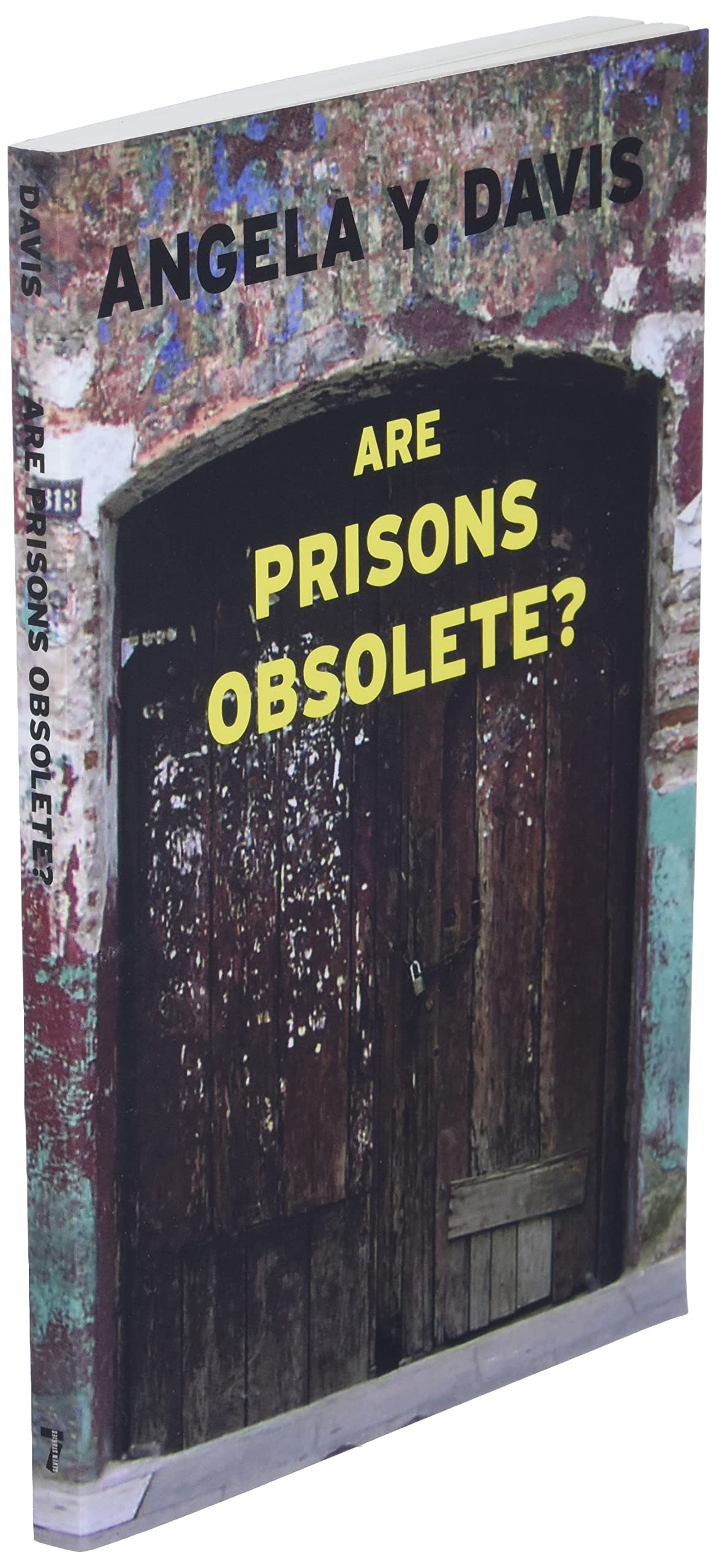
Yesterday I posted about Angela Davis’ book, If They Come in the Morning, in which George Jackson has a piece.  In fact, in his book of letters, there are some to Angela.

This book, and The Count of Monte Cristo, were two books very important to my thinking – I also read this book as a teenager.

Since Valentine’s Day is right around the corner, I’m going to suggest that, in addition to whatever you are going to do for your love, write a love letter.  When I was courting my wife, I hand wrote her love letters.  Some I mailed to her.  No one had ever done this for her!  Well, I am a poet, and some of us are hopeful romantics.

I write these words and I’m going to send them home to you
I’m going to write a letter, send it home
First class, first class baby
Let them know where I’m going to be
I’m going to write a letter, send it home
Just as fast, as fast as you can mister postman
If you please.

                                  — Write a Letter, JJ Grey & Mofro

Posted in Uncategorized | Tagged | 5 Comments

They Came in the Morning, and Returned that Night

This book was originally published in 1971, three years after Richard Nixon declared his War on Crime when he was campaigning for the U.S. presidency.  As I have written elsewhere, Nixon’s declaration of war in 1968 marked the beginning of what would be called “mass incarceration.”  Loic Waquant, a sociologist and social anthropologist, takes on using “mass incarceration” to describe the disproportionate imprisonment of Black and Brown men and women.  “Hyperincarceration,” Waquant argues, is a more accurate term, since these here United States do not incarcerate “the masses.”  But that’s another story.

The ”introduction” to this book is a letter James Baldwin wrote to Angela Davis.  Baldwin knows that if we allow the carceral state to come and take people in the morning, then surely “they will be coming for us that night.”  We know that agents of the state come in the early morning hours with “no knock” warrants, that specialized tactical law enforcement teams (TNT: Tactical Narcotics Teams) explode on the scene and into people’s homes when they are asleep and leave death in their wake, think, most recently, Breonna Taylor, but also think Fred Hampton, assassinated by law enforcement on December 4, 1969.

Angela Davis is a living icon, and I have had the pleasure of crossing her path three times in the last 20 years, all at events dealing with some aspect of the carceral system.  Most notably, about 15 years ago, at an American Studies Association conference in Connecticut.  Three of my colleagues, including Bell Chevigny, editor of “Doing Time: 25 Years of Prison Writing,” proposed a panel discussion on “prison literature” to the American Studies Association, and it was accepted.  Our argument was that the American Academy needed to value writings from prisons and jails, and that they should be taught in the ivory towers.  I think of Dostoevsky and Alexander Solzhenitsyn, how the American Academy uplifts and values the writings of these “Russian prisoners,” but not their own.  In fact, I’ve been in literary circles, and when I stated, “Right now, as we speak, there’s someone in an American prison laboring over what could be the next ‘Great American Novel,’” my counterparts, whom I could accuse of literary snobbism, would give me that look, as if I didn’t know what I was talking about.

I don’t believe in conspiracy theories, for the most part, but the American Studies Association scheduled Angela Davis’ panel discussion and ours on prison literature at the same time!  Of course, more attendees went to Angela’s panel discussion.,  (I would have gone, too if I weren’t a presenter!)  The Association should have known that these two panels would draw the same crowd, and thus not schedule them at the same time.  After the panels, we ran into Angela in the hall of the hotel hosting the conference.  We told her we wanted to come to her panel discussion but that we were presenting at the same time, our panel on “prison literature.”  Angela said she wanted to attend our panel discussion, but obviously could not!  Perhaps Angela’s panel should have been in the morning, and ours that night.

I highly recommend this book to all concerned about justice, which is far more elusive than “finding Waldo.”

Posted in James Baldwin, police involved shooting, Lest We Forget | Tagged | 1 Comment

Almost Sonnets

Today I have a bonus book recommendation.  I confess it’s a bit of self-promotion, since it is my book.  In fact, I began Black History Month by recommending my award-winning book, Black Shadows and Through the White Looking Glass: Remembrance of Things Past and Present.

This book, The Black Feminine Mystique, is a collection of poetry, a tribute of sorts, to Black women.  It’s a perfect Valentine’s gift, the poetry better than the lame words in greeting cards, even if I say so myself.  Black and Brown women might even want to purchase this book for their grandmothers, mothers, aunts, sisters, daughters, granddaughters, nieces and friends, as well as themselves.

The poetry in this book is written in the form Shakespeare made famous in English, the sonnet.  Shakespearean sonnets are difficult to write, in large part because English is a rhyme-poor language.  I often joke how Black artists make up words in order to run with a rhyme scheme – the gift of story and song.  In fact, I have written elsewhere that when Africans were forced to learn European languages, especially English, it tortured and twisted their tongues and their native tongues because Africans communicated differently than Europeans, think Click Song.  With this in mind, with a near perfect understanding of the Shakespearean sonnet and its tortured and twisted linguistic syntax, I set out to write what I call, “Almost Sonnets.”  Most of the structure of a sonnet is there, but I threw my pen at the Bard and wrote as a 20th century Black man in America – I began writing the poems before the New Millennium.

Yet do I marvel at this curious thing:

To make a poet black, and bid him sing.

–Countee Cullen
Posted in Uncategorized | Tagged , , | 1 Comment

The Gift that Keeps On Giving

J.A. Rogers is probably the greatest autodidact in the history of the world!  Not only was Rogers self-taught, but he was also self-financed and self-published.  Talk about self-determination and controlling the narrative!

I would recommend any book by Rogers.  Among my first recommendations this Black History Month was his From Superman to Man, a short polemic challenging most of the sacrilegious cows of white supremacy.

This book recommendation, Africa’s Gift to America: The Afro-American in the Making and Saving of the United States, is a testament to what W.E. B. DuBois wrote about, that is, the “gifts” Africans and their descendants in America gifted to America: the gift of story and song; the gift of sweat and brawn; and the gift of the spirit.

Gift this book to both young and old this Black History Month.  In fact, if you are looking to start or supplement your library, stock it with all of J.A. Rogers’ books.

As I’ve written elsewhere and will continue to write and proclaim to my last breath: Black History is American history.  In fact, there is no American history without Black History.

Finally, a note to detractors: Almost anyone who emigrates to the United States should wrap their minds around some fundamental lessons of Black History.  Black folk state that we “make a way out of no way” – well, Black folk made it easier for almost everyone else who comes to these here United States, having borne “the whips and scorns of time,” and having challenged America to live up to her lofty ideals.

Posted in Uncategorized | Tagged , , , | Leave a comment

Reconstruction Revisited

This book is, for the most part, unknown, even among history buffs, as I am.  (I actually stumbled upon it more than 30 years ago. Someone had placed it among the trash!)  This book though covers one of the most important periods in American history, after the Civil War (1861-65), and after Reconstruction (1865-77), specifically 1877 (the end of Reconstruction) through 1919 (the end of World War I).

The Reconstruction years pointed towards what America could be, if she wanted to live up to her lofty ideals, for all people in the continental United States, and beyond.

The year 1876 marks the election of Rutherford B. Hayes, the 19th American president.  To this day, President Hayes’ election is the most contested election in American history – Trump’s presidency will be an aberrational footnote in American history – and was certified because of a compromise, the Hayes-Tilden Compromise.  In a nutshell, Southern power brokers negotiated this Compromise, getting Hayes and his party to withdraw the last Federal troops occupying the South.  With that done, Southerners returned to business as usual, terrorizing Black people who asserted their newfound rights, and nullifying the post-Civil War Amendments (the 13th, abolishing slavery unless duly convicted of a crime; the 14th, revolving around basic fundamental rights of all Americans, that is, Black people; and the 15th, giving Black men the right to vote).

I often write and talk about the Decisive Decade (the 1960’s), but what happened in the aftermath of Reconstruction set the stage for what America was for the next 100 years: the origins of hyper incarceration; legal segregation; race riots; the wholesale brutalization of Black people; the destruction of the Black Wall Street, etc.

In this book there’s a section on the portrayal of Black people in the media, even the “liberal” media, during this period, shameless caricatures that play into stereotypes even to this day (think white people in blackface, how this stereotype tickles their funny bones).  The book is worth its price for this alone!

Posted in Uncategorized | Tagged , , , , , , | Leave a comment

A Good Black Man is Hard to Find: The Pathological World of Alice Walker

Dear God!

Once upon a time – it seems that long ago – I was working on a Master of Fine Arts (MFA).  I was reading Alice Walker.  She had accused Black men, specifically Black male authors, of not reading Black women authors, adding that Black women read everything that came down the pike that Black men wrote.  So, I set out to read even more Black women authors.  I began with Alice Walker.  I read her first two collections of short stories, and then her first three novels, the third being “The Color Purple.”  As a Black male it is hard to read Alice Walker, which led me to flirting with the idea of going after my MFA.  Since I had read Walker’s first five books, I said I might as well write my thesis on her fictional world. For me, titles are important.  In fact, before I begin any writing, I begin with a title in mind.  My working title for Walker’s work was, “A Good Black Man is Hard to Find: The Pathological World of Alice Walker’s World.”  In Walker’s first five books, those two collections of short stories, and three novels, there is so much violence against Black women.  One Black father cuts off the breasts of his college-going daughter because she is dating a white male!  The violence against Black women is off the chart!  There is not one good Black man in Alice Walker’s “fictional” world.  And although Walker, in an interview, states that she is not writing “protest novels,” as some Black male authors have, in a very strong way her writing is a protest against the violence against Black women, by both white and Black males.  But Black males bear the brunt of Walker’s ire.  To state that Walker’s world sickened me is not hyperbole.  If there was a shred of truth in Walker’s World, then we were in very bad shape.  I think that I am a good Black man, and I know many good Black men, including my father, who grew up in the Jim Crow South and served in the segregated U.S. Army during World War II, despite how white America attacked Black manhood.  My father was the best he could be given the world he was born into.  When I think of all the stories of Black fathers missing in action, I think of my father, who was always there and, historically, I think of all the Black fathers who were fathers to all the children Black women bore as a result of the rape of white men for hundreds of years during slavery. But that’s another story!

The Black male with the most redeeming qualities in Alice Walker’s World is Grange Copeland, in “The Third Life of Grange Copeland.”  In his first two “lives,” Grange gets nothing right, especially fatherhood.  In his “third” life Grange has to kill the son, Brownfield, that he has turned into a monster, in large part because of his absence from his son’s life.  Brownfield has killed his wife, and after a bit in prison he is released and is intent on destroying his daughter, Ruth.  This is when Grange knows beyond a reasonable doubt that he has to kill his son in order to stop the cycle of violence, with an act of violence.

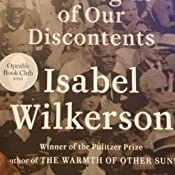
Having made it through five of Walker’s books, having diagnosed her, I was ready to commit her to a hospital for the criminally insane, or I would end up there myself!  I came to the conclusion that I was not Walker’s intended audience, and I was okay with that, but I felt like I was a target, and for that reason perhaps I was part of her intended audience.  And then I read this book; and then it all made sense.  With a clarity even her harshest critics couldn’t deny, Walker lays it out in her collection of nonfiction, “In Search of Our Mothers’ Gardens: Womanist Prose.”  It was then that I got it.  For Walker, it really doesn’t matter what happens to Black men in the whole wide world.  There’s no excuse to come home and take it out on their women and children.

Dear God!

Posted in Uncategorized | Tagged , , | 4 Comments

A Funeral, Two Graduations, and a Milestone Birthday Celebration

In a six-day span, I attended my baby brother’s funeral, our two daughters’ graduations, from middle school and high school, and my sister Cheryl’s milestone (60th) birthday celebration.

At Whitney’s funeral, I spoke on behalf of our family. Here, I want to share those words.

The last seven days I have cried more than I have in my 60 years of life. I am tired. I have been wrestling with God these past seven days, fighting him over the death of my baby brother.

I barely understand the mystery of life. I certainly do not understand the mystery of death. “The Last shall be first?” Is this what you mean, God?

Whitney was the last child born of our mother and father. He was born into a household of a mother, a father, a brother, and three sisters.

Whitney was the comedian in the family. If you were going to meet him for the first time, then my sisters would joke and apologize in advance. Whitney had a wicked wit — I called him Whit — and although he never said anything offensive, my sisters were just covering the bases, because we really did not know what Whitney might say or do.

I am the historian in the family, and I fancy myself a storyteller. I am going to tell you two stories. Spoiler alert! They both are about the love we, my sisters and I, have for our baby brother.

But before story time, I want to thank everyone for their love and support for my family, and Whitney’s extended families, and of course, Whitney’s fiancee, Cynthia.

Cynthia and Whitney were to be married on August 21st. We had planned a wedding. Instead, we are at Whitney’s funeral. Whitney was the best man at my wedding. I was to be his best man at his wedding. That’s how the Waters brothers roll!

Cynthia, I believe we have three stages of life. We, men, barely get it right the first two times. Whitney was in his third life. He reconnected with you, the love of his life. When I got married, Whitney told me he had never seen me happier. I had not seen him happier once he committed to marry you.

STORY ONE

In one of the pictures in the slide show, Whitney is 10 years of age, at our mother’s funeral. He is surrounded by a cousin, and his three sisters, his guardian angels, dressed in white.

Jeanette, on that day, became Whitney’s mother. I know that grief cannot be quantified, and our grief is exponential, four times the greatest number, but Jeanette’s grief is double ours, her siblings. She was Whitney’s sister, but became his mother when she was 19. Obviously, she did a great job raising our brother.

Growing up, Jeanette was known as “Fighting Jeanette.” She had some epic rumbles in the concrete jungle of the Marcy Projects that would have made Muhammad Ali proud. Jeanette, if she had to, would fight for our brother, would put her life on the line for him.

Cheryl embodies our mother’s spirit. If she had not heard from Whitney in two or three days, then she would call him until she got him, telling him that he could not let two or three days go by without calling one of us. The “Us” referred to one of his three sisters.

Cheryl, Whitney’s Guardian Angel.

Wanda was the baby until Whitney came along. From the very beginning, she fiercely loved him. Wanda had to compete with our mother and two sisters for facetime with our baby brother. She was last in the pecking order to hold him and spend time with him.

Wanda does not remember this, She was 5 or 6, but one day, she finally had her facetime with Whitney. She was in our parents’ room, cuddling him. I snatched Whitney out of Wanda’s arms. Our mother had a tabletop sewing machine right next to the bed. On it was a disposable razor. One second I was holding Whitney, the next I was holding my shoulder, a gash on it, and Whitney was back in Wanda’s arms. She moved like a ninja!

I tell this story because it speaks to, even at a young age, the fierceness of Wanda’s love for Whitney. From this day on, I will remember this scar on my shoulder as a symbol of Wanda’s fierce love for Whitney.

In this story, Wanda is the Equalizer. Think Latifah reprising the role of Denzel Washington, in The Equalizer, on the small screen. And me, even at my young age, I just wanted to spend more time with my baby brother. I had lived in a household with three sisters, and they have this sisterhood thing going on. Always have. Then, even though I could not articulate it, with the birth of my brother, we now had a brotherhood.

And now for a commercial.

Brothers, there’s this book The Body Keeps Score. All you need to know about it is that the body remembers everything, what has happened to it. I know we sometimes think we are invincible, and when younger, immortal. But we’re not. If you are experiencing pain, then do not ignore it. Your body is trying to get our attention, to tell you that it needs something. Don’t hesitate to go to the doctor. Most ills are preventable or treatable. Sisters, nag the men yin your life to go to the doctor until they go to the doctor!

STORY TWO

In the last chapter of the Gospel According to John, the Risen Christ has a conversation with Simon Peter. He asks him the same question three times. Do you love me? To which Simon Peter says yes.

To fully understand this exchange, we need to know that Jesus and Simon Peter are using two different words for love. Those wise Greeks had five words for love. (What we call the New Testament was originally written in Greek.) I’ll roughly translate.

Jesus says, do you have this great, unconditional love for me?

Simon Peter answers, I love you like a brother.

Jesus says again, do you have this great, unconditional love for me?

Again, Simon Peter replies, I love you like a brother.

Knowing that this is as good as it gets, the third time Jesus says to Simon Peter, do you love me like a brother?

And they really are not on the same page. For the third time Simon Peter says, Yes, I love you like a bother! He says this as if Jesus finally gets it!

I love my brother like a brother. He was my brother. But I also loved my brother with the great, unconditional, nonjudgmental love that Simon Peter could not articulate to Jesus.

In conclusion, I want to leave you with two lines from a song.

At I.S. 318, I was in the chorus. Our signature song was Diana Ross’ “Touch Me in the Morning.” Tuesday morning [June 1, 2021], Jeanette and I touched our baby brother after he had breathed his last breath, and through my grief that song flooded my mind.

Wasn’t it me who said that nothing good’s gonna last forever?

And wasn’t it me who said, let’s just be glad for the time together?

We are glad for the time together with you, Whitney!

Posted in Uncategorized | 1 Comment