Daddy Dearest

My father, a Native Southern Son, was born in the same month and year Negro History Week was established. Then, we were Negroes. Thirty-four years later, when I was born, we were still Negroes. When my father died at the age of 56, in the same month he was born — today being the anniversary of his death — we were no longer Negroes.

When I think of Negro History Week, I think of my father. As a native New Yorker, born at the very beginning of the Decisive Decade, at the very beginning of the Black Arts Era, I cannot imagine growing up in the segregated South, or being drafted into the segregated U.S. Army as a teenager during World War II, as my father.

My father never talked about growing up in the segregated South, or why he left. When I was growing up, every year around the Fourth of July my father would get in his Cadillac and go down South to visit his family, many whom never left the South. Then, I didn’t understand why my father never took me, his first-born son, or any of his children, down South. I didn’t know Jim Crow, that even little Black boys were not safe from his psychopathic wrath. When 14-year-old Emmett Till was brutally murdered by agents of Jim Crow, my father had already left the South. I often wonder if my father thought about Emmett Till on his trips down South as he drove across the Mason-Dixon line. When I learned about Emmett Till, I thought that perhaps that was one of many reasons my father never took me South. As an adult, when I visited the South on my own, I was struck dumb by Confederate pride more than 100 years after the Confederacy’s defeat in the Civil War, framed in the Southland as the War of Northern Aggression. We have the stubborn legacy of the segregated South — actually, a segregated nation, one Black, one white, separate and ostensibly equal.

The Black artist has made the same point in the context of aesthetics. The two movements [Black Power and Black Arts] postulate that there are in fact and in spirit two Americas — one black, one white.

Larry Neal, “The Black Arts Movement”

The closest I’ve come to understanding the segregated South of my father’s era was reading Richard Wright’s “The Ethics of Living Jim Crow, An Autobiographical Sketch” (1937). Although Wright was born in the generation just before my father’s — my father was 11 years of age when Wright wrote this Sketch — they shared growing up in the segregated South and not just living the ethics of Jim Crow but also navigating its many perils.

Last summer I was in Virginia. (My father lived there after he left North Carolina, where generations of my folk have lived and still live, going back to 1805, where the genealogical trail goes cold.) Something keeps drawing me back to that state. I think it’s the spirit of my father, calling me home. Although I am a native New Yorker, 200 years of my family’s history is part of the fabric of the South. My family’s blood, sweat and tears has fertilized Southern fields, not to mention my family fought in the two Great Wars, the Korean War, and Vietnam. How dare anyone tell me to “Go back to Africa!”

Posted in Black Shadows and Through the White Looking Glass, ezwwaters, Family, Fatherhood, Fathers, Lest We Forget, race, raising black boys, Relationships, Slavery | Tagged , , , , , , , , , , , , , , , | 3 Comments

From the American Revolution to the Black Arts Cultural Revolution

After the American Revolution, most of the defining moments in American history involve or revolve around Black people.  Black folk were even involved in the American Revolution, fighting on both sides – the British promised Africans and the descendants of Africans their freedom if they fought with the British, and those who fought with the British were in fact granted their freedom and relocated to Canada.  Crispus Attucks, a Black man, is traditionally regarded as the first person killed in the Boston Massacre, and thus the first American killed in the American Revolution.  In part, this is why I have written that Black history is American history, and that there is no American history without Black history.

Black history in America begins long before the American Revolution, when in 1619 Africans were forcibly brought to what we now call the United States of America.  The African presence in America would come to define America in ways that we need to acknowledge, unto this present age.

No age defined America more than the 1960s, called the Decisive Decade by Samuel Yette, the first Black Washington correspondent for Newsweek (1968).  The Decisive Decade brings us to the Black Arts Era (1960-1975).  This era moves me in ways unlike the Harlem Renaissance (1919-1940), perhaps because I was born at the very beginning of the 1960s.

The 1960s was unlike any period in American history: the Reconstruction Years (1865-1877); the Roaring Twenties (1920-1929); the Harlem Renaissance; and the Civil Rights Movement (1954-1968).  Although all of the above-mentioned eras held promise, the 1960s held the greatest promise and possibility for changing the warp and woof of America.  Note that leaders, both white (JFK and RFK), but mostly Black (MLK, Malcolm X and many others), were assassinated in the 1960s.  In no other Decade were more American leaders assassinated.  Without going down a conspiracy theory rabbit hole, it seems clear that reactionary white forces in America did not appreciate the possibilities of Camelot and made it myth with JFK’s assassination, and if there were any thoughts that his brother would take up Excalibur, he, too, was assassinated.  In this, the assassinations of Abraham Lincoln and JFK and RFK are connected.  Lincoln, the “Great Friend of the Negro,” was assassinated during America’s Civil War, which revolved around the issue of slavery.  JFK and RFK, not necessarily “great friends of the Negro,” found themselves in a Decade in which America could not ignore her Black citizens, because they took to the streets (in the Civil Rights War) while the world watched live in black-and-white on their TVs the heights of American hypocrisy, proclaiming herself the citadel of democracy and freedom to the world when democracy and freedom did not exist for Black citizens in “the land of the free and the home of the brave.”  During Camelot, affirmative steps were taken toward the illusive “perfect Union.”  With the assassinations of the Kennedy brothers, LBJ tried to make America great, with the Great Society, long before Trump could even imagine occupying the Oval Office.  Trump, the quintessential Ugly American, has revealed how morally bankrupt American politics have become.  And there are lessons here if we would just pause and take a timeout.

…the political values inherent in the Black Power concept are now finding concrete expression in the aesthetics of Afro-American dramatists, poets, choreographers, musicians, and novelists.  A main tenet of Black Power is the necessity for Black people to define the world in their own terms.

Larry Neal

There was a time when America could boast that her leaders were among “the best and the brightest” – operating within the Decisive Decade – that they were looking to rise to meet the moment, to be better, to live up to her ideals.  This is especially true of JFK, the youngest president in American history.

This Black History Month, embrace Black history, that is, American history.  Read the literature of the Black Arts Movement to see how Black artists forged an aesthetics that spoke to Black people, that put Black people at the center of the universe.  This aesthetics, though, was not meant to put white people down, only to uplift Black people.  There is something absolutely empowering for all Americans in both of these revolutions, the American Revolution, and the Black Arts Cultural Revolution.

Posted in Black patriotism, Black Shadows and Through the White Looking Glass, ezwwaters, F. Scott Fitzgerald, Growing Up, John F. Kennedy, Lest We Forget, Malcolm X, Martin Luther King, Nation of Islam, Patriotism, Poetry, Politics, race, Revolution, Slavery, Streets of Rage, urban decay, Urban Impact | Tagged , , , , , , , , , | Leave a comment

Happy Valentine’s Day to African American Literature!

Since it is Valentine’s Day, I dare to say that I have an ongoing love affair with African American literature.  And, once again, I am teaching African American Literature in the 20th Century for another college.  (I previously taught it at Bennington College.)  The primary texts are The Norton Anthology of African American Literature, 3d edition, volumes 1 and 2, edited by Henry Louis Gates, Jr. and Valerie A. Smith.  The other primary text is Brotherman: The Odyssey of Black Men in America – An Anthology, edited by Herb Boyd and Robert L. Allen.

I normally begin this course with someone reading James Weldon Johnson’s “Lift Every Voice and Sing,” known as the Black National Anthem.  Indeed, just this past Superbowl Sunday, Andra Day beautifully sang it to the millions of people tuned in.  Of course, some MAGAites (pronounced maggots) pushed back, because anything that uplifts Black folk and Black voices is anathema to white supremacists.  This is not surprising, in light of the attacks on Critical Race Theory (only taught in law schools), and what some white folk like to scream and shout, “cancel culture!” when they can’t sound off, mostly on people of color, in the most disrespectful ways, and not be held accountable.  Ironically, the pushback on singing the Black National Anthem to the world is a pernicious form of cancel culture.  Note that I attended a Superbowl party, and during the singing of both the Black National Anthem and the National Anthem that the majority of the Black audience was on their feet with their hands on their hearts.  (Eat your hearts out, MAGAites!)

Yet do I marvel at this curious thing:

To make a poet black, and bid him sing!

Countee Cullen, “Yet Do I Marvel” (1925)

I enjoy teaching this course, because it has me revisit Black classics – Three Negro Classics, with an introduction by James Weldon Johnson, one of the other assigned texts — including Up From Slavery, by Booker T. Washington, The Souls of Black Folk by W.E.B. DuBois, and The Autobiography of an Ex-Colored Man by James Weldon Johnson.

The first in-class assignment during the first class was having students reflect on and write about the theme of Black History Month – I utilize the Amherst method.  I also asked students to share their favorite Black author and their favorite book by a Black author.  I was surprised that one of the students said that his favorite Black author is Alexander Dumas, and that his favorite book by a Black author is The Count of Monte Cristo, which was my favorite book as a teenager!  I keep saying that one of these days I’ll watch one of the movies made about the book!

The reading assignment for the following class included various authors articulating what I call “Black Poetics.”  My talk – I prefer “talk” to “lecture” – preceding the assignment was a brief description of Aristotle’s Poetics, counterbalanced by an excerpt from Larry Neal’s “The Black Arts Movement,” and “Some Reflections on the Black Aesthetic.”  Neal rejects the Eurocentric approach in Black Art, that Black Art must be created from the Black experience.

The next reading assignment will include Toni Morrison’s essay, “Unspeakable Things Unspoken: The African American Presence in American Literature.” In this essay, Morrison’s brilliance shines. One of my takeaways from Morrison is, why should only dead white men be on the bookshelves when we talk about American literature?  As I’ve stated elsewhere, we cannot talk anything American without talking about Black America. Whether white folk like it or not, the reality is that there is no America as we know it without Black folk.

Posted in Black patriotism, Black Shadows and Through the White Looking Glass, ezwwaters, Lest We Forget, Politics, race, Slavery | Tagged , , , , , , , , , , , , , , , , , , , , , , | 2 Comments

The Black Arts Movement

The theme for this Black History Month is African Americans and the Arts.  For purposes of this blog, I’ll highlight the “Black Arts Era” (1960-1975).  The Black Arts Era began at the very beginning of what Samuel F. Yette, influential newsman and the first Black Washington correspondent for Newsweek, and the author of The Choice: The Issue of Black Survival in America, called the Decisive Decade, for obvious reasons if we look at that era and the political assassinations, of JFK and RFK, of MLK and Malcolm X, and so many others – a long list of stolen lives.

All those stolen lives, all those political assassinations, took from us the best and the brightest.  The decade was indeed decisive, in that the struggle for Civil Rights in America was becoming a struggle for human rights within the international context.  MLK seemed to be offering America the easy way out, and it wasn’t simply about integration.  It was about America making good on that promissory note, doing more than simply spouting the ideals of Democracy!  The world was watching America.  She could not talk about democracy abroad when it was denied at home.  She could not talk about freedom when America was becoming a prison state.  She could not send someone like Muhammad Ali overseas to fight a war against people of color, people who never called him the N word – those are fighting words!  If there was fighting to be done, it could be done on the homeland.

This political landscape would profoundly inform the Black Arts Movement.  Larry Neal, notable scholar, writer, poet, and critic, in “The Black Arts Movement,” wrote:

The Black Arts Movement is radically opposed to any concept of the artist that alienates him from his community.  Black Art is the aesthetic and spiritual sister of the Black Power concept.  As such, it envisions an art that speaks directly to the needs and aspirations of Black America.  In order to perform this task, the Black Arts Movement proposes a radical reordering of the western cultural aesthetic.  It proposes a separate symbolism, mythology, critique, and iconology.  The Black Arts and the Black Power concept both relate broadly to the Afro-American’s desire for self-determination and nationhood.  Both concepts are nationalistic.  One is concerned with the relationship between art and politics; the other with the art of politics.

Neal, L.  (2014).  The Black Arts Movement.  In H. Gates and V. Smith (Eds), The Norton Anthology of African American Literature, 3d Edition, Vol. 2.  (pp. 784-791).  W.W. Norton & Company.  (Original work published 1972).

One can make the argument that most, if not all Art, is political, including the protest novel, which the aesthetics of the Black Arts Movement rejects, because it appeals to “white mortality.” As Neal stated in the above quoted piece, the Black Arts Movement separates itself from the western cultural aesthetic. It is tied to concepts of Black Power. It operated from the fact that there were two Americas, Black, and white, and white America had no claim to moral superiority given the racial terror it perpetrated against Black people throughout the Decisive Decade. If this was the road of white morality, then why follow it in any shape, form or fashion? Why not create something that spoke directly to and evolved from your lived experience as Black people in America. A case on point, Frederick Douglass deconstructed the Fourth of July, what it meant to the Negro? Black aesthetics will see things differently, because Black folk have experienced America differently from white folk.

The Black Arts Era is full of revolutionary works of music, story, and song, that came from the Black experience of America. In the Black Arts Era, Black artists found a voice that divorced itself from that duality that W.E.B. DuBois wrote about. It wagged that symbolic Black fist at the white world. Read any of the works of artists from that generation, beginning with LeRoi Jones.

I often wonder what kind of land America would be without that long list of political assassinations in the Decisive Decade, by far the most important decade in American history, one more important than the Reconstruction years (1865-1877). In a sense, those political assassinations forged the Black Arts Era in Black blood.

Posted in Black Shadows and Through the White Looking Glass, Education, ezwwaters, John F. Kennedy, Lest We Forget, Malcolm X, Martin Luther King, Murder, Nation of Islam, Politics, race | Tagged , , , , , , , , , , | 2 Comments

Happy Birthday to Black History Month!

Black History Month is nearly 100 years old!  Granted, it began as Black History Week, on February 7, 1926, and didn’t become Black History Month until February 10, 1976.  My father, a Native Southern Son, was born in the same month and year, eight days later.

President Ford called upon the public to “seize the opportunity to honor the too-often neglected accomplishments of Black Americans in every area of endeavor throughout our history.” 

Presidential Message of Gerald Ford on Black History Month

My father grew up in the segregated South.  As a teenager, he was drafted into the segregated U.S. Army to serve during World War II.  A couple of years after his discharge from the segregated U.S. Army in 1946, my father would make his way to Brooklyn, New York. During his lifetime, there were basically two reasons why Black folk left the South.  One, they were fleeing white violence or the threat of it, or two, they were seeking a better life.  Most times, it was a combination of the two.

My father never talked about his life growing up in the segregated South.  He was born in North Carolina and later would move to Virginia.  (I imagine he saw his share of disrespect and violence perpetrated by white folk against Black folk.)  Once he moved North, every year he would get in his Cadillac and travel down South around the Fourth of July weekend.  And although Frederick Douglass eloquently articulated what the Fourth of July meant to the Negro – not the glory of the stars and stripes, for which Black people fought without hesitation, from the very beginning of the founding of the nation, during the Revolutionary War – there was always hope that the nation would live up to her ideals.  Even W.E.B. DuBois believed that white folk would have to give Black folk their due because they put skin in the game, that is, fought with brave distinction in the Great Wars, but he was soon disillusioned and “went back to Africa.”

Africa was probably always calling DuBois to come home.  America has miserably failed in respecting Black humanity.  Given this white mindset, and the miseducation of the Negro, it was astonishing that Carter G. Woodson had the vision to celebrate the history and contributions of Black people in America, a mere 61 years after the end of the Civil War.  And what Black people accomplished was astonishing in light of all the forces mustered by white supremacists and segregationists to hold on to the way of life of the “Lost Cause,” and to keep Black people subjugated and “in their place.”

I often wonder if America will ever be a safe place for Black people.  I know it’s impossible for the divestiture of Black people’s gifts to America, the gift of sweat and brawn, the gift of story and song, and the gift of the spirit.  As Martin Luther King Jr. once dreamed, maybe one day the majority of white people will see that not only are Black folk the conscience of the nation, but Black folk are also the heart and soul of America.  These are among the many reasons to celebrate Black History Month, every month.

Happy Birthday to Black History Month!

Posted in Black patriotism, Black Shadows and Through the White Looking Glass, Education, ezwwaters, Fatherhood, Fathers, Growing Up, Lest We Forget, Patriotism, Politics, race, raising black boys, Revolution | Tagged , , , , , , , , , , , | 2 Comments

Black Fruit, Strange Fruit

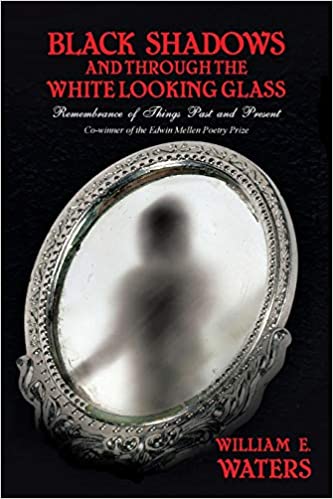
My first book, the award-winning epic poem, Black Shadows and Through the White Looking Glass: Remembrance of Things Past and Present, deals with the theme(s) of “the captivity, exploitation and suffering of Black people in America.”  But not all of Black history is about suffering.  A big part of Black history is, despite the odds, triumph and transcendence.  Nevertheless, there is a theme of “racial injustice.”

The Equal Justice Initiative has a superb calendar documenting this racial injustice, lest we forget.  Every American should be subscribed to this calendar!  Today’s calendar is entitled, “White Mob Lynches Thomas Brown on Courthouse Lawn in Nicholasville, Kentucky,” on February 6, 1902.  In most of these lynchings, as in the murder of Thomas Brown, white mobs, without resistance from law enforcement, would seize Black men from jails, brutalize them in unspeakable ways, and then hang them, memorializing them as “strange fruit.”

https://calendar.eji.org/racial-injustice/feb/06

Southern trees bear strange fruit
Blood on the leaves and blood at the root
Black bodies swinging in the southern breeze
Strange fruit hanging from the poplar trees

Pastoral scene of the gallant south
The bulging eyes and the twisted mouth
Scent of magnolias, sweet and fresh
Then the sudden smell of burning flesh

Here’s a fruit for the crows to pluck
For the rain to gather, for the wind to suck
For the sun to rot, for the trees to drop
Here’s a strange and bitter crop

Black men, women, and children harvested crops across the South for nearly two and a half centuries under slavery, and then another 100 years under Jim Crow, laying the groundwork for the wealth of the nation.  Of course, most white folk did not and do not want to give Black folk credit for this, for the gift of their sweat and brawn, their ingenuity and brilliance, that they overcame, and did more than simply survived. The sadistic pathology of white supremacy though will not let Black people be!

As we head into a presidential political cycle, with a country as divided as it was during the period leading up to the Civil War, where some white people still do not want to let Black people be, where one political commentator describes the “politics of revenge,” that that’s what’s driving many white voters, that some white people want revenge. For what, I wonder? I know that when I hear “cancel culture” from a white person that it is connected to a bygone era, where white people were not held accountable for their crimes against Black humanity. Do some white people want to return to those days, where they could say and do anything, including killing Black people, without being held accountable? Those days are long over! 

Black fruit will not sit idly by and be turned into strange fruit! Perhaps RAHOWA is upon us!

Posted in Black Shadows and Through the White Looking Glass, crime, ezwwaters, Lest We Forget, Murder | Tagged , , | 1 Comment

Black History: “Say It Loud – I’m Black and I’m Proud!”

My first three posts this Black History Month have invoked Carter G. Woodson, “the father of Black history,” and his seminal work, The Miseducation of the Negro, published in 1926. Most importantly, Woodson, the creator of Black History Month, gave Black folk something to be proud of.

In my post of February 3, 2024, “Correcting the Miseducation of the Negro,” I referenced my educational odyssey, which continues to this day — I am a lifelong learner. There is nothing more important in one’s educational journey then, first and foremost, to learn one’s history; for Black people this is Black history, which is given short shrift within American history courses, though Black history is American history! Black history, including Critical Race Theory, and the 1619 Project, is not “revisionistic.” The term is used negatively, as if correcting the historical record of exclusions and whitewashing of American history is made up history, though the mythological and propagandistic nature of American history is not called into question. And as I previously wrote, at 17, in my first year of college, I was introduced to critical thinking and instructed to question every theory and position I encountered.

During my educational odyssey, I remember all the Black teachers I had, at first not because they made a great impression on me, but because they were Black. Sadly, from pre-k to 12th grade, I only had three Black teachers: Mrs. R in elementary school (PS 148); Mr. J. in intermediate school (IS 318); and Mr. R. at Alexander Hamilton (now Paul Robeson) High School. Mrs. R. was “motherly” — we all thought of her as our mother. She believed in us and believed that the world we were inheriting would be much better than hers. Misters J. and R. were music teachers. Mr. J. taught us that music resided within us, within our souls, and that our heartbeats were like the drumroll heard at creation. And though Mr. J. did not reference W.E.B. DuBois’ “gift of story and song,” he instructed us how to embody a song and make it our own! To this day, my favorite song is, “Touch Me in the Morning,” by Diana Ross, to which we sang out our little hearts, which I learned by heart in Mr. J’s chorus class. We sang the song as if as teenagers we knew what love was, to have it, and to lose it. Mr. R. was the coolest and stylish teacher I had through 10th grade. He was cultured in the way that white folk think of culture, but he embodied that “duality” DuBois wrote about, American and African. Mr. R. had us listen to Bach, and we watched how it transported him as we listened, and from simply watching him we learned about the transcendent nature of music, of the Arts. And because we were living through the Black Power Era, Mr. R. gave us heavy doses of James Brown, “Say It Loud – I’m Black and I’m Proud!” Whenever I left Mr. R’s class, I held my head high and walked with the rhythm of the drumbeat of my heart.

Black history is the heartbeat of America.

Posted in Black Shadows and Through the White Looking Glass, ezwwaters, Lest We Forget, race | Tagged , , , , , , , , , , , , , | 1 Comment

Correcting The Miseducation of the Negro

Carter G. Woodson’s seminal book, The Miseducation of the Negro, published in 1926, is a book Black folk should periodically revisit, perhaps every three years, ideally every year.  If you are Black and you have not read the book, then I strongly suggest that you read it this Black History Month.  I would not go as far as saying that if you are Black and have not read the book then you are miseducated, but I would think of Supreme Court Justice Clarence Tom, U.S. Senator Uncle Tom Scott from South Carolina, and Aunt Jemima Candace Owens, and I would bet my last dollar that these miseducated Negros have not read the book.

It is not surprising that Senator Uncle Tom Scott hails from the state that in 1739 passed the first law which prohibited teaching an enslaved person to read and write, punishable by a fine of 100 pounds and six months in prison.  Note that today that 100 pounds would be equivalent to 25,306 pounds.  For context, New York State currently annually spends about $25,139 per student on public education (pre-k through 12th grade).

I am a product of New York City’s public education system, and in it I learned readin’, writin’, and ‘rithmetic.  From pre-k through 12th grade, I would not have thought of myself as miseducated.  At 17, my first year at Russell Sage College, in a Rhetoric course, I learned about Trivium – the elementary three: General Grammar, Aristotelian Logic, and Classical Rhetoric.  It was in this class that I also learned the first lesson of the Humanities: “know thyself.”  Education must first revolve around self-knowledge.  For a Black person, that would entail having books like The Miseducation of the Negro as part of the curriculum.  Even with this discovery, I didn’t think of myself as miseducated, but I was definitely deceived.  You know that a class has made a life-changing impression on you when 46 years later you remember one of the primary texts, The Art of Deception: An Introduction to Critical Thinking, by Nicholas Capaldi. (A year ago, when our daughter was a sophomore in college, I sent her this book.)

When the laws prohibiting teaching enslaved people to read or write were no more, Black children could not theoretically be denied education because of the Compulsory Education Act (1852), which required all children between the ages of 8 and 14 to attend school for at least three months out of the year.  In 1964, the age of eligibility was raised from 15 to 16.

When I think of myself as a 16-year-old, I did not know that in a year a course would change my educational trajectory.  I am thankful for that educator who taught me the importance of critical thinking, to call everything into question, that dissecting a theory was more important than remembering its core principles.  I learned to ask questions, even if only to myself.  First, did the theory in question hold up under scrutiny?  The whitewashed version of American history does not hold up under scrutiny.

Without getting into the politics of education, we know that the so-called “separate but equal” clause articulated by the U.S. Supreme Court in Plessy v. Ferguson (1896) would give ol’ Jim Crow (segregation) legal standing, and not until Brown v. Board of Education (1954) would the Supremes revisit this “thinking” and cut ol’ Jim Crow’s legs from under him, but the battle against a segregated and inferior educational system continues to this day.

What I learned during my educational odyssey was that I had to take responsibility and supplement my formal education by learning about myself and my people, the first lesson of the Humanities.  Then I would go on to the second lesson: learning about other people and how we and my ancestors have interacted in America since 1619.  When I was learning about myself and the history of my people, there was no 1619 Project.  Ironically, when Black folk seek to correct the inaccurate historical record written by white conquerors, it is called “reversionistic” instead of “corrective.”  The criticism of the 1619 Project, and of Critical Race Theory, and Diversity, Equity, and Inclusion, are part of a legacy of keeping not only Black folk miseducated, but also white folk.

My Black History Month Challenge to both Black folk and white folk, is to begin the journey of our collective miseducation by starting with reading Carter G. Woodson’s book, The Miseducation of the Negro.  I would caution folk that Black folk in America are not the only miseducated people; we simply bear a heavier burden by being miseducated.

Posted in Black Shadows and Through the White Looking Glass, Education, ezwwaters, Lest We Forget, Politics, race, raising black boys, Slavery | Tagged , , , , , , , , , , , , , , , , , , , | 4 Comments

From The Miseducation of the Negro to Critical Race Theory

Carter G. Woodson, “the father of Black History,” wrote The Miseducation of the Negro in 1926. Woodson earned his PhD from Harvard University, and during his academic career served as the Dean of Howard University, an historically Black research university, established March 2, 1867, nearly two years after the end of America’s Civil War.

One hundred and fifty-nine years after the end of the Civil War, America is in the midst of Uncivil Culture Wars, around Critical Race Theory (CRT), diversity, equity, and inclusion, with some white people waving the “cancel culture” flag, not surrendering to the fact that 2024 is not Antebellum America, or Jim Crow America, where white folk were not held accountable for crimes against Black humanity, including dehumanizing language to refer to Black folk that cut right to the core of their being. Whenever I hear a white person shout “cancel culture,” I know that it’s a clarion call to what some white folk think of as “the good ol’ days,” when Black folk knew their place or faced the consequences of mob violence, culminating in the Day of the Rope, becoming the strangest of “strange fruit” if they didn’t stay in their place.

“Strange Fruit,” as sung by Billie Holiday, is haunting. It’s the anti-National Anthem that haunts America. Picture “Black bodies swinging in the Southern breeze,” and picture the postcards of this violence preserved for posterity, white men, women, and children mugging for the camera around a Black body that often was brutalized beyond human recognition, and the denial and whitewashing of this history, which is pushed into the shadows and “relegated” to Black history, though as I have written elsewhere, Black history is American history.

At its core, CRT places people of African descent at the center of the study of history and the human experience, which is perhaps why there is so much resistance from some white people towards CRT. To borrow a phrase from Nobel laureate Toni Morrison, CRT is about “speaking the unspeakable.” In Morrison’s lecture on this, it is not about “canceling” the thought and ideas of white people but making room on the Academic mantel for Black folk, and others.

Because most white folk have almost always seen Black folk as “the other,” CRT is anathema. It forces white folk to listen to those speaking the unspeakable, and they don’t like what they hear, when the ideals of America, and some white people, are put on trial, and as in most American trials, the verdict is a foregone conclusion. Guilty as charged.

Posted in Black Shadows and Through the White Looking Glass, ezwwaters, Lest We Forget, race, Slavery | Tagged , , , , , , , , , , , , | 5 Comments

The Siren Song of Mass Murder

The latest mass murder in America, in Lewiston, Maine, sounds like a broken record, a siren song.  In the tenth month of this year, America has experienced and witnessed more than 500 mass murders.  Still, the Second Amendment is sacrosanct, and assault weapons are easily accessible.  Politicians and talking heads are talking about the “mental health” of “the person of interest” in this latest mass murder, who may have spent two weeks in a mental health facility.  The suspect, who doesn’t deserve to be called by name, may have previously heard voices and wanted to do harm to other reservists!  (The suspect is believed to be in the Army Reserve.)

When I was in my early 20s, working as a paralegal, I first came across someone with mental health issues.  He was in prison, serving 15 years to life, for a homicide.  The voices in his head had told him to kill a random stranger on a New York City Street.  How many times have we heard that people charged with murder heard voices, that the voices told them to kill someone?  My encounter with J.C. (a fictional name, to protect the guilty), revolved around a parole board appeal.  He had recently went to his first parole board appearance after 15 years in prison.  He was denied, held for the maximum 24 months before he would make a reappearance.  I filed his appeal papers, requesting the transcripts of the parole hearing.  A month later he brought the transcripts to my office in the prison.  He sat across from me, rocking back and forth like he was on a rocking horse, as I read the transcripts.  At one point, one of the parole commissioners asked J.C. if he still heard the voices.  In the slow speech of someone on Thorazine, he answered in the affirmative.  “What do the voices say to you?” the parole commissioner asked.  J.C.’s response was prosaic.  He said the voices would tell him when to get out of bed, to wash up, to take out the trash.  The parole commissioner continued with this line of questioning, as I watched J.C. rock back and forth faster and faster.  He must have divined that I was at the part in the transcripts about the voices.  I looked at him with one eye, continued to read with the other.  “If you were put in the same circumstances, and the voices told you to kill, would you?”  I knew the answer to this trick question.  In the same state of mind, of course he would do the same thing.  “Yes,” he answered.  “I had no choice.”

I agreed with the parole board not to release J.C., but he should not have been in prison 15 years later, regressed to that same state of mind where he would do the same thing.  This was my first parole case, and then, I knew that something was fundamentally wrong with this process.  It seemed like the parole commissioner was making sport of someone who had a serious mental health issue.  I did everything in my power, but J.C.’s administrative parole board appeal was denied, as well as his Article 78 proceeding in the county Supreme Court.  I don’t know what became of J.C., but I imagine that parole never released him, and that he died in prison with that siren song in his head.

Posted in ezwwaters, Murder, Parole, parole board, Politics | Tagged , , , , | 5 Comments