I Wanna Go to Bailey’s Cafe

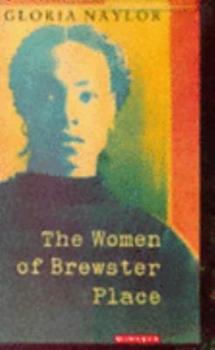
Gloria Naylor is another Scheherazade.  She was a consummate storyteller, wrote beautifully, created engaging stories and characters we could judge if so inclined by the content of their character, not their race.  Unlike Alice Walker, Naylor’s male characters have more character, like Ben the janitor/caretaker in today’s book recommendation.  They are not stereotypes.  For the record, and in fairness to Walker, James Baldwin called out Richard Wright for creating the “stereotype” Bigger Thomas.  As I indicated in a previous blog, Bigger is not a stereotype, and he is not simply an angry Black man.  He was created from Wright’s imagination.  He’s that dream denied, not deferred, that turns into a nightmare, and not simply for white folk.

Naylor, in creating her characters, especially the seven women in The Women of Brewster Place, gives them soul, and it conjures up, for me, The Souls of Black Folk, by W.E.B. DuBois, which also doesn’t make it on my recommended book list this Black history Month.  As writers know, when we create characters, even if it doesn’t make it into our works, we give them born days, and sketch their lives on a timeline – I, myself, think in timelines, as a history buff.

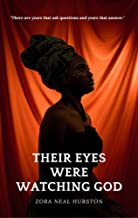
I have a special place for Gloria Naylor on my Black History Month Book Recommendations, as a native New Yorker, and for her involvement in a literacy program in da Bronx.  And, of course, as a born and bred Brooklynite, for her book, Bailey’s Café, which centers on “a mythic Brooklyn diner that offers an oasis for the suffering.”  Additionally, she intertwined stories from the Bard and Black folklore.  And although Their Eyes Were Watching God – a great title – by Zora Neale Hurston doesn’t make it on my list – there are only 28 days in February this year – I think of how both Hurston and Naylor wove Black folklore into their stories.

The Women of Brewster’s Place, a National Book Award Winner, is Naylor’s most famous work, and it made it to the small screen starring Oprah Winfrey, Robin Givens and Cicely Tyson.

As a Black man I love that Naylor returned to Brewster Place with The Men of Brewster Place.  Naylor knows we need each other, and perhaps she never said, “I don’t need a man.”  I have told Black women perhaps they will never hear a black man say, “I don’t need a woman.”

If you haven’t read anything by Naylor, then you need to.  Pick up any book by her.  You’ll get a good and entertaining story, and you won’t be disappointed.

Posted in Lest We Forget, race, Relationships | Tagged , , , , , , , , , , , , | 3 Comments

All Jazz is not Improvised!

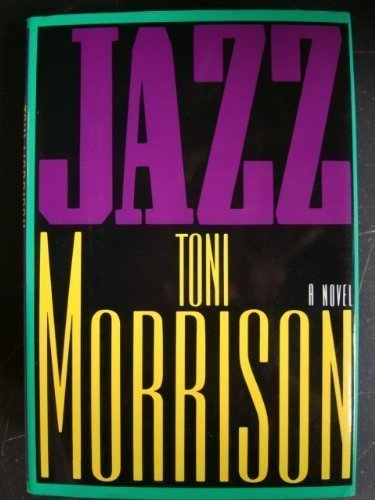
Toni Morrison is a conductor, a composer of language so melodious her prose jumps off the sheet, dances in the streets and sings to a music you feel is meant just for you.  Only one other author, James Baldwin, has done this for me, elevated prose to poetry to music to jazz, all that jazz, seemingly improvised but carefully constructed, each note (word) packed with meaning, with emotions, with a story as timeless as the beginning of time, of first loves, of “killing the thing we (men) love.”

Jazz opens in the winter of 1926, the year my father was born, just three days into this new year. Joe Trace, a divorced Black male in his fifties, shoots to death his lover of three months, 18-year-old Dorcas.

From the inside flap, it says, “In a dazzling act of jazz-like improvisation, moving seamlessly in and out of past, present and future…”

Some readers find Morrison hard to follow.  For the most part, these are readers not accustomed to jazz.  Additionally, Morrison expects more from her readers, as all those (mostly white men) we were required to read in college, a case on point is Faulkner, his works more convoluted than complicated, with nary a note of music.  In fact, Morrison liked the works of Faulkner and her master’s thesis was titled, “Virginia Woolf’s and William Faulkner’s treatment of the alienated.”

Alienation is not only a theme in Morrison’s work, but also in so many Black authors.  Deconstructing the treatment of Black folk in these here United States, trauma and alienation loom large.

Morrison looms large over American letters.  She won a Pulitzer prison for Beloved, a National Book Critics Circle Award for Song of Solomon, and the Nobel Prize.  Reading anything by Morrison will transport you.  As an artist, Morrison’s gifts are on full display in Jazz.

Posted in Poetry | Tagged , | Leave a comment

More Than One Thousand and One American Nights

Imagine if your very life depended on telling a story.  Imagine telling a story for one thousand and one nights.  Imagine this storyteller as a woman.  In One Thousand and One Nights, also known as Tales from the Arabian Nights, Scheherazade, a young woman betrothed to King Shahryar, finds herself next in line in this precarious position.  King Shahrya, betrayed by his wife, has lost all faith in women.  The wife who betrayed him he had executed, along with all the people privy to her indiscretions as well as those who participated.  Since then, he takes a “wife” every day, and kills her before the night is over.  King Shahrya, this serial killer of young women, meets his match in Scheherazade.

Scheherazade is a consummate storyteller.  In fact, Scheherazade created the serial novel and cliffhanger.  After telling King Shahrya a story, as the night was approaching and it was time to go to sleep, Scheherazade would begin another story and stop at a critical point.  Scheherazade’s stories were so intriguing and entertaining that King Shahrya let her live another day to complete the story.  This storytelling went on for a thousand and one nights.  In the end, Scheherazade has “cured” the King of his murderous ways and they live happily ever after.

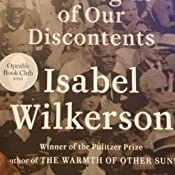
When I first started reading Caste: The Origins of Our Discontents, by Isabel Wilkerson, I thought of Scheherazade.  Wilkerson is a masterful storyteller.  She tells this story of our discontents, and connects seemingly unrelated events, in such a compelling and engaging way.  The first part of this book is entitled: “Toxins in the Permafrost and Heat Rising All Around.”  Suffice it to say that racism, the caste system of race in America, is deeply rooted in America’s “permafrost.”  A little heat will bring what we believe to be long dormant pathogens of racism to the surface. When Wilkerson begins chapter one, “In the haunted summer of 2016, an unaccustomed heat wave struck the Siberian tundra…,” you wonder exactly where she is going.  When she gets there, when you get there with her, you have to marvel at the writing and the connection.

Earlier this month I recommended books by Octavia Butler.  On this day, February 24th, in 2006, Butler, another storyteller in the tradition of Scheherazade, passed away.  As Butler went where no Black woman writer has gone before in her “science fiction,” Wilkerson takes us to the Siberian tundra, and when the permafrost has melted, the thing that America can simply not get away, the thing that America can simply not resolve, racism, rises to the surface, rearing its ugly head.

It has been more than one thousand and one American nights, and here’s yet one more story to add to all the other American stories about race.

Posted in Lest We Forget, race | Tagged , , , , , | Leave a comment

Son of a Native Southern Son

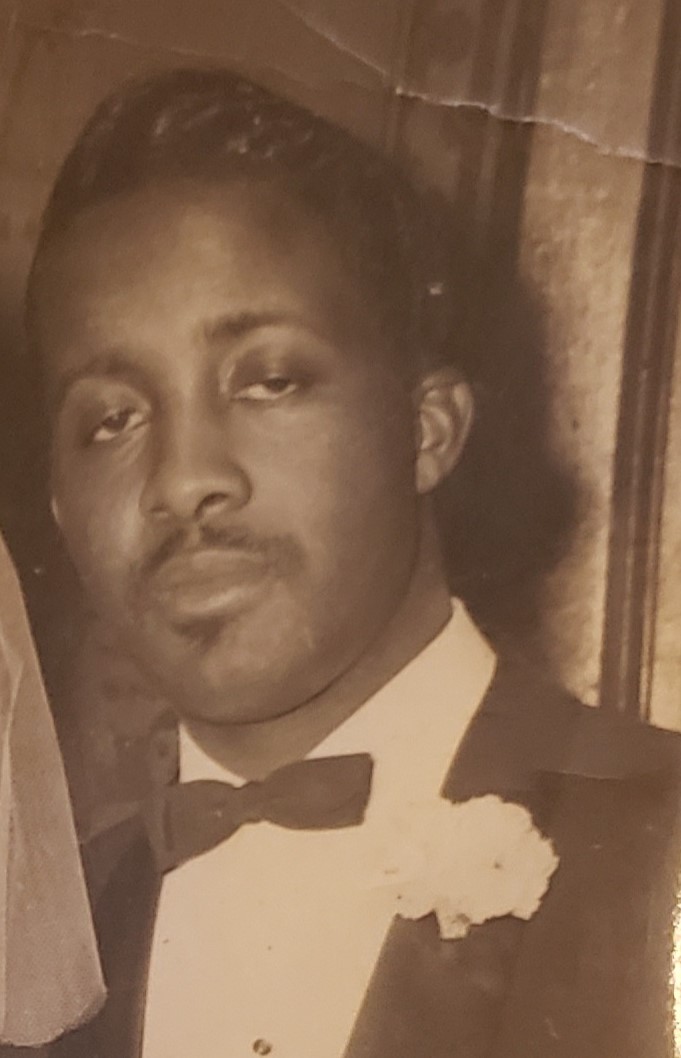
My Father in 1958 on his Wedding Day!

On this day in American history, in 1982, my father passed away, at the age of 56, a week and a day after he reached that age.  I always think of my father as a Native Southern Son.  When I learned from an older cousin that my father was an aspiring writer, I think that he would have been influenced by the writers of the Harlem Renaissance, and Richard Wright and James Baldwin.  Given that, I think a perfect title for his book would have been, Notes of a Native Southern Son.

As much American history as I have read (and lived), I can still not imagine my father’s life growing up in the Jim Crow South, serving in the segregated U.S. Army as a teenager during World War II, migrating (or fleeing) from the South and landing in Brooklyn, living in Bed-Stuy in the 1950s, traveling South every year, not like a criminal, but returning to the scene of one of the greatest crimes in the annals of history (American slavery, segregation, lynchings). And I’ll never forget, because I couldn’t imagine my father’s coming of age story in the segregated South, where malevolent forces still existed and floated freely in the Southern air when I was born, why my father took solo trips to the South almost every year around the Fourth of July, where my paternal roots are firmly planted, and never took me on his Southern road trips.  I perfectly understand now, and how the first ten years of my life, during the Decisive Decade, it was not safe to be a Black man or Black man-child in America, especially in the Southern states.  Still, I think all Black fathers owe their sons one thing: the truth about the world in which we have been born.

My father’s story began long before he was born, and I now see that my story is simply a continuation of his.  The science of DNA has revealed so much about our ancestry, though it’s still hard to get to the root of Black folk’s existence in these here United States.  What I do know, on my paternal Southern tree, probably that poplar tree from which many Black people were hung, is a root from 1805 – that’s as far back as I’ve been able to DNA time travel.  The Southern states can be accused of many things as it relates to Black folk, but they did a meticulous head count of Black folk in those bleeding Black blood states, for purposes of the census (read the Constitution and the provision about representation in the House of Representatives being based on the size of the population).  So, in 1805, the Southern fruit on my paternal tree is a mullata – probably the fruit of rape, that is, a white male raping a Black female.

Billie Holliday first sang and recorded “Strange Fruit” in 1939, when my father was 13.  I know my father loved Ray Charles, another native Southern Son, but I wonder if Billie Holiday’s haunting rendition of “Strange Fruit” was a refrain in his mind when he was growing up and when he traveled South every year?  I wonder if he witnessed a lynching. He certainly had to have heard about one…or more.

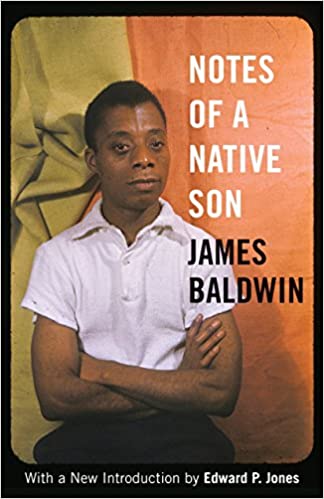
The more I think about my father, I think that I would be the James Baldwin to his Richard Wright.  Yesterday I recommended Native Son.  Today I recommend James Baldwin’s Notes of a Native Son.  I know I took the long way to get here, but American stories with Southern themes are convoluted, one reason why William Faulkner is so confusing, and challenging to read.

James Baldwin was simply a masterful writer.  His prose is composed, so composed he is only one of two writers where I literally hear music and melodies in their prose.  My favorite short story of all time is Baldwin’s “Sonny’s Blues.”  In my last year of college, the year my father died, I wrote a paper for a political science class using “Sonny’s Blues.”  All these years later I remember the title of the paper I wrote, which impressed the professor.  For this course we had a number of texts, including: Freud’s Civilization and its Discontents; Fanon’s The Wretched of the Earth; Michael Walzer’s Just and Unjust Wars; and a Marx & Engels reader.  Looking at Marx’s theory of alienation, I wrote my final paper for this class, entitled, “’Sonny’s Blues,’ Or the Alienation of a Black Man in a White Male-Dominated Society.”  In Baldwin’s works, methinks he touches on this sense of alienation.

From Native Son to Notes of a Native Son to what could’ve been, Notes of a Native Southern Son, and perhaps I am well on my way to writing Son of a Native Southern Son.

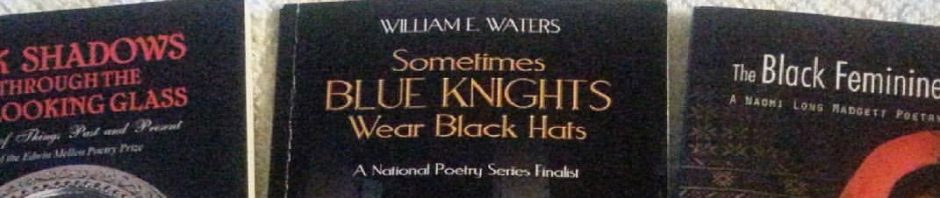
Posted in Black Shadows and Through the White Looking Glass, ezwwaters, Fathers, James Baldwin, Lest We Forget, race, raising black boys, Sonny's Blues | Tagged , , , , , | 3 Comments

A Bigger By Any Other Name

Bigger Thomas, although a fictional character, haunts the imagination of white folk. 

Richard Wright’s Native Son, where we meet Bigger Thomas, was published in 1940.  Benjamin Mays, in eulogizing the Reverend Dr. Martin Luther King Jr. 28 years later after he was assassinated by a white man, said that “no man is ahead of his time.”  At the time, people thought that the book was ahead of its time, but it was of the time.  Richard Wright dared to write and publish a “protest novel” that no other writer of his time wrote, though perhaps thought about.  In fact, James Baldwin wrote, “who does not have his private Bigger Thomas living in his skull.”  Frantz Fanon, in his 1952 essay, “The Fact of Blackness,” wrote, “In the end, Bigger Thomas acts.  To put an end to his tension, he acts, he responds to the world’s anticipation.”

The world that Bigger finds himself in is rife with poverty, hopelessness, and despair, with measures upon measures of racial tension.  The legacy of slavery, sharecropping and segregation, hasn’t significantly improved the lot of Black folk in America, that is, what should be realized 75 years after the Civil War.  The ideal, the Black Wall Street, was pillaged and plundered and burnt to the ground by white folk in 1923.  Dreams are not necessarily deferred. . .

The novel, nightmarish, is dream-like.  After the murder of a white woman (Mary), and the rape and murder of a Black woman (Bessie), Bigger moves through the city like a malevolent spirit, that Black boogey man that haunts the imagination of white folk.  Despite Baldwin’s words quoted above, he thought that Bigger was a stereotype that would feed into the white imagination.  (Why would Black folk even care what white folk thought about a fictional Black character?)  Despite being the creation of a Black male author, Bigger is much more than a stereotype.  He is all the dreams destroyed, not deferred.  He is that Black man that white writers have been writing about for hundreds of years.  A case in point, and one of my favorite Shakespearean characters, is Aaron the Moor, in Titus Andronicus.  Aaron really doesn’t care what white folk think of him, and only wishes that he could wreak even more havoc.  Of all Shakespeare’s villains, only two, Iago, and Richard III, rival Aaron. (Note how the two Moors, Othello, and Aaron, are portrayed in Shakespeare’s works, in his imagination, three hundred years before Bigger!)

            Bigger, Bigger, Bigger!

Note:  Richard Wright died at the very beginning of the Decisive Decade (1960).  It is worth noting that he was born on a plantation near Natchez Mississippi, on September 4, 1908.  Wright is one of three great Black autodidacts, two of whom I’ve mentioned during this Black History Month: J.A. Rogers and Malcolm X.

Posted in Black Shadows and Through the White Looking Glass, crime, ezwwaters, James Baldwin, Justice Chronicles, Lest We Forget, Malcolm X, Martin Luther King, Murder, race, raising black boys, Streets of Rage | Tagged , , , , , , , , , , | 1 Comment

Me and Malcolm X’s Murderer

On this day in American history, Malcolm X was murdered.  I was four years of age.  Fourteen years later, I would meet Malcolm X’s killer.  The first thought that crossed my mind: He, Thomas Hagan, is unremarkable.  And then: What had led this unremarkable man to murder such a remarkable man?  Many questions crossed my mind, but I didn’t ask one.  I just stared at him as if I could get answers.  I had already read The Autobiography of Malcom X: As Told to Alex Haley.  At 18, Malcolm X was the only man I thought worthy of emulating.  In that, even though I never converted to Islam, I studied the teachings of the Nation of Islam, the teachings of the Five Percent Nation, and orthodox Islam.  I have childhood friends who were either one or the other, or all but at different stages of their lives.

How my life as a Black man-child would be impacted by Malcolm’s murder I had no idea.  I didn’t have a memory of Malcolm’s death.  The first “political” death that I remember is the Reverend Dr. Martin Luther King Jr’s.  When King was assassinated, I was seven years of age.  Then, I didn’t understand the implications of his killing, but I knew that the world had changed, that the world had shifted, that King’s assassination reverberated across the globe.  A refrain during the first 10 years of my life, during the Decisive Decade, was, “They killed another good Black man!”  The adults said that over and over, and not until the assassination of Dr. King did it register in my mind.  There was something about being a Black man in America that inspired so many things, but above all else, it inspired fear in the white imagination.

I can’t begin to imagine the life of my father, a native Southern Son, born in the segregated South, in North Carolina, in 1926.  I knew he knew something that he was keeping from me.  Maybe it was this mystery, that he knew that white people would look at me and be afraid, for no other reason than that I was born Black in America.  (Well, my birth certificate says “Negro.”)  For years I resented my father because he never took me on his yearly trip down South, almost all around the Fourth of July.  Later, I wondered if he knew Frederick Douglass’ famous speech about the Fourth of July.  When I gave that a little thought, I realized it was irrelevant.  He was born and spent the first twentysomething years of his life in the South.  As a teenager he served in the segregated U.S. Army during World War II.  When I came to understand American history, I came to understand my father.  He didn’t take me South because he couldn’t protect me from that malevolent thing in the Southern air that sends white men into murderous rage and white women into flights of fancy (fantasy), that without hesitation Black men, and boys, would pounce on them and sully their purity.

Despite this backdrop, I can’t recall my parents ever saying anything bad about white folks.  Later I wondered if this was a character flaw.  Why were Black but mostly white people allowed to kill Black leaders with impunity?  When I looked at Malcolm X’s murderer, that was one of my questions: Why are you still alive?  As I got older, I, too, heard that question, from the older people in my ‘hood, the Watchers, I called them, Septuagenarian Seers who had already predicted my fate as a Black man in America, that I wouldn’t live long enough to mate, or I would end up in prison.

During the Decisive Decade, Black men were murdered.  In the 1970s and up till the New Millennium, Black men were imprisoned.

I outlived my father.  He died at 56.  Deep in my soul though, call it what you will, but I hear his voice in my head.  He is proud of me, that I’ve lived this long, in spite of it all.  And that I have a triumph or two under my belt.  From a cousin, I learned that my father was an aspiring writer.  Maybe I got the “writing gene” from him.

Finally, once again I encountered Malcolm X’s killer, Thomas Hagan, in the New Millennium.  I was working for a nonprofit that helped formerly incarcerated people find employment.  He had been released or was on “work release.”  I saw him in the Long Island City Office of the organization I worked.  I never forget a face, and I stared at him in the same way I stared at him when I was 18.  And he was as unremarkable as ever.  I know he remembered me, if for nothing else the look I gave him as a teenager.

Posted in Black Shadows and Through the White Looking Glass, crime, Growing Up, Lest We Forget, Malcolm X, Martin Luther King, Murder, Nation of Islam, race, raising black boys, Religion | Tagged , , , , , , , , | Leave a comment

Masquerading as White

Given my book recommendation yesterday, that is, Black Robes, White Justice, by Judge Bruce Wright, it seems natural to recommend this book by Frantz Fanon, Black Skin, White Masks.  In many respects, this book explains Black jurists’ administering “white justice,” and not being a counterweight to “white injustice.”

Black Skin, White Masks, is Fanon’s first book, published in 1952.  It was supposed to be his dissertation, under another title.  Fanon, trained in psychoanalysis, looks at the psychological impacts of colonialism, long before people started to talk about post-Slavery syndrome.  Not only were countries colonized, but also minds, bodies, and souls.  The first chapter alone, on language, is worth the price of the book.  Elsewhere I’ve touched on Africans and their descendants throughout the Diaspora “learning” European languages, how these languages were simply not suited to the African tongue, especially English.  For Fanon, the language is French.  Fanon, born in Martinique, first spoke Creole French, which is not really a bastardized version of French, but French with the rhythms and accents of the Caribbean giving new life to the language, as if “standard” French is as dead as Latin, from which French evolved.

Fanon’s writings explains an American phenomenon, “passing.”  What is often missing from the American narrative about Europeans coming to “America” is the wholesale rape of indigenous and African women.  This happened throughout the “New World,” to such an extent that there was an attempt to classify the products of this rape.  In the French Antilles, racial classification went  to 1/64th Black!  Ironically, it was the “black blood” that was controlling (hypodescent), that defined this European obsession with race: Sacatra (7/8); Griffe (3/4); Marabou (5/8); Mulatre (1/2); Quarteron (1/4) Metis (1/8); Mamelouk (1/16); Quarteronne (1/32); Sang-mele (1/64)! J.A. Rogers argues that this “miscegenation” created 55 shades of color.


Fanon is a most interesting subject, and I would recommend reading everything by him, from his first book, Black Skin, White Masks, to his last, The Wretched of the Earth.  And even though The Wretched of the Earth is on my recommended book list, it might not make it on the list of 28 books I will have recommended this Black History Month, because there is simply so much to read to address not only The Miseducation of the Negro, by Carter G. Woodson, which will be the last book I recommend this month, for the obvious reasons, but also the miseducation of Americans writ large.  What I was aiming to say, by beginning with Fanon’s first book and ending with his last, one will see the evolution of his thinking.  Sadly, Fanon died young, in 1961, at 35, at the beginning of the Decisive Decade.  But he left us so much to ponder.

Posted in Education, Lest We Forget | Tagged , , , | 2 Comments

White Sheets Under Black Robes

Black Robes, White Justice, by Judge Bruce Wright, is one of my favorite titles touching on the criminal legal system!  The title itself speaks volumes.  Bruce Wright was a distinguished New York City Judge and, in light of the current debates about crime and bail reform, specifically in NYC, the late Judge Wright should be uplifted.

Long before the current bail reform movement, Judge Wright was dealing with the issue of imposing fair bail on people charged with crimes.  During the 1970s until the present, many judges in NYC would by default impose excessive bail on poor defendants, bail so high the people presumed to be innocent until proven guilty were held in places like Rikers Island for up to three years before their day in court.  In far too many cases, their trials did not last three days.  A couple were one day trials!  Thus, why the delay in bringing them to trial?  (That’s rhetorical.)  Their cases were not complicated, not if they could be disposed of in less than three days.

Judge Wright, in imposing fair bail, looked to the 8th Amendment of the U.S. Constitution, to wit: “Excessive bail shall not be required, nor excessive fines imposed, nor cruel and unusual punishments inflicted.”  For following the Constitution, and in imposing fair bails, not the king’s ransoms many NYC judges imposed on poor people charged with crimes, in the NYC tabloids, Judge Wright was dubbed, “Cut ‘em Loose Bruce!”

Judge Wright calls out a judge or two in his book, even Black judges.  Ironically, many Black judges administer “white justice.”  This has been a fundamental problem of the criminal legal system and law enforcement.  Oftentimes, Blacks in the legal field, from judges to prosecutors to the beat cop, try to prove to their white colleagues that they can administer “justice” in the same way.  If the scales of justice are tilted against Black and Brown people, and the poor, then something is fundamentally wrong with Black jurists imposing “white justice.”  My argument to Black jurists, for quite some time, has been: Black and Brown folk are not asking for any special preferences in the criminal legal system from Black jurists.  They are only asking them to balance the scales of justice.

Judge Wright famously calls out William Thompson, an Administrative Judge in Kings County Supreme Court.  Then, before the Individual Assignment System, the Administrative Judge assigned cases.  “Willie,” as Judge Wright calls Judge Thompson, dubbed himself the “king maker.”  I would add “queen maker.”  Thompson romantically allied himself with a white woman judge in Kings County Supreme Court, Sybil Hart Kooper, who dubbed herself the “Dragon Lady.”  Thompson made sure he assigned “high profile” cases to Judge Kooper, making her the Queen of the Court to his Kingship.  Court watchers have reported that Willie would often visit Sybil in her courtroom when Black and Brown “defendants” were on trial for their lives, and even the teenagers standing trial before the Dragon Lady knew that something was going on, even if they could not articulate it.  So much “white justice” happened under Kooper’s Court I could write a book.

This book, Black Robes, White Justice, is a must read for advocates and any person of color looking to serve on the bench or have anything to do with the administration of “justice.”  If “justice” was truly colorblind, then Judge Wright would not be calling out “white justice!”

Posted in crime, ezwwaters, Justice Chronicles, Lest We Forget, race | Tagged | Leave a comment

Derrick Albert Bell Jr. — The Godfather of Critical Race Theory

Derrick Albert Bell Jr. should be as well-known as Thurgood Marshall.  He was a lawyer, civil rights activist, and professor.  In 1971, he became the first tenured Black professor of Law at Harvard Law School.  From his reputation alone, Professor Bell would be an instructor I would have stood in line to sign up for any class he taught.

As it was, I was introduced to Bell’s work by one of my professors, Bill Webber, during graduate school.  Webber, President Emeritus of New York Theological Seminary would, once he thought he had taken the measure of you, recommend two books, one for the fall and the other for the spring semester.  Both of my book recommendations were written by Bell, and Webber is the only white male who truly saw some of my “measure.”

Bell was the only Black graduate of his 1957 law class at the University of Pittsburgh School of Law.  Shortly after law school, Bell was working for the civil rights division of the U.S. Justice Department.  He was asked to resign his membership in the NAACP under the rationale that his objectivity, and the objectivity of the division, might be compromised.  Bell left the Justice Department rather than give up his NAACP membership.  Compare this with Supreme Court Justice Hugo Black, who was a member of the Robert E. Lee Klan No. 1 in Birmingham, AL.  Black “resigned” from the Klan in 1925. In 1937, after Black was confirmed to the U.S. Supreme Court, it was reported that he had been given a “grand passport” in 1926, granting him life membership in the Ku Klux Klan.

So, today, I recommend the two books by Bell I read in 1993 and 1994, respectively: And We Are Not Saved: The Elusive Quest for Racial Justice, and, Faces at the Bottom of the Well: The Permanence of Racism.  Note that Bell, considered the Godfather of Critical Race Theory, is quoted as having said: “Racism is so deeply rooted in the makeup of American society that it has been able to reassert itself after each successive wave of reform aimed at eliminating it.”  Think President Barack Obama’s successor, No 45, and his white nationalist platform.

Now, I am interested in what Bell might have said or wrote about Clarence Thomas when he was appointed to the High Court. Thomas probably doesn’t realize it, but his face is truly at the bottom of the well.

Posted in Uncategorized | Tagged , , , , , , , | Leave a comment

If Only Death Blossomed

We are more than halfway through the shortest month of the year, dedicated to Black History Month.  I am feeling a sense of urgency, in that there are thousands of books I would like to recommend.  I stay awake at night, by overly active mind and imagination keeping me up.  Instead of counting sheep, books have been playing across the screen in my mind, my mind scanning the memory banks of books I’ve read in order to make book recommendations.  This sense of urgency made me think of the last letter someone wrote from death row, giving it to his lawyer before his state-sanctioned execution.

For a number of years I volunteered with PEN America, the writers’ organization, the affiliate of PEN International, with the Prison Writing Program (PWP).  PWP held an annual writing contest for people in prisons and jails across the United States.  I served on the poetry committee, which was the most-submitted to category.  Poetry is hard, as Steinbeck attests, yet many aspiring writers begin with poetry, perhaps thinking poetry is easy.  PWP received a lot of awful poetry, but there were, inevitably, gems among the piles of manuscripts.  Many of these poets had no formal education – some wrote themselves out of the darkness of illiteracy, like Jimmy Santiago Baca – and no specialized training in writing; many didn’t know how to present their work.  Others wrote from solitary confinement, handwriting their poems on the back of the disciplinary reports that landed them in solitary.  Oftentimes, the back story, which they felt compelled to tell, was more interesting than the work submitted.  The Chair of PWP during my volunteer time corresponded with people on death row.  At one meeting she read the last words written by someone who was executed.  He only wished that he had more time, to write, to read, but especially to write. His handwritten letter, his handwriting, seemed rush, as if he was racing against time, and he was.  When I stare at a blank sheet of paper, I imagine that letter, that last piece of paper that carried his words from death row to a meeting room in Manhattan where many of us could not begin to imagine that sense of urgency, that all was lost, and that we had to get these words out before walking that last mile at the appointed time of death.

I was going to make a different book recommendation, but the above story compels me to this one, Death Blossoms: Reflections from a Prisoner of Conscience, by Mumia Abu-Jamal.  For decades, Mumia wrote with urgency under the threat of death.  Read Death Blossoms and just begin to imagine. . .

Posted in crime, Lest We Forget | Tagged | Leave a comment