I Didn’t Fly Last Night

I didn’t fly last night, but 6am this morning I was in the writer’s cockpit, navigating my way through my novel. Did some re-writing and got some writing in to boot. Right now I am on the runway, but plan to take flight again later today.

Posted in Uncategorized | Leave a comment

Sorry, Walter Mosley

I had been writing furiously, but the last three days I have let the world of work work against writing every day.  Been writing in my head — I know, that doesn’t count!  Will write and re-write tonight.  Will wake up early Saturday morn and write.  I shouldn’t forget: I write, therefore, I am.  And I am never more alive than when I am writing!

Posted in Uncategorized | Leave a comment

I haven’t called my Muse

Imagine not talking to your woman for three days? No, don’t imagine that. Imagine being alone, or at least not with that woman anymore — such is not writing the past couple of days. Will write tonight and over the weekend. Capri is calling. She wants to be born!

Posted in Uncategorized | Leave a comment

Inspiration — “Writing Every Day”

Just finished re-reading an essay entitled “Writing Every Day,” by Walter Mosley, in the March/April 2007 issue of Poets & Writers.

Writing is a discipline.  It is far too easy, when writing is not one’s primary source of income, to not write every day. Even if one is not moving towards writing as one’s primary vocation, if one has a novel inside of her waiting to be born, then one cannot put it off.  Perhaps there is no biological clock ticking away, but one should think of writing in this way.  Time is running out.  So write, write, write….

Posted in Uncategorized | Leave a comment

October 1, 2010 — Celebrating Fifty Years of Life

I saw the best minds of my generation drop out of school and get their education on the streets, in the schools of hard knocks: in group homes, reform schools, jails, reformatories and prisons.  They dropped out of schools that didn’t teach The Pedagogy of the Oppressed; schools that didn’t understand the psyche of The Wretched of the Earth; schools that didn’t challenge; schools that placed a premium on memorization and rote at the expense of thoughtfulness and learning; schools incapable of tapping into the creative energy of these minds descended from minds that were once trained in the greatest institutions of learning on Mother Earth, in Songhai, Ghana, Mali and Timbuktu; schools that taught history that excluded them and their contributions; schools that alienated them; schools that taught cruelty; schools with low ceilings and finite possibilities.

I saw the brightest boys of my generation descend into insanity.  They were in the best high schools the City had to offer, but their minds were light-years ahead of the curriculum.  We knew they were different, their heads shaped like eggs, but brilliant, not of the world they were relegated.  They tutored others in math and science and instead of graffiti wrote formulas on the walls.  They were bored in lab so conducted their own experiments, on stray cats and dogs – we saw their remains throughout the projects.  They flew homing pigeons from coops on the projects’ rooftops, sent esoteric messages to other egg heads throughout the City’s housing developments.  They experimented with mind-altering drugs – Acid, LSD and angel dust.  They were our angels, not of the world they were relegated.  They leapt off of tall buildings, believing they could fly like their pigeons, and they did, for a brief moment in time, only to crash land in the concrete jungle, their wings crushed and their bodies broken.

I saw the best physical specimens of my generation, the fastest, the strongest, play three sports with effortless grace, not become all Americans.  I saw them earn full scholarships to play basketball but drop out of school in their freshman year because they refused to ride the bench behind the starters, when they knew that they ran faster and jumped higher and that they shot hoops with the accuracy of marksmen.  So they returned to the streets, their dreams of playing pro basketball dashed on the hardwood floors of colleges eager to exploit their talent; instead they played in the summer leagues, more dazzling than the sun.  And when the sun set, not only did the freaks come out – “The Freaks Come Out at Night” – but  the gamblers collecting their winnings from the games, the pimps, hustlers, con men and gang members, the whole wide underworld.  Then their physical prowess was put to other tests.  I saw them outrun cop cars and motorcycles and police dogs.  I saw them hurdle five-foot fences, leap from building to building, with cops hot in pursuit, and they seemed to always get away.  Before extreme sports were invented, they were pushing their bodies to the outer limits, redefining the use of space.  I saw them subway surfing and elevator surfing, engaged in thrills that could kill.

I saw the boldest boys of my generation, those that didn’t die young, graduate from petty to major crimes.  It started innocently enough, playing hooky from school, stealing lunch from the bodega, but gradually escalated to shoplifting, burglary, armed robbery and even murder.  From juvenile delinquents to juvenile offenders to youthful offenders to adult criminals.  In the projects they hunted the rats for sport, with BB guns and bow and arrows; and it turned out that the animals’ remains I saw throughout the projects was not the result of tests of the brilliant egg heads, but the evidence of their torture.  They were not only the boldest, but also the most alienated of my generation.  They descended into another kind of madness, defined by cruelty.  They hated a world that hated them – “The Hate that Hate Produced.”  They hated this world of low ceilings and finite possibilities.  They hated this world that would deny them their dreams.  Thus they ended up in group homes, reform schools, jails, reformatories and prisons.  A lawyer would later tell me that all of this was “inevitable,” which made me think of the Watchers, the Watchers from behind Venetian blinds, the projects’ old ones in the know, septuagenarian seers, who predicted that many of my generation wouldn’t amount to anything, that we’d end up in group homes, reform schools, jails, reformatories and prisons, that many of us would not live long, that many of us certainly would not live to see fifty years.

I saw the bravest boys of my generation find their way out of the projects and into basic training.  They knew that there was no way they could be all they wanted to be in a housing development with low ceilings and finite possibilities.  They went from leaping from building to building to jumping out of airplanes to fight in Granada and Panama.  They were honor guards in championship games, those games the best physical specimens of my generation should’ve been playing in.  They were in the Marines, in the Army and the Navy.  They swaggered down the streets of Spain, ran with the bulls, found cheap thrills in Manila with “our little brown cousins,” redefined what it meant to be a warrior in Japan, fished in Korea and drank beer in Germany and convinced the frauleins that Hitler got it wrong, that these physical specimens were part of the Master Race – you could take them out of the ghetto – none of them came back to the projects.  Later, I saw them, military erect, at the funerals of their parents and their younger siblings, casualties of the wars on poverty and crime.  We looked at each other, nodding, acknowledging that we were still here, more than survivors, smart, sane, in shape and unbroken – celebrating life.
Posted in Poetry | Leave a comment

The Novel Wants to be Born

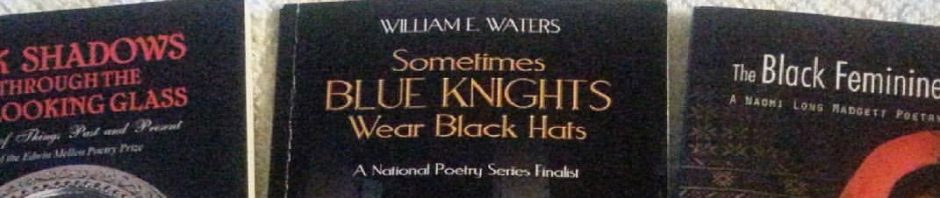
The late great Bill Webber, President Emeritus of New York Theological Seminary, once told me that the closest a man comes to experiencing giving birth is writing a book.  Therefore, I wasn’t surprised that it took me nine months to write my first book, Black Shadows and Through the White Looking Glass: Remembrance of Things Past and Present.  This novel I’m working on though, The Summer of Capri, I feel, will be premature.  She wants to be born.  I am writing furiously.  First thing yesterday morning I typed the six pages I had written the previous morning.  Ever write a story in the first person and you come to embody the character, giving birth to him (or her)?  (Aren’t these characters we create composites of us and everyone we’ve ever come in contact with?  Or who we want to be?)

Posted in The Summer of Capri | 1 Comment

Excerpt from The Summer of Capri

No matter where we have been, no matter who we have become, no matter where we live now, there’s the place where we are from, where our roots are planted.  My roots are in Brooklyn.  I grew up in Brooklyn.  Like that famous tree from literature. In the Marcy projects. From a kid playing stickball throughout the projects to a Marine on the beachhead of Grenada to a beat cop patrolling the same area when “community policing” was resurrected to a…  When I finished serving my two tours with the Marines, I attended a Marcy Day or two, always on a hot Saturday in August, would see some of the people I had grown up with.  Some still lived there.  Years later, when I was a beat cop, they were still there.  And all of these years later they remained.  And their grown children.  It was depressing. The buildings looked smaller, not as tall as my child’s imagination had seen them then, and drab, the red-brick dirty, looking like some  mythical giant had walked across them with muddy boots on.  People in the projects were making a big deal out of Jay-Z, the rapper and businessman, also out of Marcy, proud of him, of course, since he demonstrated that something good could come out of the projects; but he was eight or so years my junior and by the time he was busting beats I was on the beachhead in Grenada, very far from Marcy, as I had planned.  I couldn’t get far enough, since the most painful memory in my life lived there, which, of course, kept pulling me back.

In the car I cruised down memory lane, slowed down on Park Avenue, the other Park Avenue, as we learned to say.  I turned on to Marcy Avenue.  It was here that the ghosts lived, where my older brother, Hannibal, two years my senior, was killed by a rival gang member.  Hannibal and Alexander.  My father named us and called us his little generals.  The name stuck.  When we were kids, up until when we became teenagers, everyone in the projects called us little generals.  My brother was a born leader, probably would’ve grown up to be a general if not for the accident of birth in the Marcy projects.  I wouldn’t say it was the next best thing, but my brother was a Minister of Defense or some such title in the Marcy Chaplains.  People from Marcy and the surrounding projects, Tompkins and Sumner, still spoke about him.  He was the one expected to do good if not great things. He was tall and strong and played every sport effortlessly.  And he was smart. An A student bored out of his mind in school, he would come home and read, not watch TV.    My father didn’t graduate from high school, but he made it a point to educate himself.  In our apartment we probably had a better library than the public schools we attended.  Following in my brother’s footsteps, whom I idolized, I read every title he did, right after him.  I didn’t read as fast and didn’t comprehend what he did – the two-year age difference between the two of us was a big difference at that age —  but when I graduated from high school I was reading at the college level.  I read The Autobiography of Malcolm X as well as The Art of War. That’s how diverse my father’s library was.  I turned left on to Nostrand Avenue. I still hadn’t figured out why my brother had joined a gang.  Well, gangs were different then.  Gang members were really protecting their turf, protecting the old people and the kids.  You never heard of innocent bystanders being casualties of these strange wars. No.  Never. I could remember being shooed inside by a gang member when war was in the air, even if there was a hint of war in the air.  And now, another ghost from my past had resurfaced, I was certain.  I’d check when I got back to the office.  I turned left on to Myrtle Avenue, slowed down and looked across the avenue toward what looked like a concrete wasteland. When I was a kid, there were these impossibly competitive basketball games going on every day during the summer and on into fall.  People in NYC talked about the Rucker basketball tournament.  They needed to come downtown to Marcy projects on any given summer day when I was growing up.  I could still hear the basketball pounding on the concrete, the “swish” of the chain-linked net when a long-range jumper was made.  “Gimme the ball, gimme the ball, gimme the ball.”  The refrain, from my brother, who wanted the ball in his hands at a decisive point in any game. When he got the ball, it was sheer magic.  I’ve heard how the great ones, Oscar Robertson, Kareem Abdul Jabbar, Wilt Chamberlain, Larry Bird, and of course Magic and Michael, and I can’t leave out the legends from the New York Knickerbockers, Earl “the Pearl” Monroe and Clyde “the Glide” Frazier, and the indomitable Willis Reed, played at a level that others, no matter how good, couldn’t even imagine.  Come on!  Wilt the Stilt scored 100 points in a regulation game!  Mike never got close to that.  In one game my brother scored about 70 points.  He approached that level of focused intensity.  He could shoot from long distance or take it to the hoop.  He had this head fake, his eyes looking to the heavens for approval before he defied gravity, that got defenders off their feet and into the air while his feet, in white canvas low-cut Chuck Taylors, were firmly planted on the concrete.  As the defender elevated he would go around him, heading to the hoop with so much speed it was frightening.  One time, I swear, when he got airbound, he jumped right over this six footer.  Okay, maybe the six footer ducked slightly, but in my memory my brother took flight and jumped clean over the “defender” and slammed the winning basket home.  Coming back to the present, I saw a solitary kid pounding a basketball on the concrete court, making a move toward the hoop.  I smiled.  Maybe the next Michael Jordan.  I speeded up, turned on to Marcy Avenue.  I had circled the projects countless times, now and then, lost in the past lane.  I accelerated, turned left onto Park Avenue and headed back toward downtown Brooklyn.  Before I knew it, I was under the BQE.  This neighborhood was going through a metamorphosis.  Converted warehouses into condos, new condo developments going up, big plans for the Brooklyn Navy Yard, one block north from Park Avenue on Flushing Avenue.

Park Avenue turned into Tillary Street.  I caught all the lights to Cadman Plaza which, when you turn left, going southbound, turns into Court Street.  I turned right on to Joralemon and then right on to Clinton and saw  a car pulling out.  Just a block and a half from my office.  I fed the hungry meter and made my way up to my office.

Posted in The Summer of Capri, Uncategorized | Leave a comment

Working on the P.I. Novel — The Summer of Capri

I believe I can fly!

Work on the novel is going well.  Just wrote a scene, a flashback.  The main character, Alexander Jones, a P.I., is thinking about his brother, killed in a gang war in the mid-’70s.

Posted in The Summer of Capri | 2 Comments

From EZ Waters

I am working on a novel that has been brewing in my mind for nearly 10 years.  I’m finally getting it out of my head and onto paper.  I am never more alive than when I am writing.  Writing is like flying.  It’s a marvelous feeling, fraught with danger, defying the gods, mastering/conquering one of the elements.

Posted in Uncategorized | 1 Comment