
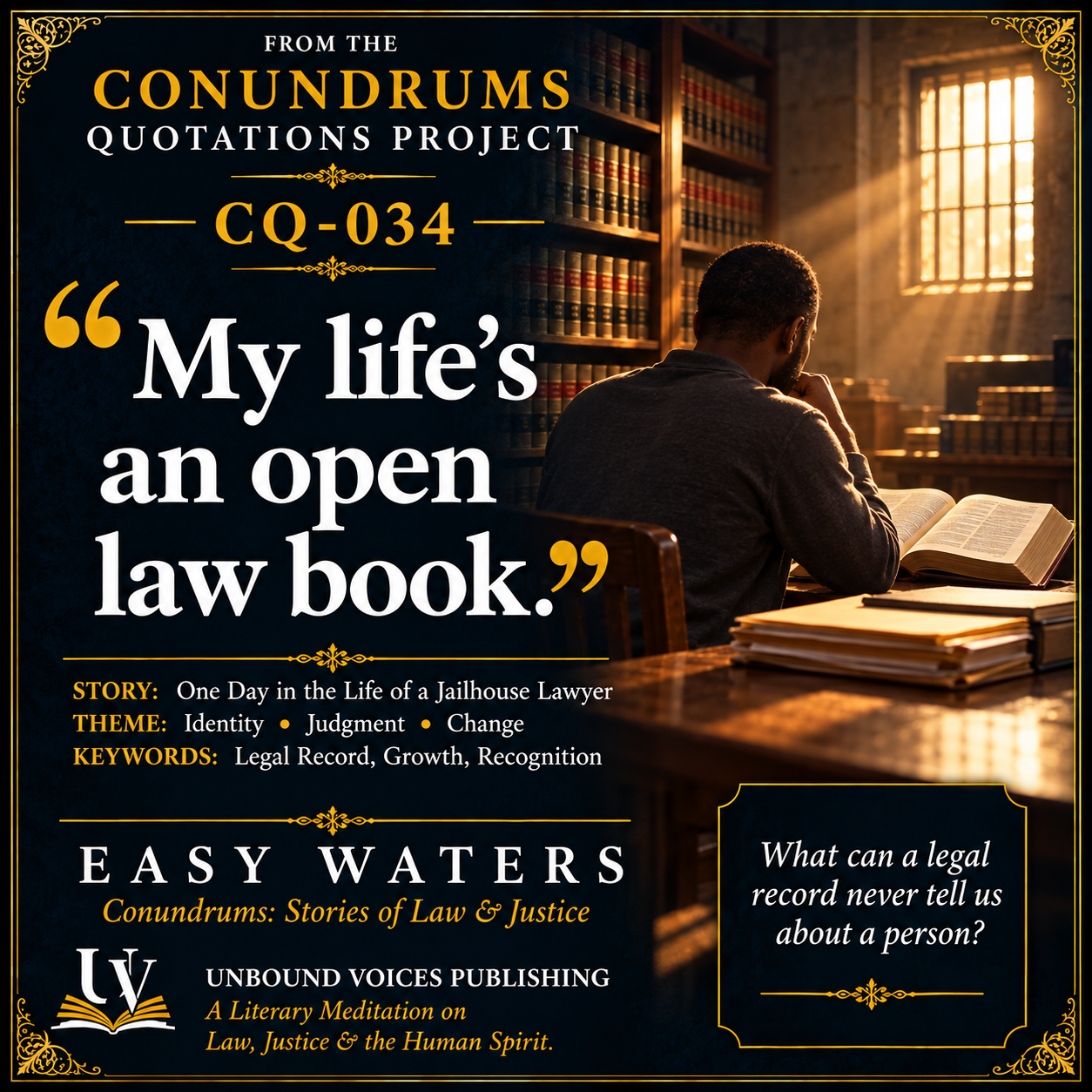
“My life’s an open law book.”
—Easy Waters, “One Day in the Life of a Jailhouse Lawyer,” Conundrums: Stories of Law & Justice
An open book invites a reader. An open law book invites a judgment.
In the story, E prepares to go to the law library. Professor, a man who tutors others in prison, asks why he continues putting himself through the agony of legal challenges.
E still believes someone will say, “Enough is enough!”
Their conversation turns to guilt and due process. Professor sees his admission of guilt as a reason not to appeal. E insists that sending someone to prison still requires a lawful conviction.
That distinction matters. Accountability does not relieve the state of its own obligations.
But “My life’s an open law book” carries another meaning. A legal record can make a life available for inspection while leaving much of that life unread. It records charges, testimony, decisions, and sentences. Where does it record the person’s growth? The people they have helped? The years in which they became someone the original record could not anticipate?
An open law book may tell us how a person entered prison. Reading it alone cannot tell us everything about who that person is today.
Explore the Conundrums Quotations Project at ezwwaters.com.
Justice, Literature & Memory — Delivered to Your Inbox.
#Conundrums #Literature #HumanDignity
What is one thing a legal record cannot tell you about the person it describes?


